

We Tried This Laundry Hack To Remove Stubborn Lint, And It Worked Like A Charm
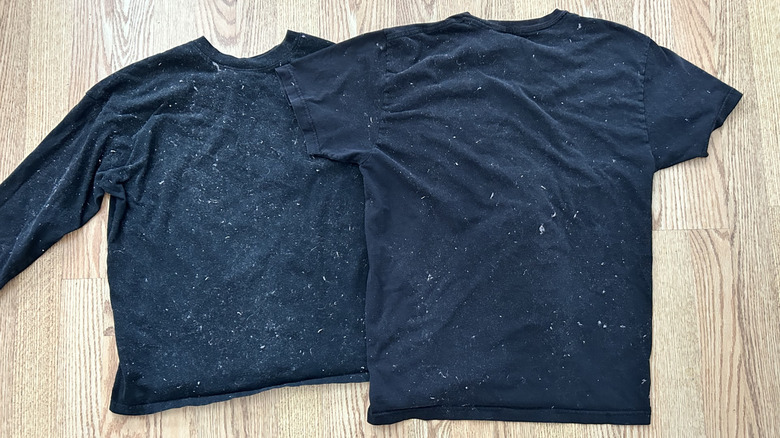
When it comes to removing lint from clothes, a sticky roller tends to do a decent job. Sometimes, though, this tool just won't cut it. When a fuzz emergency arose recently, I decided to try out a hack I'd heard about: tumble drying lint-covered clothing with microfiber cloths.
My lint situation came about after I bought a fuzzy throw blanket for my living room sofa. I opted to give it some fresh-from-the-dryer coziness for its first use, so I tossed it into the washing machine, adding a couple of black T-shirts to keep the laundry from piling up. Unfortunately, after snuggling with the blanket in the drum of the washer, these poor tees looked like something else entirely. They were so slathered in fuzz that they could have been reclassified as gray sweaters. So, before figuring out how to get the new blanket to stop shedding, I needed to remove a lot of that unwanted lint from the shirts.
Some sources advise drying wet garments with dry microfiber cloths for this hack, whereas others recommend tumbling your garments with a wet cloth instead. Some also suggest using one or more microfiber cleaning rags, while a few claim that a microfiber towel will do the trick. I had a few microfiber washcloths tucked away in my bathroom, so I decided to see if they could banish the lint. Why microfiber? Well, it's a natural lint magnet thanks to the power of static electricity. Its fibers are designed to create a positive charge that pulls in lint and other bits of debris.
Designing a fuzz-busting experiment
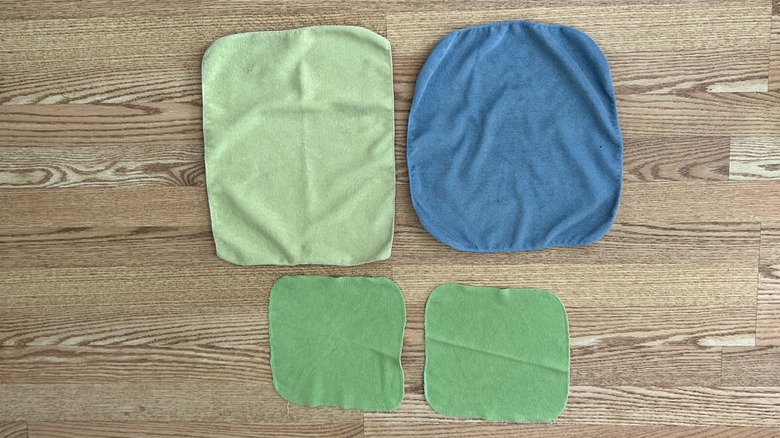
I used four different microfiber washcloths to test out this hack. Two were thin baby washcloths made of finely textured microfiber, each of which was about 9 inches by 9 inches. The other two were thick, oversized washcloths with a slightly rougher texture. In addition to comparing the effectiveness of the two types of microfiber washcloths, I decided to see if wet washcloths worked better than dry ones for this task.
My experiment involved four trials: two with the small washcloths and two with the larger ones. Both shirts were roughly the same size, made of similar fabric, and had comparable amounts of lint, although one had long sleeves and the other had short sleeves. Both were also dry at the start of the experiment. First, I dried the long-sleeved shirt alongside two large, wet washcloths. Next, I dried the short-sleeved shirt with two small, wet washcloths. After that, I washed both shirts with the fuzzy blanket again, which gave them a fresh layer of lint. Then, I dried the wet long-sleeved shirt with the two large washcloths, this time dry. Finally, I dried the wet short-sleeved shirt with the two small washcloths, which were also dry.
Putting this hack to the test
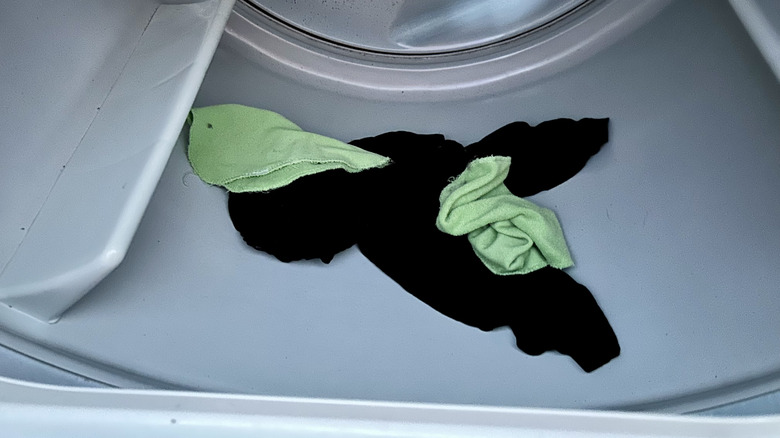
Performing each variation of the lint-removal hack was very simple. I tossed a shirt and two microfiber washcloths in an empty dryer, chose the dryer setting I wanted, and hit the "start" button. Since I was working with fabric that was wet but not particularly delicate, I used a hot dryer setting for every trial.
I initially thought that each trial would take 20 minutes. However, this wasn't quite enough to see the results of the hack. I gave each shirt an extra 10 minutes of tumbling time to prevent them from being too damp or wrinkly when removed, and so I felt confident that I'd given the washcloths plenty of time to work their magic. Though some variations of the hack worked better than others, all four had removed a significant amount of lint by the half-hour mark.
I also took a few steps to make sure that the washcloths had a fair shot at removing lint from the shirts. For instance, I made sure that the microfiber washcloths were free of lint before each trial so that pre-existing fuzz wouldn't skew the results. I also cleaned the screen of the dryer's lint trap following each trial to prevent safety hazards and make drying as efficient as possible.
Does this lint-removal method work?
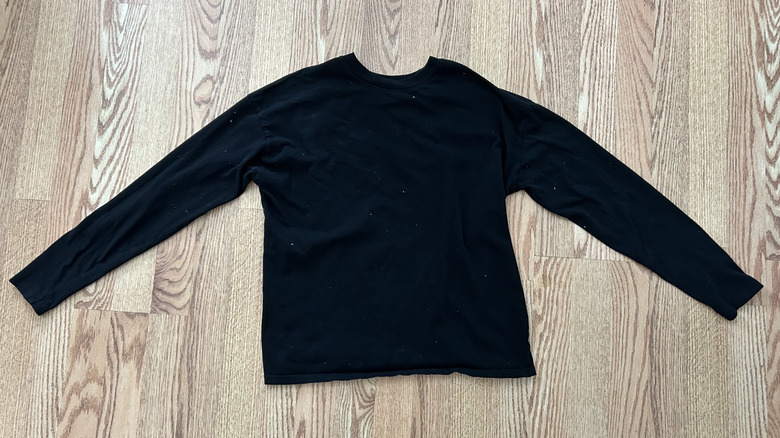
Though the wet washcloths did a pretty good job of removing lint from the two dry T-shirts, I had to use a lint roller to pick up several pieces of fuzz that had refused to let go. In contrast, the dry washcloths were terrific at taking lint off the two wet shirts. There was hardly any lint to remove from the long-sleeved shirt after it tangoed with the two larger washcloths in the dryer. The smaller microfiber washcloths also turned in a performance so strong that no lint roller was required afterward.
All in all, this hack seems like a worthwhile addition to any laundry routine. In the future, I'd opt for the combination of wet laundry and dry cloths as this produced superior results. I may also try using a microfiber mop cover in place of microfiber washcloths if the washcloths are in use. I might even buy a few extra microfiber cloths I can use for lint removal, as well as cleaning my stainless steel appliances.