

Found A Rabbit's Nest In Your Yard? Don't Do This
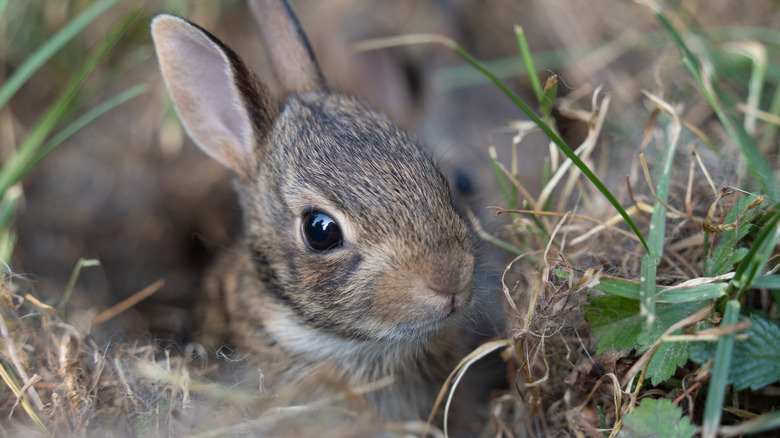
Throughout most of the United States, spring through fall is considered lawn-care season, a period when yards and gardens require the most maintenance. It is also rabbit mating season. Rabbit pairs can produce new litters of bunnies every 30 days or so, often resulting in up to half a dozen litters for the year. With that in mind, there is a chance that your mowing routine and your local rabbits' habits will collide at some point during spring, summer, or fall, resulting in you having to contend with a nest in your lawn. If you do find a rabbit's nest in your yard, don't disturb the babies!
Although you might think it's far-fetched that a rabbit would choose to build a nest in your lawn, it is more common than people realize. It can even happen if you've taken various humane steps to keep rabbits out of your yard. So, it is important to check your yard for rabbit nests before you mow. What you're looking for are actually a few subtle signs, as bunny nests typically appear as small disturbed areas in your yard. You may see shallow holes, a patch that is brown or doesn't match the rest of your lawn, or tiny tufts of fur atop your grass.
Any of those signs warrant a closer inspection. Gently move the dead grass to the side and peak inside. If you see baby bunnies, you have discovered a rabbit nest. However, resist the urge to move the baby rabbits. Unless the bunnies are obviously injured, leave the nest the way you found it.
Disturbing baby bunnies can do more harm than good
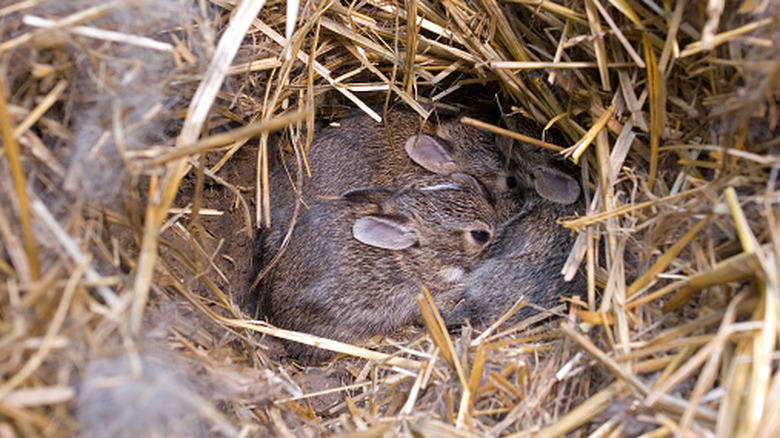
Although the baby bunnies may appear to be abandoned, that is not likely the case. Mama rabbits only visit their little ones a couple times a day to feed and groom them. Typically, this is dawn and dusk, and they go about it fairly sneakily, so you might never see the doe rabbit. Even if you have touched the nest, the mother will come back as long as it is still intact. But, if you are unconvinced that they are still being attended to, you can place a few sticks over the nest in the early evening. If those sticks are moved during the night, the mother has returned.
As long as the mother is visiting, the babies shouldn't be moved. If it becomes obvious at some point that the mom isn't coming around or the babies become obviously sick, they may need to be relocated. However, you should call a wildlife removal professional rather than do it yourself.
Instead of removing or disturbing the nest, you should mark its location and make adjustments to how you mow your lawn to avoid the rabbit nest. Keep your mower and string trimmer at least 10 feet from the nest. You should also keep children and pets away from the baby bunnies, which are very easily stressed. Mowers and kids can literally stress them to death, while dogs and cats might attack them. Additionally, any of these stressors could cause the mother to stay away from the nest. Although these precautions may seem like an inconvenience, it won't be for long. Baby bunnies typically vacate the nest once they are just three weeks old.