

The Easy-To-Grow Indoor Plant That Bursts With Colorful Blooms
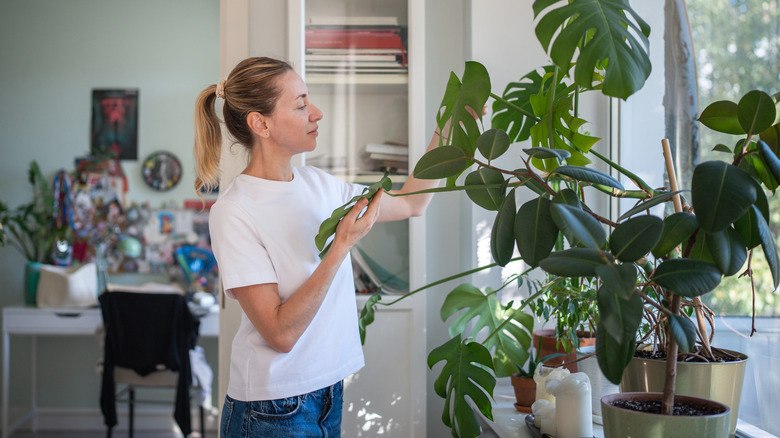
When considering indoor plants, you might first think of some of the most common selections, such as snake plant, Boston fern, spider plant, and Chinese evergreen. Some houseplants may even produce pretty flowers, such as orchids, cyclamens, and African violets. Because of different lighting and care needs, not all indoor plants produce flowers. If you're looking for a flowering plant you can easily grow indoors without a lot of hassle, you might consider clivia (Clivia miniata).
Known by the nicknames "bush lily" and "flame lily," clivia is coveted for its bright orange clusters of flowers and large dark green leaves. As a bonus, clivia flowers are also relatively long-lasting. The plant is native to tropical regions of southern Africa, and it's suited for hardiness zones 9 to 11 when grown outdoors in the U.S. With that said, clivia is not exclusively an outdoor plant. Clivia can, in fact, make for a low-maintenance indoor plant, especially if you don't live in a warm tropical environment.
Before bringing clivia indoors, be aware that this plant can be toxic to humans and animals due to poisonous lycorine alkaloids. As such, you may want to avoid clivia if you have cats, dogs, or young children who might accidentally ingest parts of the plant. If you do have pets, consider alternatives such as plants that are absolutely dog-friendly.
How to grow clivia plants indoors
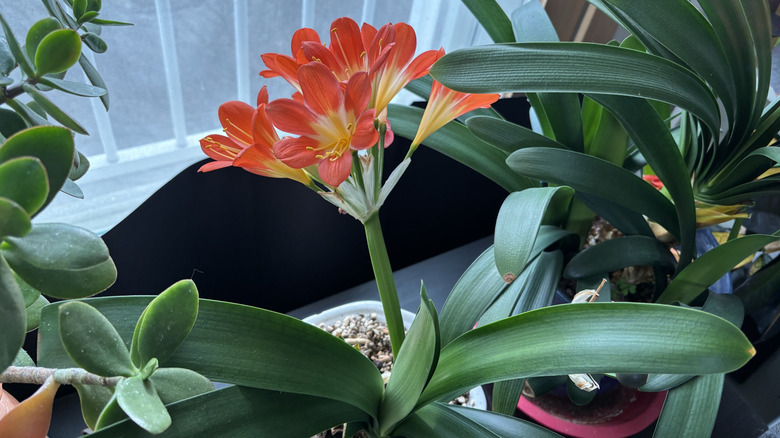
Clivia will provide your household with pretty foliage and flowers, so long as you follow a few rules of care. First, make sure your clivia plant is exposed to a source of bright indirect light inside your home. Ideally, this should be near north-facing windows, or those that face the east or west. Also, while clivia is considered drought-tolerant, you should water this plant whenever the soil feels dry. For best results, water at the soil level only, and try to do so in the mornings only. Do not overwater clivia, as it is vulnerable to rot.
Ironically, clivia also needs exposure to cooler temperatures in order to flower by springtime. The Wisconsin Horticulture Division of Extension recommends providing clivia with fall or winter dormancy for at least a month by exposing the plant to nighttime temperatures between 36 and 50 degrees Fahrenheit. In other words, you might need to bring the clivia outdoors at night on a temporary basis. Keep in mind that clivia doesn't tolerate frost, so you will need to monitor air temperatures carefully. This is followed up with an additional one to two months of reduced water intake. As soon as you notice new flower stalks, you can provide clivia with more water and bring it back indoors.
Whether you grow clivia indoors or outdoors, know that this is a slow-growing plant. According to the North Carolina State Extension, it may take a few years for a new clivia plant to bloom. If you're eager to enjoy its beautiful orange blooms sooner, consider selecting a developed plant from a local nursery instead of starting from seed.