

Keep Your Aloe Vera Plants Lush And Thriving With A Simple Watering Tip
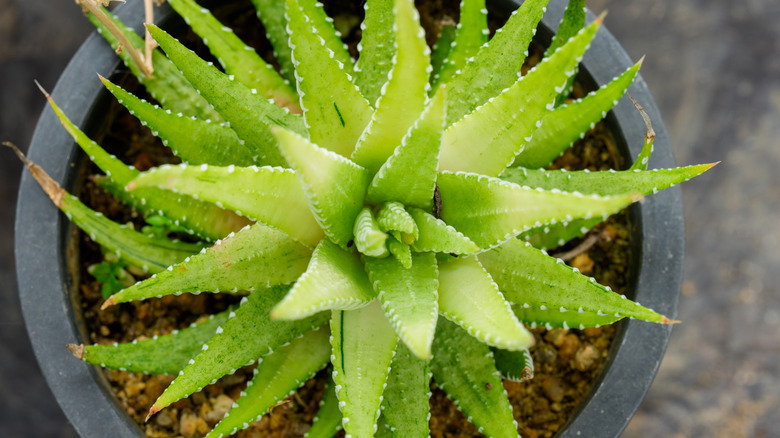
Aloe Vera (Aloe barbadensis miller) is a very popular plant among casual and ardent gardeners alike. This is partly due to its myriad medicinal uses and distinctive appearance. Another reason it is so popular is that this succulent is quite simple to grow and can live for more than a century. While aloe vera is relatively maintenance-free, if you want to keep your plants lush and thriving, it is important to establish a regular watering routine and know how to adjust it when necessary.
Given that aloe vera plants are made up of more than 95% water, it's no surprise that a regular watering routine is necessary. However, it may be an eye-opener that the watering routine is designed mostly to prevent overwatering rather than underwatering. Although they are primarily composed of water, overwatering or watering too often can cause aloe vera plants to develop drooping, mushy, faded leaves and root rot. Although overwatering is the main issue to avoid, underwatering can also cause issues. Aloe vera plants that don't receive adequate hydration will typically have shriveled, wrinkled leaves with brown or yellow tips.
Making sure your aloe gets just the right amount of water
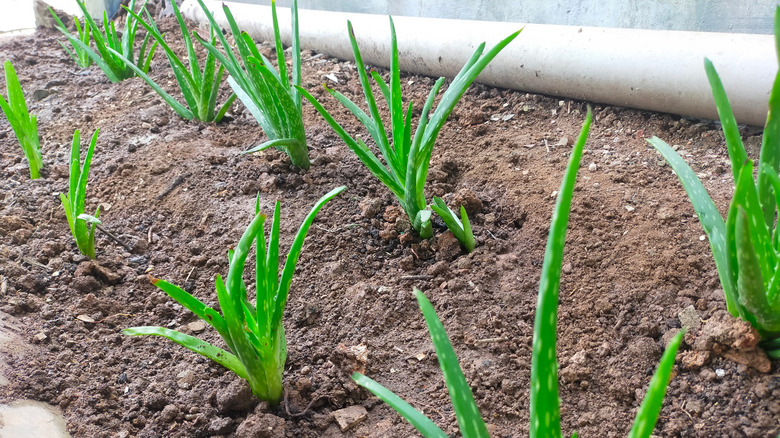
The importance of establishing a good watering routine is underscored by the fact that, most often, if an aloe vera plant dies, it is due to over- or underwatering. Additionally, if you hope to see your aloe vera plant bloom, it is important that it receives the right amount of water consistently. How much and how often you water your aloe vera depends on the season, whether it is kept indoors or outdoors, and the size of the container.
As a general rule, during the warmer months of spring and summer, a thorough watering every two to three weeks is sufficient. In the cooler months of fall and winter, when aloe is dormant, watering can be reduced to about once a month. However, while that is a good baseline for establishing a watering routine, it is also important to check the soil before watering. Regardless of your schedule, you should not water your aloe plant unless the top couple of inches of soil are dry.
When you water, it is important to give the aloe a deep enough drink so the water penetrates to its roots. However, don't let the water pool or saturate the soil. For plants in containers, use pots with adequate drainage holes and discard any excess water after 10 minutes. Additionally, aloe plants in pots should be watered from above, not below. Whenever possible, use collected rainwater. Another option is to use rice water for aloe plants to give them a shot of nutrients when watering.