

The Tiny Pest That's Lurking In The Snow: What To Do If It Gets Indoors
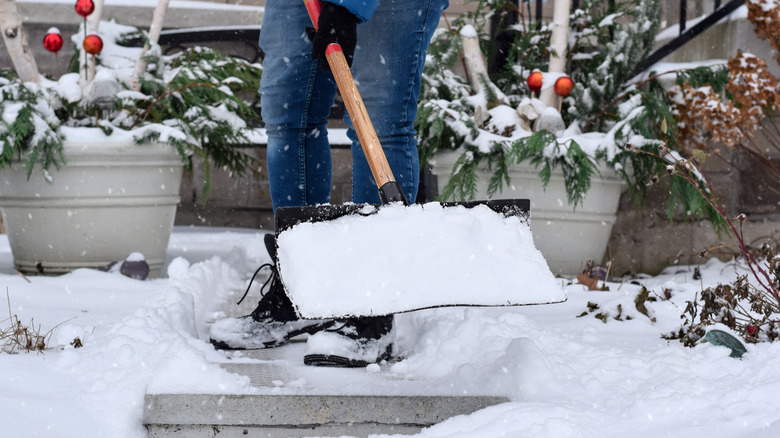
It's typical to experience a bit of a reprieve from pests during the cold winter months. This is particularly the case with warm-weather pests, such as mosquitoes and ants. A lack of warm temperatures and reduced humidity doesn't mean your property is totally in the clear when it's cold outside, though. Not only are some of the same creatures still around in smaller numbers, but there are even some winter-specific ones to be aware of. Such is the case of the snow flea (Hypogastrura nivicola), which may sometimes infest homes.
Snow fleas get their name from their increased visibility during the winter months. They are not actually fleas at all. Instead, these common flea-like bugs belong to an insect-like group known as springtails. Contrary to popular belief, these small jumpers are not exclusive to snowy, wintry conditions. In fact, they may be present year-round in your garden's soil or even under leaf piles around your yard. Unlike many types of insects though, snow fleas can tolerate extreme cold. If there's winter precipitation on the ground, you're more likely to see them because of the way their dark, bluish-gray bodies contrast with the whiteness of snow. When present in large numbers, it's even possible for patches of snow flea-infested snow to look like it's turned black. According to the University of New Hampshire, millions of snow fleas may cluster together! They also tend to gather around solid items low to the ground, such as house foundations and the bases of trees. Snow fleas are attracted to sources of food in the snow, such as algae and fungus.
Spotting snow fleas, and why they may enter your home
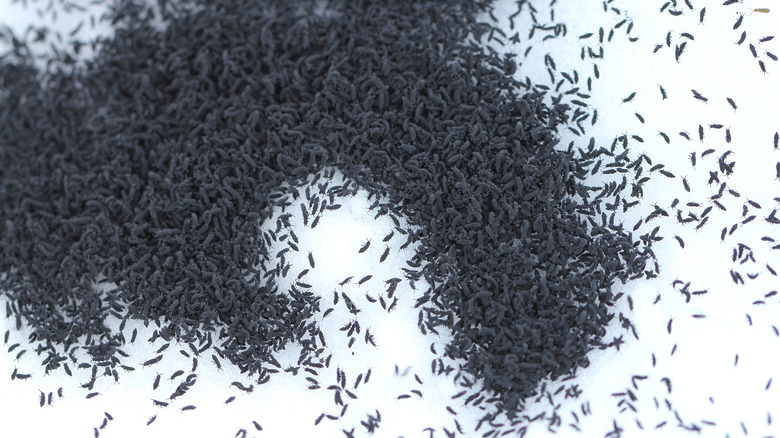
While seeing snow fleas can be alarming at first, the good news is they do not pose any health risks to people and pets. However, it's still important to keep these bugs out of your home, as they may turn into a nuisance. Snow fleas are considered beneficial in yards and gardens because of their ability to break down organic matter in soils.
You can identify snow fleas by their color and their size of only approximately 1/10 of an inch in length, per the University of Minnesota. Despite their small sizes, they're easy to spot when they cluster together. Another telling sign is their ability to jump surprisingly far distances of several inches at a time.
While snow fleas typically stay outdoors where food sources are plentiful, they may occasionally come inside during dry conditions to seek moisture. They will not bite you if they make their way into your home, but it's possible for their characteristic large numbers to become problematic. It's even possible for infestations to grow massive enough to cover interior walls. Needless to say, this is not something anyone wants to see in their home, even if they are harmless.
How to handle a snow flea infestation in your home
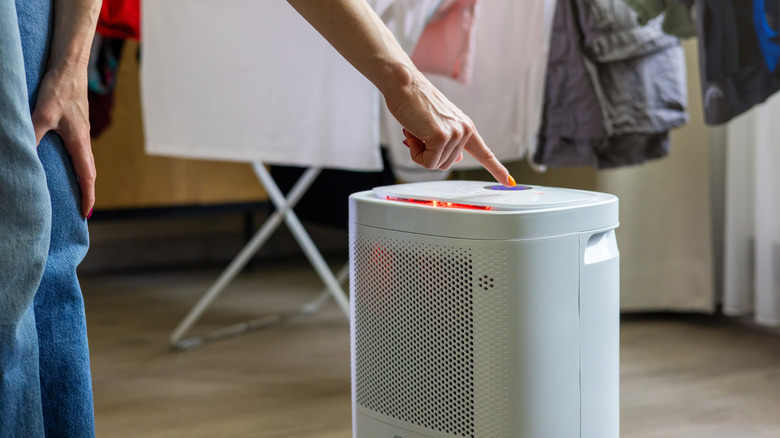
Snow fleas can be challenging to manage once they've taken up residence in your home, but they are not impossible to control. If you think you have a snow flea infestation, the first step is to address sources of moisture that could be attracting them into your home, a common first step whenever you identify household pests. This includes checking for dampness in basements and bathrooms, as well as plumbing leaks that may need repair. Running a dehumidifier can create conditions that are unfavorable for these critters, but you could try out other ways to dehumidify a room without buying this appliance, too. You'll also want to make sure any houseplants are not overwatered, as saturated soil is appealing to snow fleas.
Once you reduce moisture in your home, chances are that snow fleas will leave these drier conditions. If you still see some springtails though, you can physically remove them with a vacuum, making sure that you empty the bag or canister outdoors. Consider contacting a pest control expert for snow flea infestations that persist despite vacuum removal and addressing moisture in your home.