

The Fruit Tree You Can Grow Indoors Even In Winter And Lower Light Conditions
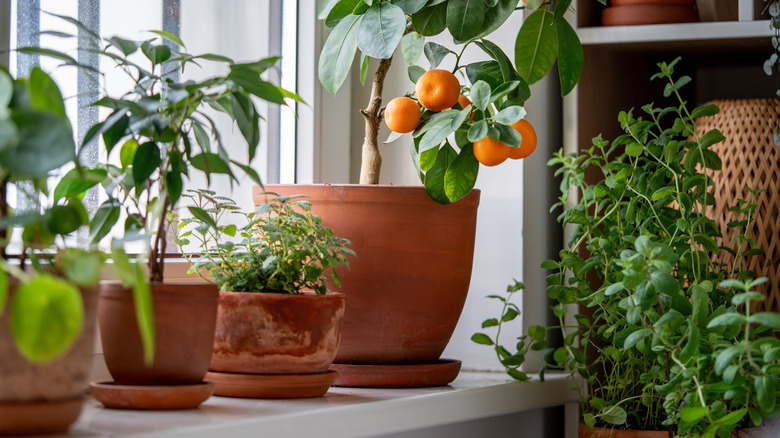
Depending on where you live, you might need to take extra steps to protect plants from seasonal frosts and freezes. Some in-ground perennials can be protected with frost fabric, blankets, and other types of coverings. On the other hand, it often makes more sense to transport certain small container-grown fruit trees indoors for the winter, and there are a variety of indoor plant ideas to consider. With the right lighting and watering, arabica coffee trees (Coffea arabica) are among some of the fruit tree options you can grow indoors during the cold winter months.
Arabica coffee is known for its red or golden berries and pretty white flowers that emerge within a few years of planting. The fruit's dried seeds (beans) are also famous for helping to create your morning cup of coffee. Given the fact that arabica coffee trees are indigenous to tropical regions in East Africa, you might assume that the plant is not all that suitable for certain climates. This is true for outdoor growing conditions, as the tree is considered hardy in zones 10 through 12 only. Commercially, arabica coffee trees are grown in tropical areas outside of their native eastern Africa, including parts of southeast Asia, South America, Central America, and Hawaii. There may be an exception to the tropical climate rule when growing this plant indoors, though.
One note of caution before growing arabica coffee trees indoors: be mindful of any pets or young children you may have in your household. According to the University of California, the plant poses the risk of minor toxicity. When ingested, arabica coffee can cause diarrhea, vomiting, and other symptoms.
How to grow an arabica coffee tree indoors during winter
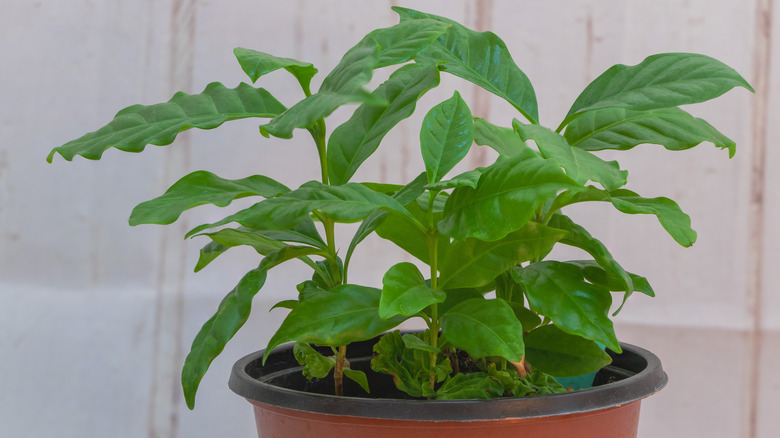
While commonly grown for ornamental qualities in yards and gardens, arabica coffee can also be grown indoors as small container trees. This doesn't mean you can simply bring the container indoors and forget about it, though. For success, you will need to consider the plant's growing needs while making some adjustments for its temporary indoor environment.
First, the tree prefers bright and indirect light when indoors. With this in mind, the best spot for your arabica coffee tree near an east-facing window that has sheer blinds. This is unlike indoor plants that thrive in front of north-facing windows. Any other window may still technically work, but be careful with westward windows due to intense afternoon light — this could increase the risk of leaf burn. (It's worth noting that when grown outdoors, arabica coffee trees generally thrive in partial shade conditions.) You'll also want to avoid placing arabica coffee directly underneath air vents, as it can dry out this humidity-loving plant.
Indirect lighting isn't the only criteria that can make or break the health of an indoor arabica coffee tree. You'll also need to ensure the plant has moist (not saturated) soil, and that there are enough holes at the bottom of the container to encourage good drainage. Leaf wilting is a common sign that your arabica coffee plant needs more water, but it can also indicate overwatering too. Make it a point to feel the soil every day — if it's dry, give your coffee tree some water. On the flipside, let it be if the soil feels overly wet or soggy.