

Don't Forget To Prune This Hydrangea Variety Before Winter Is Over
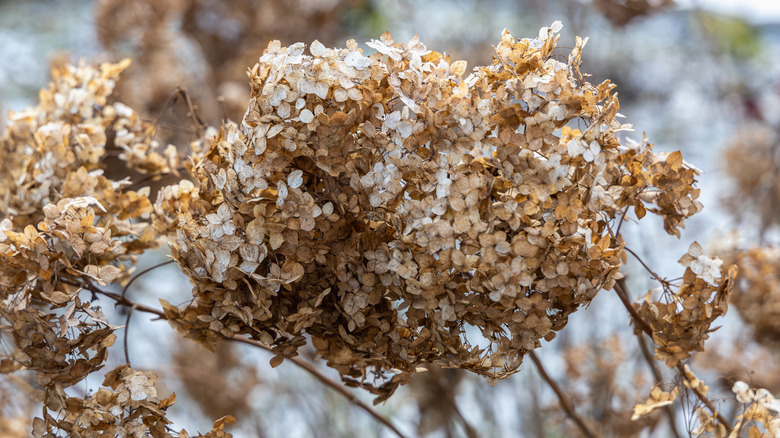
Hydrangeas are fantastic, versatile flowers that come in many different shapes and sizes. Knowing how to grow hydrangeas is important for their general health, but there's a care step that can vary quite a bit depending on the type of hydrangea you have. Different varieties require pruning at different times and in different ways. If you have smooth hydrangeas (Hydrangea arborescens) in your garden, prune them in late winter or early spring for the biggest and best flowers.
Smooth hydrangeas thrive in USDA Plant Hardiness Zones 3 through 9, and they bloom on new wood. This means that flowers only grow on branches that grew during that year. Old wood, or branches from previous years, sometimes still bloom, but these flowers tend to be smaller. Pruning during late winter (or early spring if you live somewhere colder) while the shrub is still dormant will encourage it to grow more new branches during spring.
Your smooth hydrangeas will focus more energy on putting out fresh branches to replace the cut ones, rather than simply growing new leaves on the old wood. However, if you wait too late and prune them after they emerge from dormancy, your plants might not have time to grow new wood before their summer bloom time arrives. Dormant pruning also reduces stress, so waiting too long may cause them to struggle. If there are already new leaves visible, it's unfortunately too late to prune your hydrangeas.
How to prune smooth hydrangeas
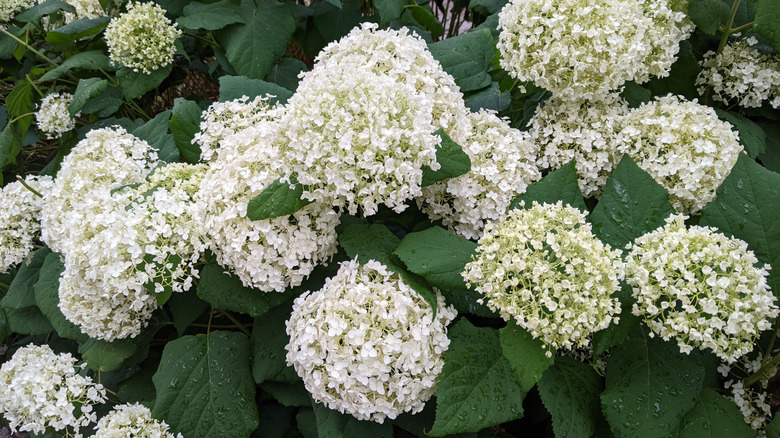
Start by ensuring your pruning shears are sharp and clean to avoid unnecessary damage or the spread of harmful bacteria. Next, decide which pruning method you want to try. Smooth hydrangeas need some amount of pruning, or else they can become top-heavy and struggle to support themselves, but you can take multiple approaches. If you like your smooth hydrangeas' existing size and shape and don't mind having some smaller flowers, a light trim will suffice. Knowing the difference between trimming and pruning may be helpful here. First remove any branches that are damaged, diseased, or dead, then cut any branches that are too long.
Many gardeners prefer to simply cut smooth hydrangeas down to a few inches above the ground and let the shrub start fresh each year. Your shrub will stay smaller and more compact if you take this route, but it will have larger flowers. This option is particularly appealing if you have limited space and need your hydrangeas to stay small but don't want to sacrifice bloom size. It's also generally quicker, since you won't need to analyze the shrub and determine which branches to keep and which to cut.
However, cutting them back every year may not be the best option in the long run. A study by the Mt. Cuba Center in Hockessin, Delaware found that after repeated annual cut-backs, some plants began growing fewer flowers, leading the researchers to recommend pruning only ⅓ to ⅕ of the branches (via Fine Gardening). That said, the reduced flowering only began after three years of cut-backs, meaning you may be able to split the difference by alternating between heavy and light pruning each year.