

The Overlooked Fix For A Cold Garage This Winter
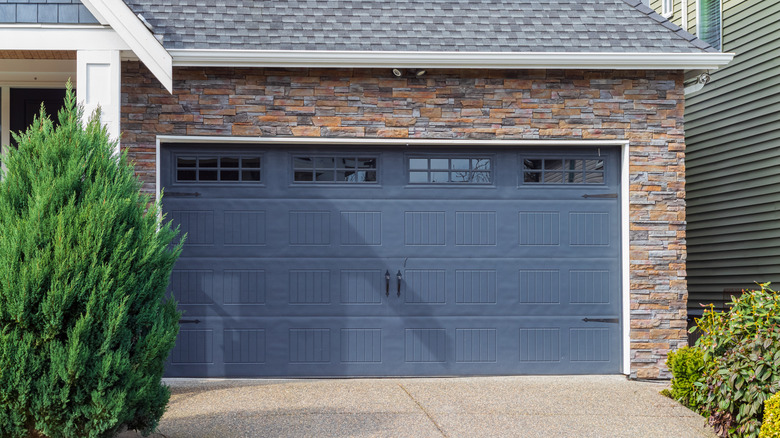
You may be looking into garage storage and organization ideas to improve your storage situation, but if you can't even step into your garage without shivering, there's a simple adjustment you can make to help it warm up. An insulated garage door might be just what you need to keep your garage pleasant, even during winter.
Insulated garage doors are exactly what they sound like — doors with an extra layer of insulation in the center to help regulate the temperature inside the garage. They're particularly useful if your garage shares a wall with your house, since the lower temperatures inside the garage can influence the temperatures in your home. Improved temperature regulation means a lower heating bill, as it takes less energy to maintain your ideal temperature. If your garage isn't attached to your home, but you spend a lot of time in it, an insulated door may still be worth it to keep your garage comfortable. In addition to temperature regulation, the extra padding in the door can help muffle noises and add extra protection against damage.
However, there are a few factors to keep in mind. Insulated garage doors come with a higher price tag and that may not be worth it for everyone. If your garage is free standing and you spend minimal time in it, an insulated garage door may not be useful. Additionally, if you live in a mild climate and the cold doesn't bother you much then you may not get much benefit from extra insulation. You should also ensure that it doesn't cut off ventilation. While it may make your garage warmer, too much insulation in your garage can be unsafe if toxic fumes have nowhere to go.
Choosing an insulated garage door
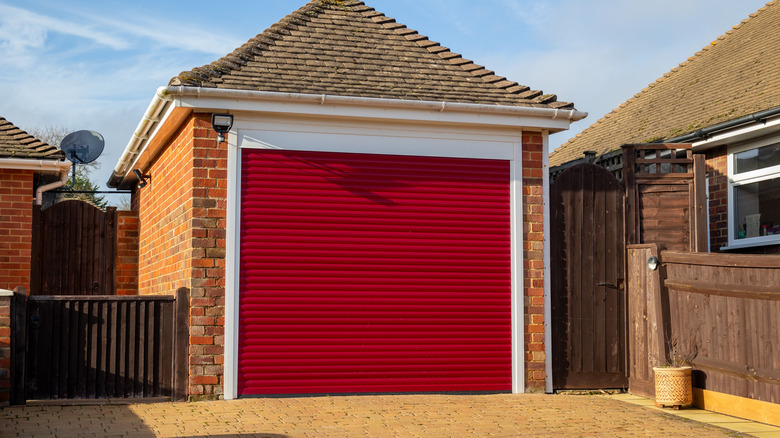
If you've decided that an insulated garage door is right for you, your next step is to find the right door. You may be able to match your existing garage door style and color to keep your house's aesthetic consistent, but there's more to consider than just appearance. Insulated garage doors have something called an R-value. This measures how effective the insulation is at keeping the temperature stable inside your garage. A higher R-value means the door is more effective, but doors with higher R-values also tend to cost more than those with lower ones. Consider how cold your region gets when deciding what level of insulation you need, as the price difference between low and high R-value doors can range from $300 to $1,200 dollars on average.
You should also consider the materials used and the number of layers. These can also impact R-value and cost. Insulated garage doors may be made of two or three layers, with three levels being the most effective, but also the most expensive. The insulation is commonly made of polyurethane or polystyrene. The names may sound complicated, but polystyrene is Styrofoam, and polyurethane is insulation foam. Polystyrene is less effective, but more affordable, while polyurethane is more effective and more expensive. The layers around the insulation can also be made of different materials, such as steel, vinyl, aluminum, or fiberglass, with aluminum being the most affordable on average. All of these factors can combine to create doors at different price points and R-values. Depending on your needs, you can balance these different factors to create the perfect insulated garage door for you.