

5 Easy Ways To Melt Sticky Grease And Gunk Off Of Kitchen Cabinets
We may receive a commission on purchases made from links.
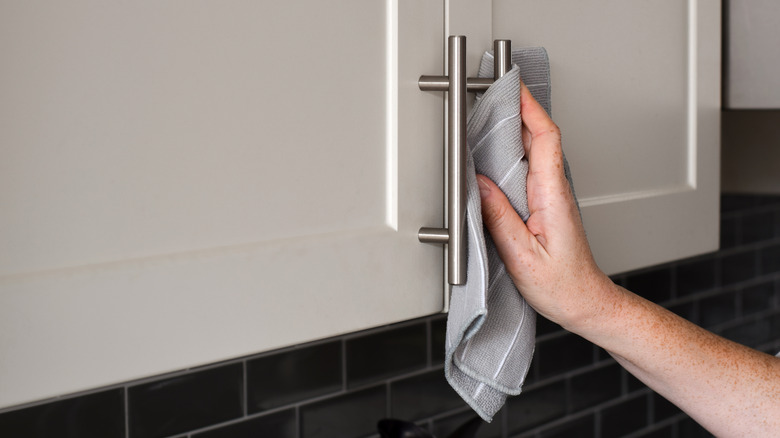
Gleaming kitchen cabinets are beautiful — unless that "shine" is actually a bunch of sticky grease and gunk that's built up over time. Hot oil splatters can multiply at every meal, attracting flour, dust, and other airborne particles. Although that combination may sound extremely unappetizing to you, it's a feast for kitchen pests like ants, cockroaches, flies, and even mice. Besides, reaching for a spice jar and coming back with sticky fingers is just plain gross. Fortunately, there are several common household items you can use to bring your cabinets back to life with a good cleaning.
Keep your cabinet material in mind when selecting the best cleaning method. Nonporous surfaces like laminate and stainless steel are often easier to clean. Meanwhile, wood cabinets add both beauty and maintenance time to the mix, since they're more likely to scratch or warp if you choose the wrong cleaning products or technique.
Professional maids recommend working your way from top to bottom, which means you'll need to pull out your trusty step stool and reach for a powerful handheld vacuum to clean the tops of your cabinets if they don't reach the ceiling. If you're due for a serious deep clean, you should also empty and vacuum the inside of each cabinet. This is a good opportunity to spot any sticky spills or rings left from bottles of olive oil or vinegar and to nab cobwebs or crumbs that have accumulated in the corners. Finally, clean the fronts and frames before drying them thoroughly.
Use dish soap and warm water
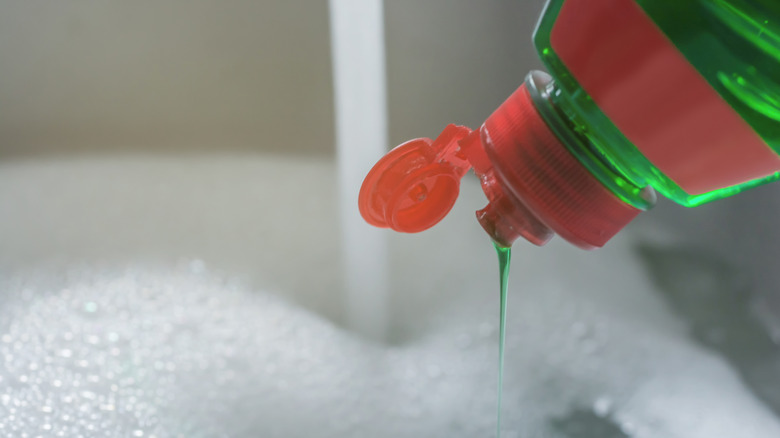
Dish soap is just as effective at cleaning grease off your kitchen cabinets as it is at cutting through the crud on your pots and pans. Most dish soap products are formulated the same way. The superstar ingredients are surfactants — chemicals that help water and grease mix together while also creating foamy bubbles that trap dirt so it can be easily removed.
"For most surfaces, a mixture of warm water and mild dish soap will suffice. Dip a soft cloth or sponge into your cleaning solution, wring out any excess liquid and gently wipe down the exterior of your cabinets," Kathy Cohoon, operations manager at Two Maids, told The Washington Post. If decorative grooves or your cabinet handles are part of the problem but the size of your sponge is making things awkward, gently scrub them with an extra-soft toothbrush dipped in your soapy water.
It's a good idea to rinse your cabinets with a separate cloth dampened only with water to make sure you don't leave any soapy residue behind. Work quickly and avoid using sopping wet rags. This is really important if you have wooden cabinets, since they are naturally more absorbent and are prone to staining or even delamination when they're exposed to too much moisture. Do a final wipe-down with a dry cloth to remove any remaining water.
Mix vinegar and water together
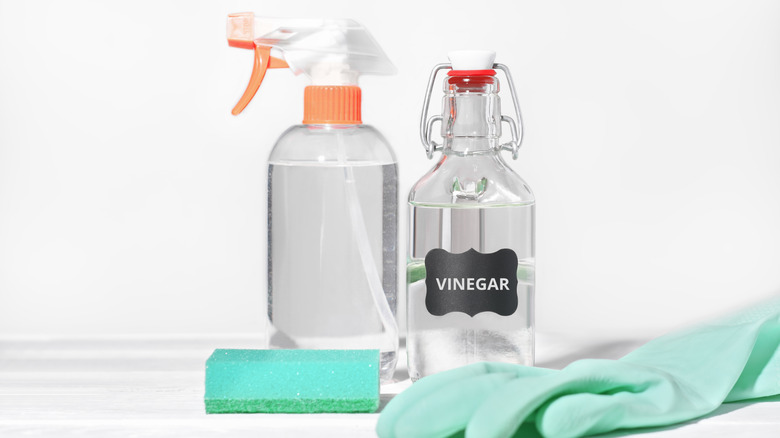
Vinegar and water is another simple two-ingredient mixture that melts grease right off kitchen cabinets. It's cheap and non-toxic, making it a great choice if you're battling more gunk than grease. The acetic acid in vinegar dissolves grime through a different chemical process than surfactants. Essentially, it breaks down mineral deposits while also killing a wide range of foodborne bacteria you're likely to find in your kitchen, including E. coli and Salmonella. There are a few ways to use vinegar to clean your kitchen cabinets. But before you get started, cover any natural stone countertops with old towels since vinegar can dull, etch, and slowly dissolve them.
Once you've protected your vulnerable surfaces, a spray bottle filled with equal parts water and vinegar becomes an effective weapon whether you're deep-cleaning or doing a spot treatment. Give the mixture a few minutes to penetrate dirt or fingerprints, which will help lift them right off the surface. Don't be afraid to use a little elbow grease to remove any dried-on bits of food, since the vinegar is likely to soften them. For really stubborn spots, you can apply undiluted vinegar using a soft cloth.
You shouldn't have to worry about your diluted vinegar spray staining or damaging laminate, glass, or stainless steel cabinets. However, you may want to consider doing a spot test in an inconspicuous area to be on the safe side. Since it's not pH neutral, many cabinet experts suggest avoiding vinegar on wood cabinets altogether, since it can damage or discolor them.
Combine vegetable oil and baking soda
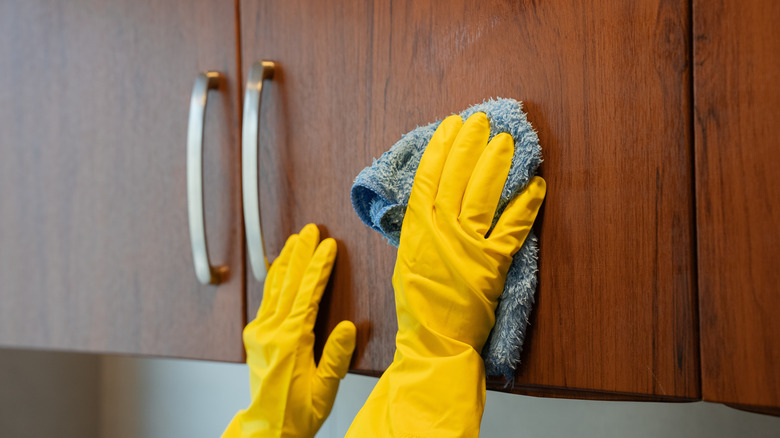
Although it might seem counterintuitive, it turns out there are a few oil-based ways to clean thick layers of grease off your kitchen cabinets. The one you've probably heard of is Murphy's Oil Soap, a popular and affordable cleaning product designed particularly for wood. Made primarily of water and sodium tallate, an oily wood pulp byproduct, it's available as a spray or concentrated formula you can mix with warm water before applying it to your gunky wooden cabinets with a soft sponge. It gets plenty of rave reviews from Amazon customers who love the way it restores shine, but make sure you rinse well after cleaning to avoid leaving behind a sticky film.
If you don't want to invest in a $15 bottle, but you have some vegetable oil on hand, there's another DIY option you may want to consider. Some cleaners and range hood experts (who know plenty about kitchen grease!) suggest mixing one part oil and two parts baking soda into a smooth paste to clean sticky cabinets, hinges, and handles. Apply it with a microfiber cloth in gentle circular motions before washing the paste and grime right off. It's a good idea to follow oil cleaning with a quick round of dish soap and warm water, unless you're using a "dry" oil like linseed or walnut, which will harden into a protective coating when exposed to oxygen. Then, use a buffing motion to dry them for maximum shine.
Try lemons and salt
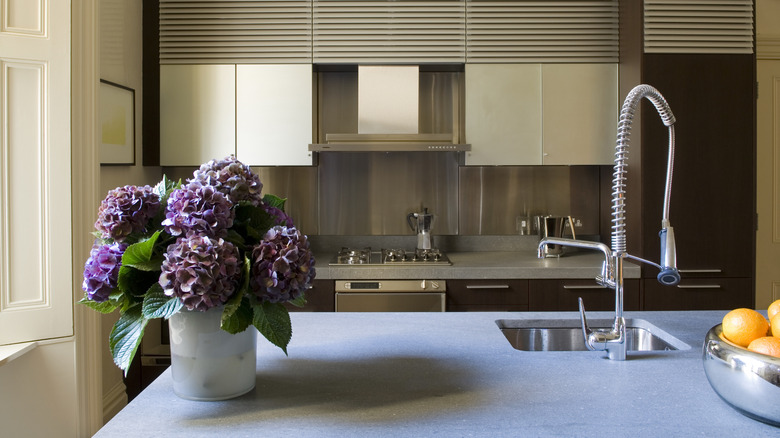
There's one cabinet material you might only expect to find at your favorite restaurant, but stainless steel kitchen cabinets are blindingly beautiful in residential homes, too. For many, the appeal lies in how easy it is to clean and sanitize the non-porous surface. Whether yours are softly brushed or polished to a mirror-like surface, wiping with the grain is crucial to avoid tiny scratches that dull the finish. Always use soft rags or microfiber cloths instead of sponges, and avoid abrasive powders. Bar Keepers Friend Cleaner and Polish Spray and Weiman Microfiber Wipes are popular stainless steel cleaning products on Amazon that reviewers love. But at between $20 and $25, they're way more expensive than a simple cabinet cleaning ingredient you probably already have on hand.
Lemons are an effective and non-toxic alternative. The same citric acid that makes you pucker up naturally dissolves grease and removes stains from stainless steel. Lemons also have deodorizing properties that help when kitchens are plagued by funky smells. For spot-treating, try dipping a wedge in table salt and using a gentle scrubbing motion until your cabinets shine.
Several Redditors swear by the lemon method for stainless steel cabinets as well as pots and pans. One contributor to r/LifeProTips summed up this effective method, posting, "What I'd previously sometimes spent an hour trying to clean cleared up in literal seconds. And it works consistently, and doesn't take a ton of it. Surely the higher acidity is a major factor, but being able to not have to resort to anything beyond a simple kitchen staple and not chase voodoo magic to clean these pans anymore is a godsend."
Grab some rubbing alcohol
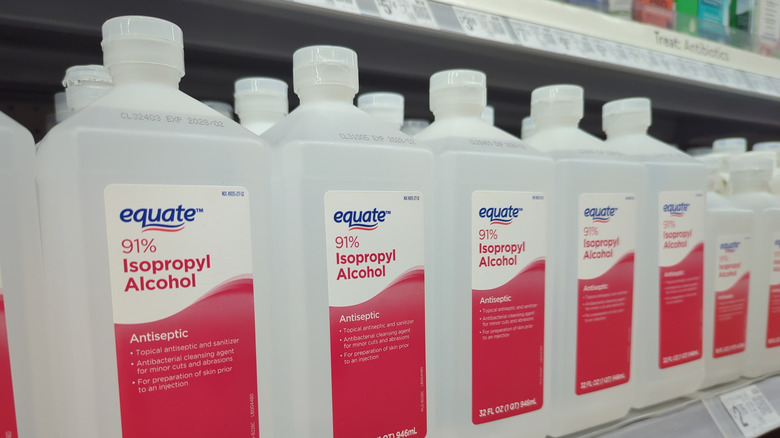
Glass cabinets can really elevate the look of your kitchen as long as you keep them sparkling. If you want to avoid the eye-watering fumes of ammonia sprays, dish soap or vinegar can be used to keep grease at bay. However, if it's been a while since your last cleaning session, or if your kitchen cabinets have leaded glass where gunky build-up loves to collect over time, rubbing alcohol is a better solution. The same disinfecting qualities that make this inexpensive pharmacy staple so effective on small cuts will quickly sanitize your glass. Since it's a powerful solvent, rubbing alcohol quickly dissolves grease and oil. It also evaporates quickly, meaning you'll avoid those pesky streaks that some other cleaners leave behind.
There are two different ways to clean glass with rubbing alcohol. Directly applying a small amount with a soft cloth is an excellent way to remove stubborn fingerprints or unidentified sticky stuff. You can also apply rubbing alcohol more liberally with the help of a spray bottle. Either way, allow it to sit on the surface for a few minutes before wiping it up. To avoid scratches, using a lint-free cloth is always best when you're cleaning glass. You may be among the surprising number of people who love the way rubbing alcohol smells, but it can be toxic if inhaled in large quantities. It's a good idea to turn on your range hood or open a nearby window while cleaning your kitchen cabinets to ensure adequate ventilation.