

Ditch The Reno: There's A Way To Refresh Countertops Without Replacing Them
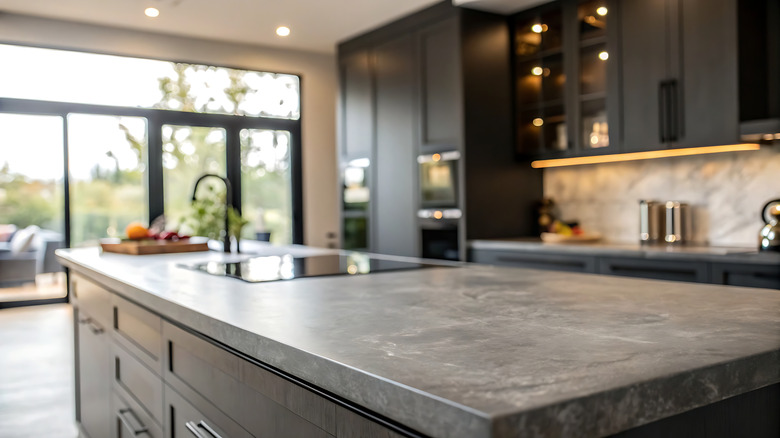
Countertops are essential for storing items and having work space in your kitchen or bathroom, and a well-planned countertop can even tie the whole room together. If you want to undertake a bigger project, there are plenty of countertop upgrade ideas you can put into practice. If you don't have the budget for that, file those ideas away for later use and instead try this simple way to refresh your countertops using a skim coat.
A skim coat is a thin layer of material applied over the existing countertop, giving it a fresh look and covering minor damage like stains, surface cracks, or uneven surfaces. For countertops, a skim coat in concrete is typical. You can apply it over a countertop of any material, so don't stress if your countertops aren't already concrete. However, you do need the surface to be clean and sturdy for the coating to adhere properly. For example, if you have old laminate countertops that are warped and peeling, your skim coat may not be able to dry flat and could end up cracked.
Skim coats have a few advantages over total replacements, such as being more affordable and easier to DIY. However, it does take time to complete. The concrete needs time to cure, and you may need multiple layers to get the look you want. Like most DIY projects, it's likely that your finished countertop will have a handmade quality to it. The good news is that small flaws are actually part of the 2026 "planned patina" trend, so you don't need to stress about them. In addition to the concrete skim coat, you'll need a trowel to apply it, some sandpaper, eye and mouth protection, and a sealant. Optionally, you can also use concrete stain or paint to decorate your countertop.
How to apply a skim coat to your countertops
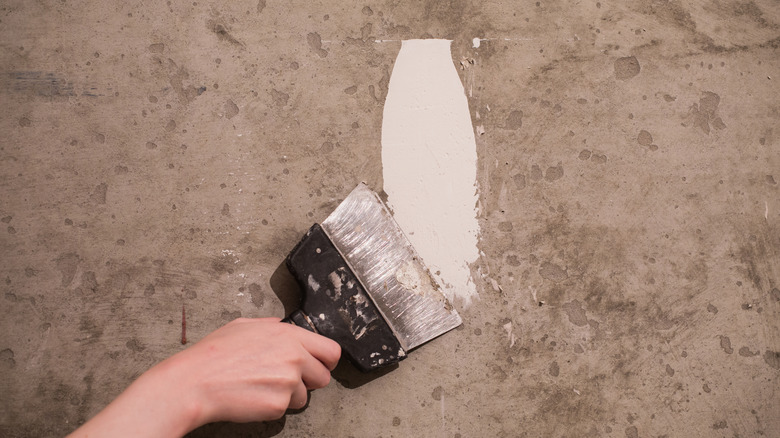
Start by cleaning your counters and removing any warped or wobbly surface layers. Smooth countertops, such as laminate and tile, should be scuffed with sandpaper before applying the skim coat. Otherwise, the concrete may not adhere properly. Otherwise, make sure your countertops are sturdy and mix up the skim coat. Remember to put on your eye protection and mask to avoid getting concrete dust in your eyes or lungs. You can use a standard concrete mix, but add additional water so it's thinner. A ratio of 1 gallon water to 50 pounds concrete is a good starting point, but you can adjust it as needed until you have the thickness you want. If you plan on adding multiple layers, a thinner mixture is ideal, while a thicker mixture is better suited to a single layer.
Apply the skim coat using a trowel in a thin layer, smoothing it out as much as possible. The layer is typically less than ⅛ inch thick and may be much thinner as long as the entire surface is covered evenly. To coat the vertical edges of the counter, you can let the mix dry slightly so it is slightly thicker and firmer before applying it. Let the concrete fully dry, then use your sandpaper or sander to erase any bumps that were accidentally missed. You can repeat the process for additional layers, or apply any stains or paints you want to add if you're satisfied with your first layer. Finish your countertops with a concrete sealant to protect it from stains and damage. You may want to look into concrete repair products in case it cracks before you're ready to apply another skim coat, but otherwise you're all set.