

Always Keep Your Wood Ashes — They Help Keep These Garden Pests Away
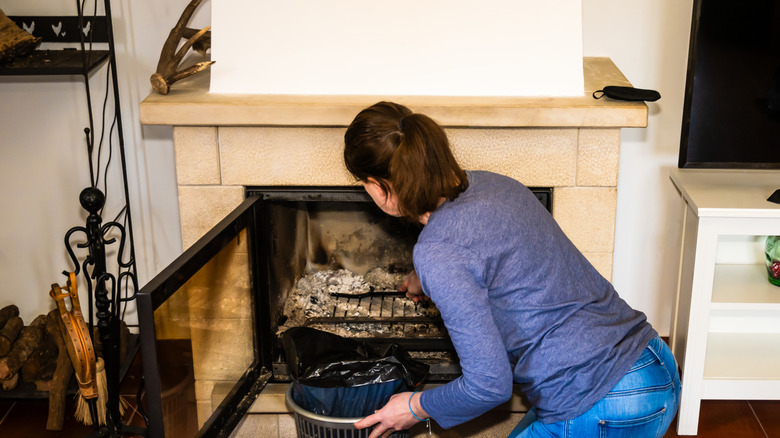
You may already have a habit of reusing ash from fireplaces and fire pits, but are you taking full advantage of all it has to offer in the garden? This byproduct of burnt wood can be used to adjust the pH level of soil that's overly acidic and add small amounts of potassium, phosphorus, and other nutrients. In certain situations, you might even use it to control slugs without turning to synthetic pesticides. Slugs do whatever they must to avoid contact with wood ash because their soft bodies can't tolerate it. The texture is too abrasive, and salts found in the ash will harm and rapidly dehydrate them. This also seems to be true for their shelled counterparts, snails.
Ashes from certain types of wood may offer better slug protection than others. According to an article from Applied Sciences published in 2020, a research team found that ashes from beech, oak, fir, and spruce trees offered strong protection against Spanish slugs, whereas ashes from hornbeam, chestnut, and black alder trees did not. The researchers deemed oak and spruce ash the best candidates for organic slug control on small farms, since they "caused high mortality and inhibited slugs' feeding." To boost your chances of success, make an ash barrier around vulnerable plants.
How to fight garden slugs and snails with fireplace ashes
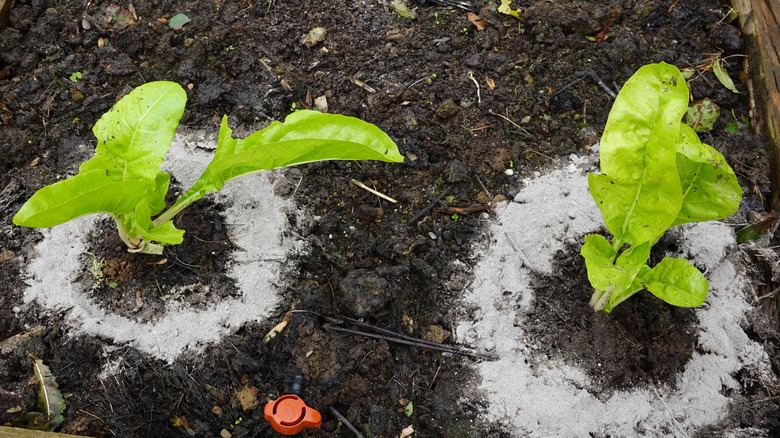
The ash barrier you place around the bases of slug-attracting plants can be more of a path than a wall. In other words, it doesn't need to be tall. Just make sure to fully encircle the plants you're trying to protect. Be diligent about re-applying wood ash after rain showers and other watering sessions. In addition to changing the texture of the ash, water will dilute and wash away the slug-stopping salts it contains. Consider pairing ash barriers with other types of organic pest control for maximum effectiveness.
A few words of caution: Before using fireplace leftovers to keep slugs and snails at bay, confirm that the parts of your garden you'd like to treat can handle ash. In general, wood ash shouldn't be used around blueberries, azaleas, magnolias, and other plants that crave acidic soil. Avoid using it if the soil's pH level is higher than 7.0, as it may make the growing environment too alkaline for many plants. It's smart to use wood ash sparingly. Even if you're just applying a little bit of it to your garden, wear protective gear such as gloves, goggles, and a dust-blocking mask.