

5 Dated Dining Room Trends Designers Are Ready To Put To Bed In 2026
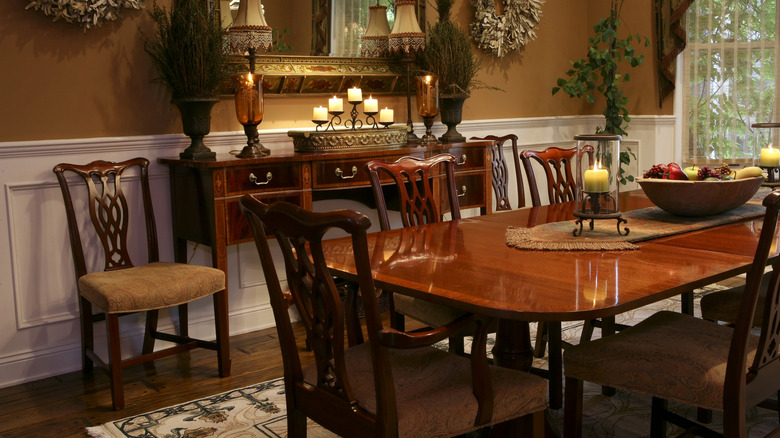
If you're like us, the very mention of "dining room trends" probably sparked some confusion. Didn't everyone say, just last year, that the dining room is dead? Far from it, and for some really good reasons. We'll look at some of the dining room trends that are going out of style — matching furniture, colossal chandeliers, old-school minimalism, and the old-fashioned concept of a dining room — and see what we can learn about the role dining rooms promise to play in our homes in the future.
Trends are complicated. Popularity doesn't always imply the unpopularity of alternatives. Just because there's a resurgence of round dining tables, for example, doesn't mean rectangular tables are on the way out. And so it is with the dining room itself. Reports of its death were greatly exaggerated by those who believed either open-concept dining or distinct dining spaces would win. That's not how popularity works, and that's certainly not how renovation budgets work.
It's also possible the dining room seems to be making a comeback specifically because of certain trends. It might be difficult, for example, to latch onto the current hutch trend in your open concept kitchen area, but it could be possible in an under-furnished dining room. If you converted your dining room to a playroom last year but just love the bold colors, huge murals, and funky shapes currently trending, you might very well decide to seamlessly switch the room back to its original purpose. If so, good for you. But as separate dedicated spaces re-emerge in popularity alongside this array of new interior design trends in 2026, we can say goodbye to several common characteristics that defined dining rooms of old.
Overly formal spaces
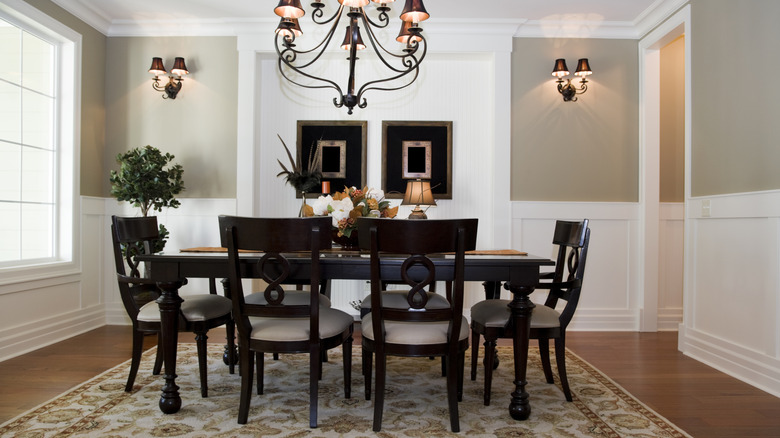
We tend to call them "formal dining rooms," but what we mean is something closer to "dedicated dining rooms." But there's no denying that they have tended to be overly formal and underly used over the years. (Because "underly" isn't formal English, get it?) In a bit, we'll work through the question of whether dedicated dining rooms are, in fact, trending. But let's handle one thing right up front: Formal dining spaces are no one's idea of a trendy notion.
A lot of the trends that are happening would be at odds with the formality of a prototypical formal dining room with its wainscoting, high-backed upholstered chairs, giant polished wood or marble table, and a crystal chandelier that will fall all the way through the earth if its poor ceiling joist ever lets go. None of that jibes with trends toward big murals, offbeat and colorful art, eclectic furnishings, warm wood, and playful patterns.
One phrase we keep seeing is "museum-piece dining room," and it's never framed in a positive way for today's designs. New interpretations are "replacing traditionally stuffy dining rooms with comfortable, cozy spaces that feel luxurious through richly layered textiles and earthy colors," designer Jayme Ritchie told Southern Living. "The goal is 'beautiful to behold, but approachable enough for everyday use.'"
Dining-only dining rooms

One trend that would make a formal dining room practically impossible is the movement toward turning them into multi-purpose spaces that are only sometimes dedicated to dining and entertaining. Perhaps you found a clever way to give your underutilized dining room new life, but now you're thinking a bigger table would be nice. Or maybe you're needing space for family board game night, so you're confiscating some of the dining room's schedule for that.
"As homes prioritize efficiency and flexibility, especially in smaller footprints, dedicating an entire room solely to formal dining no longer makes sense for many families," Designers Natasia Smith and Sandy Baisley told Home & Gardens. Indeed, if your home is more than today years old, you might be putting it through paces it wasn't really designed for, like accommodating work-from-home schedules or home-schooling. This is particularly true in apartments, where space is at even more of a premium.
It's possible to do such things in a formal dining room, of course, but it's not exactly practical. The cable management and storage issues alone would be virtually insurmountable. And just think of all the scratches! Which brings us to the related concept that multi-purpose rooms have multi-purpose furniture. Perhaps it's built-in cupboards for stowing away office stuff or more comfortable chairs for that Monopoly marathon. Maybe it's a folding table or a bike repair stand in there that doubles as a coat rack. Who knows what people get up to in their dining rooms these days? Whatever it is, it's awesome.
Modern, sterile minimalist design
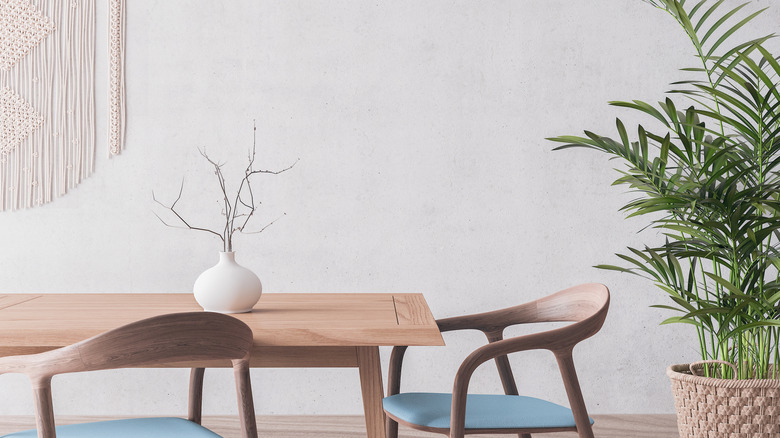
Many designers will tell you that minimalism is out of style, but some will proclaim that it's still trendy. What's certain is that the old way of doing minimalism was a popular dining room trend that's disappearing from homes. "The issue with super contemporary dining spaces is that the clean lines and simplistic, minimalistic approach can often slide into one-note, stark, standoffish territory pretty quickly when the design is not balanced correctly with warmth and texture," Hunker's own interior designer, Erika Dale, explained. She added that ultra-modern dining rooms "felt cold, unwelcoming, and uneventful, like a catalog page that lacked a point of view rather than a home."
You certainly don't need maximalism to avoid the look of a minimalist dining room design, but stark white will no longer do in 2026. It simply isn't compatible with trends toward jewel tones and other complex colors, textured finishes, bold upholstery patterns, showy statement pieces, and truly multi-purpose furniture. You can still marry most looks with some form of modern design ... modern and vintage are a great team, after all.
Matching furniture
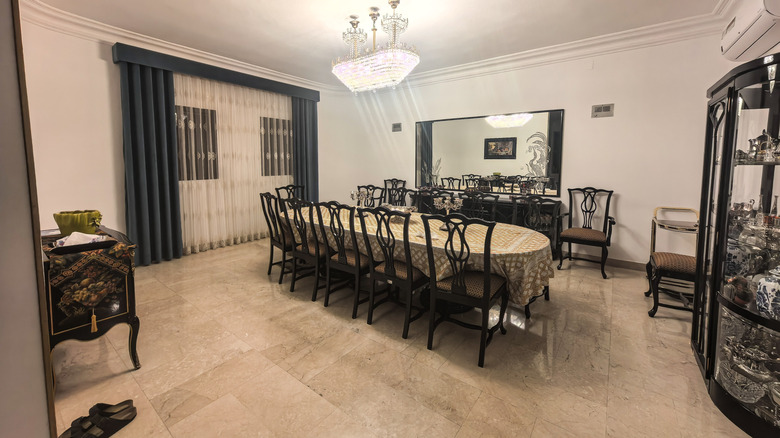
If you somehow didn't pick up on this already, we're happy to tell you that matching dinner room furniture is one of the dated dining room features that have lost their luster and will not be considered de rigueur for the foreseeable future. Okay, maybe not quite that long; after all, trends have a shelf-life of about 10 months, on average. You will want your dining room furniture to be cohesive in some way that you care about, but it's no longer considered trendy to have all the pieces appear to have come from the same catalog page. Perhaps you'll have a midcentury sideboard, modern chairs, and a live-edge table, for example, but you don't even have to get that matchy about it.
Indeed, having all your chairs match might raise a trendy neighbor's eyebrows. Okay, maybe not, but designers certainly don't think it's necessary. "When I'm choosing a dining table and chairs, I'm considering how they speak together without being a set," said Shea McGee of Studio McGee. She recommends taking in the tones and shapes of your emerging dining room style and finding compatible but contrasting materials, weights, and even scales between the chairs and other elements.
Oversized crystal chandeliers
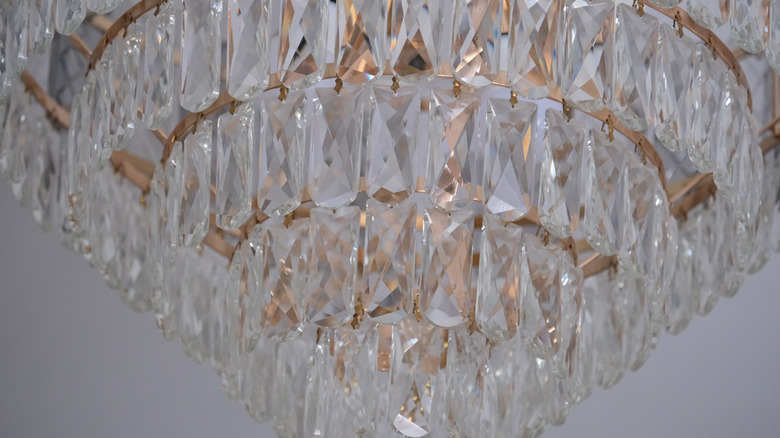
Remember that enormous chandelier that might find its way through the Earth to the Indian Ocean if it falls? Well, there's good news: You can get rid of that dated dining room fixture ... perhaps pawn it off on your proudly déclassé aunt or donate it to a craft project aiming to make 1,000 fake diamond rings for some reason. It's certainly a kooky thing to have in multi-purpose dining rooms, and might be a little distracting if you're trying to call attention to rich wallpaper or a dramatic mural.
But the problem is less the size or even the glam quality of the chandelier, but rather its period. A little vintage can make even the most crystalline chandelier okay again. "When you start with lighting that has history or patina, it gives you the freedom to introduce newer dining tables or chairs without everything feeling brand-new or matchy-matchy," designer Louise Copeland told House Beautiful.