

Prolong The Life Of Your Water Heater With Two Must-Know Tips
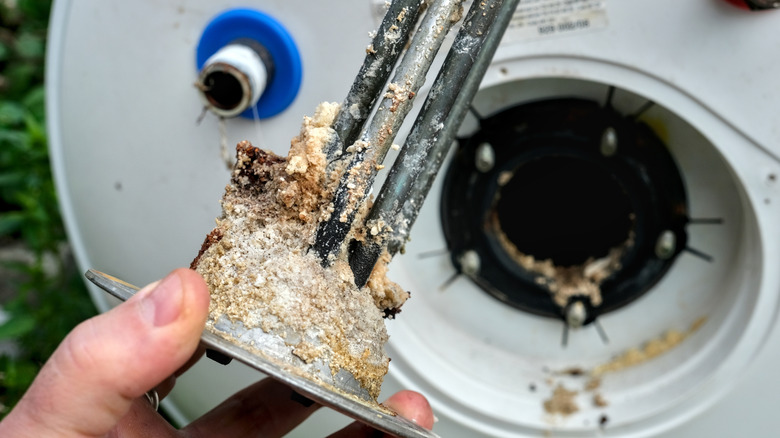
To many of us, water heaters are something of a black box. Water and electricity or gas go in, hot water comes out, and we don't think much more about it unless a sibling or spouse insists on using all the hot water before you shower. But there's actually some unusual stuff going on in your water heater, and if you don't keep an eye on it, you could eventually be dealing with an expensive replacement ... or worse.
Prolonging the life of your water heater means keeping it in a condition to heat water while not leaking all over your basement or utility room floor. But before we get into proper water heater maintenance, let's touch on one thing you can do to lighten its load every now and then and, thereby, prolong its life. Using your water heater's vacation mode will certainly make it less active while you're away, and it should save you money for that very reason. Typically, a water heater in vacation mode maintains a water temperature of about 50 degrees, enough to prevent frozen pipes and substantial bacterial growth. If your water heater doesn't have a vacation setting, you can manually set its temperature to 50-60 degrees before you leave.
It's also a good idea to turn off the water to your home before you are away for a substantial amount of time, even just a few days. This will prevent an unexpected leak — and they're all unexpected — from flooding your home. If you live in a cold area, it's also a good idea to drain any exterior water lines before you leave.
Annual water heater maintenance
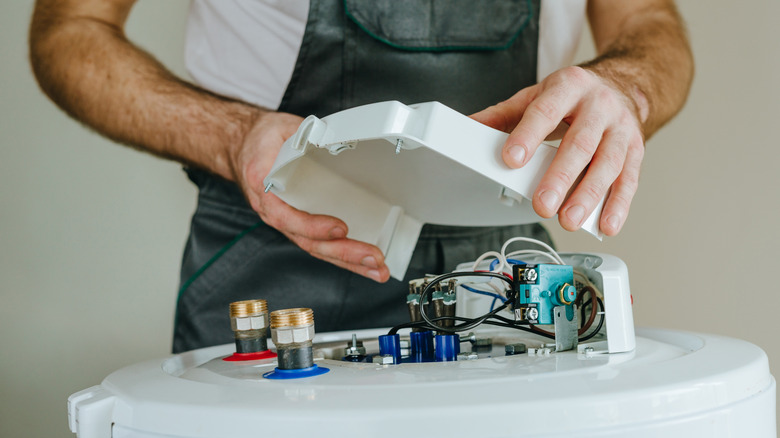
Most critical water heater maintenance tasks need to be performed annually. If you take a yearly vacation, since you need to check your water heater over before you leave anyway, consider going the full maintenance regimen then. Here's what's involved in your once-a-year effort to prolong your water heater's life. Safety first, as always: run down a safety checklist to prevent accidents and injury. Turn off the power or gas to the heater and shut off its cold water supply. Allow the water several hours to cool before you start interacting with the appliance. Wear protective gear and, if you're dealing with a gas water heater, be sure you have adequate ventilation in case any gas is released.
Check the function of the temperature and pressure relief (TPR) valve. This usually involves simply opening and closing the valve to make sure it releases water, then seals again completely. Release the water into a bucket, unless it's already piped to your home's exterior. You should also drain or flush your water heater annually. It's usually best to drain and flush it. This removes sediment that can collect in your water heater and cause performance issues.
Your water heater's sacrificial anode is a rod designed to take the brunt of any galvanic corrosion going on in the tank. You will want to check this for excessive corrosion, so add it to your list to check every year along with everything else. If you have a tankless water heater, follow a similar schedule: flush the water heater annually, and inspect its cold water inlet filter at least as often.
Other maintenance tasks
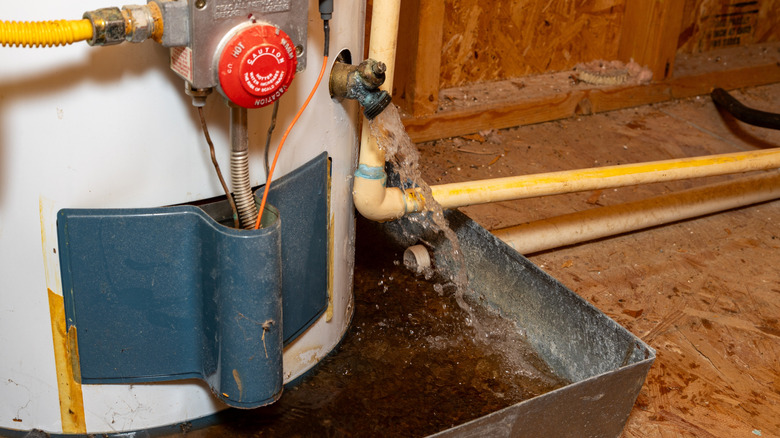
The other key maintenance task should be done at least annually, but it would be a good idea every few months. Check your water heater over for any signs of trouble. This is mostly a visual inspection, except where noted. Look carefully for leaks around the tank and any water connections. Check for visible corrosion of any sort, even hard water stains or superficial rust. Check the insulation around your water heater and any pipes in the area to make sure they're in good repair. Clean any air intake vents and, if you have a gas heater, check its venting system. Inspect electrical connections for loose wires and terminals. Since doing this can actually cause them to loosen, either tighten all connections or examine them with a thermal camera to see if there's any excessive heat present, which is often caused by loose connections.
Inspect the water heater's thermostat and (if you have an electric water heater) heating elements with a multimeter. For a gas water heater, check its pilot light periodically, especially if you suspect decreased performance. Test your cold water inlet filter, if one is present. And it's probably a good time to test your home's water pressure, which can impact water heater longevity.
It's a good idea to have a professional inspect your water heater, including the TPR valve, every five years, and more frequently as the system ages. If you find any problems during your DIY inspections, you might need to call in a pro, especially if you see signs it's time for a new water heater or if you are uncomfortable diagnosing and repairing any problems you spot.