

The Little-Known Trick That Removes Grease And Grime From Cabinet Hardware
We may receive a commission on purchases made from links.
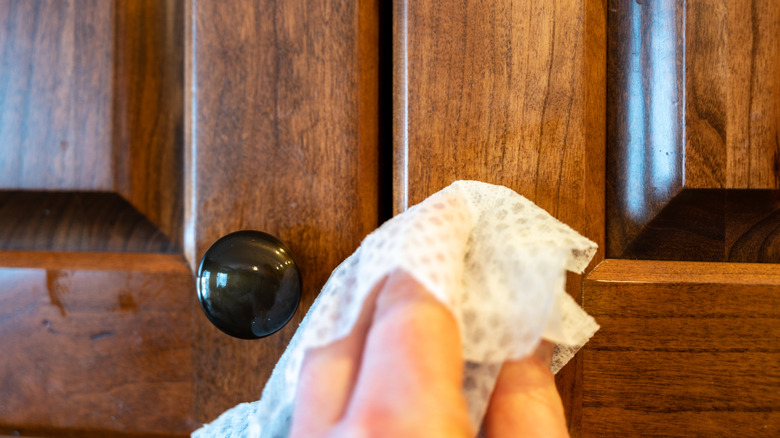
Those who love to cook know that meal prep is inevitably followed by cleaning. However, even if you take steps to prevent grease from building up in your kitchen and clean promptly after cooking, over time residue will cling to your kitchen cabinets and hardware. Sometimes, simply cleaning your cabinets with soap and water will be enough. However, for more stubborn buildups, there's a little-known trick that removes grease and grime from cabinet hardware — wipe them with WD-40. This trick will actually work on any greasy, grimy cabinet hardware throughout your home and garage, not just that found in the kitchen.
Ridding cabinet hardware of grease and grime is just one of the many surprising uses for WD-40. This tried-and-true household staple is effective for this purpose due to its solvent properties, as WD-40 is largely composed of Stoddard Solvent and other mineral spirits. These mineral spirits, which are the result of highly refining petroleum, easily remove grease by dissolving the molecular bond holding it in place and absorbing it. This means the grease and grime can be wiped away along with the solvent.
With that in mind, the original formula WD-40 will work for this purpose, as refined solvents make up half of each can. But if you have particularly bad grease and grime buildup and/or a lot of hardware to clean, it might be worth investing in a can of WD-40 Specialist Cleaner & Degreaser formula.
How to clean cabinet hardware and other hard surfaces with WD-40
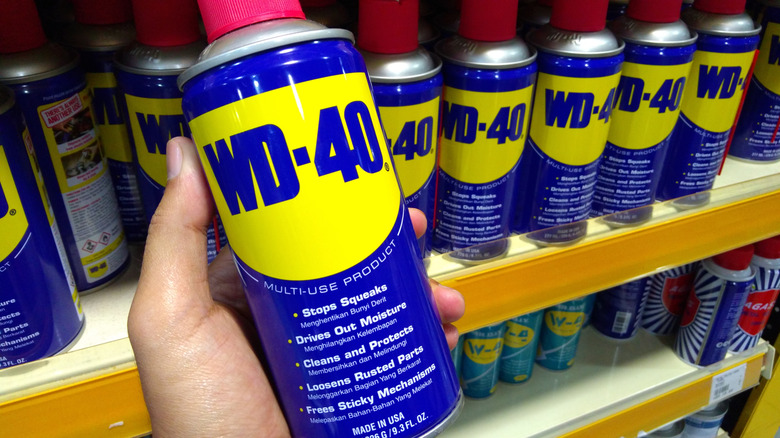
There are actually a few different ways to use WD-40 to remove grease and grime from cabinet hardware. The simplest method, which the company suggests for removing residue from hard surfaces, including kitchen floors, is to spray the grimey area with WD-40 Specialist Degreaser, let it sit for a few seconds, and then wipe it off. For thicker buildups, such as those that are often found around vent hoods, cabinet hardware nearest the stove, or those in workshops and garages, it can be helpful to use a small brush or non-abrasive scrubbing pad on the surface after spraying it with WD-40. If you are worried about the solution getting on your cabinets and possibly staining the wood or granite countertops, you can always spray it onto a rag or paper towel and use that to apply it to the greasy area.
If you want a more thorough, deep cleaning, you can always remove the hardware first. Once the hardware is off, put all the knobs and other metal parts in a container such as a bowl or tray. Liberally coat all the hardware with WD-40 and allow it to sit for as long as 20 minutes. Then, use a small brush or non-abrasive pad to scrub them before wiping them with a clean cloth or paper towel.
Whichever method you choose, as an added bonus, the WD-40 will remove rust if it has started forming on the metal parts of your cabinet hardware as well. It will also help prevent rust, as well as keeping your cabinet door hinges from squeaking.