

Experts Urge You To Do This If Leaving Your House Before A Freeze
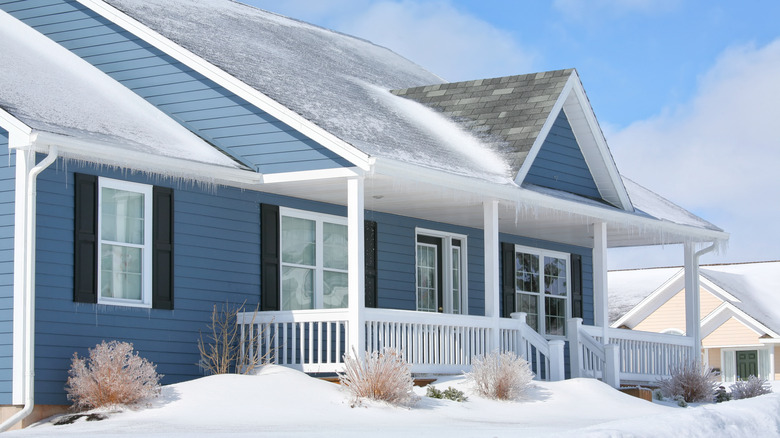
When you're going on a trip in the winter, it may be tempting to turn off the heat in your home, thinking that you'll save money on your utility bill. However, many pros note this as one of the top mistakes people make when leaving for a vacation. Trevor Shane, digital solutions lead and training manager at Bosch Home Comfort, explained to Real Simple how to set your heat when no one will be home: "If temperatures will be near or below freezing, therefore making your pipes susceptible to damage, it's crucial to keep the heat on," Shane said. "For very mild climates where the temperature doesn't often dip below 40°F, you may be able to set the heat lower with caution, depending on the quality and type of your system." Otherwise, he warns that your pipes could be in danger of freezing and bursting.
If you're leaving during winter, especially before an expected freeze, you'll want to take measures to prevent frozen pipes and keep your home safe until you return. Even if your pipes don't freeze, leaving the heat off still isn't a good idea and could actually end up costing you more in the long run. HVAC expert Brian White told Martha Stewart, "While you do save energy by reducing the temperature, completely shutting off the system can lead to your home losing too much heat, which could require a significant energy surge to reheat everything when you return." Instead, try slightly adjusting the thermostat to a lower temperature.
Expert advice on keeping the heat on while away
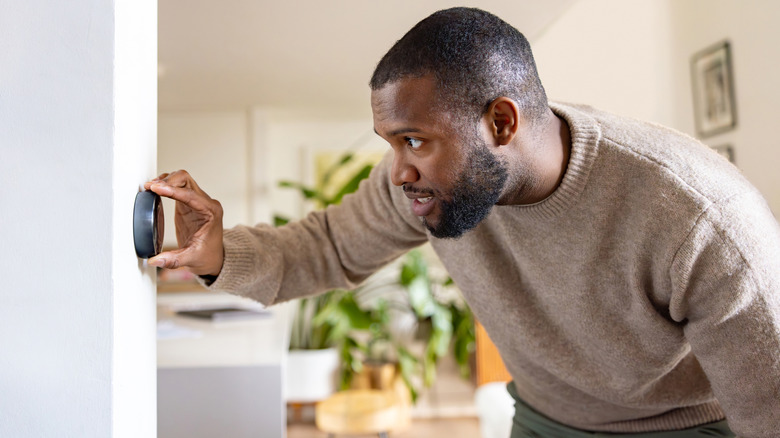
Turning your heat completely off while leaving the house for a while could lead to disaster, but you may be able to adjust the temperature a little bit to conserve energy and lower your heating costs. Josh Mitchell, owner of Air Conditioner Lab and an HVAC technician, let Better Homes and Gardens know what thermostat settings are safe for freezes. "Set your thermostat to around 55°F," Mitchell said. "It doesn't have to be comfortable, just warm enough to prevent frozen pipes and protect your HVAC system." He warns that adjusting the thermostat to an even lower temperature could put pipes in colder areas of the home at risk, but at 55 degrees, this can be a great heating tip to save money in the winter. When lowering the temperature from 68 degrees, Mitchell estimates that the savings on heating costs could be around 10% to 15%.
With older homes or spaces without great insulation, it may be a good idea to leave your thermostat at a higher temperature (around 60 degrees) to account for pipes in exterior walls that can quickly freeze. Besides the risk to your pipes, leaving the heat off could potentially create condensation and harm your electronic devices. In addition to leaving the heat on, you might consider shutting off your water supply valves if you're concerned about pipes freezing. Keeping your curtains closed and opening the doors to cupboards below sinks will also help to keep the heat inside your home and protect your pipes from frigid weather.