

How To Easily Repot Your Snake Plant So It Thrives For Years To Come
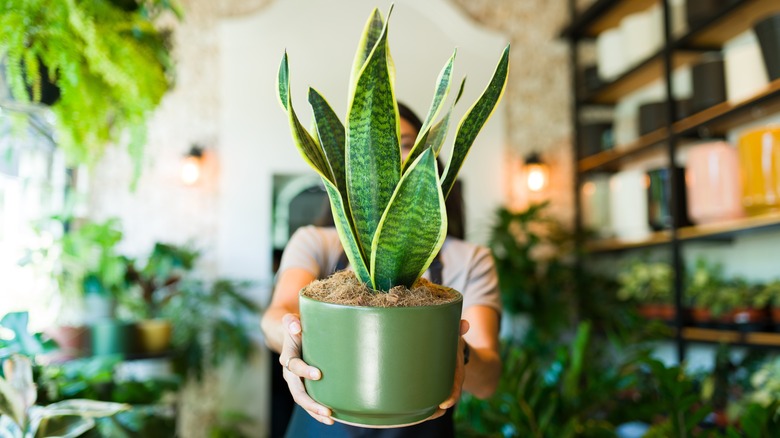
Snake plants (Dracaena trifasciata) are famous being low-maintenance indoor plants that you don't need a green thumb to grow. They can grow in a range of light conditions, including low light, so you can enjoy their bright green, sword-like foliage nearly anywhere in your home. As succulents, they store water in their leaves, so they rarely need watering, and these hardy houseplants can also handle average household temperatures and humidity with ease. Although there isn't much effort required to care for a snake plant, repotting them every few years – if done the right way — can do wonders for their health.
Before you grab a new container, make sure your snake plant is actually ready to repot. They like to be somewhat root-bound, so repotting too frequently can cause more harm than good. However, there comes a point when the root system becomes too overcrowded, leaving little room for soil, water, and nutrient uptake. Once the roots begin circling the bottom of the container or growing out of the drainage holes, it's a clear sign that the plant has outgrown its pot. You may also notice some signs before checking the roots, such as water draining too quickly or needing to water too much. Plus, as snake plants grow, they can become top heavy and will need a larger pot to balance out the weight. Mineral buildup on the soil, yellowing leaves or stunted growth can also indicate that it's time to repot.
How to move your snake plant to another pot
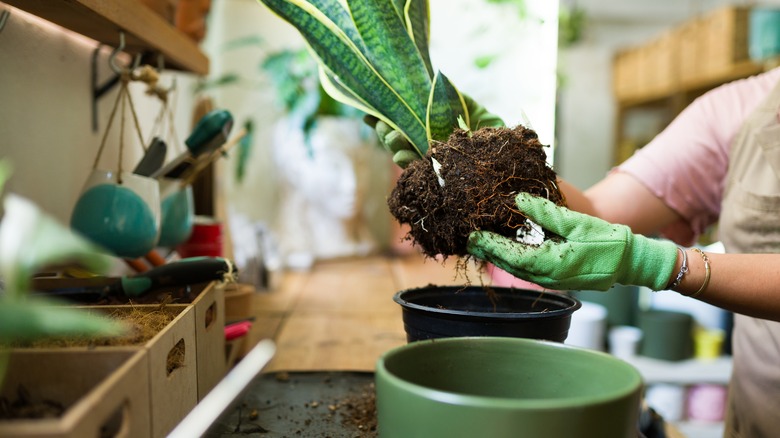
Technically, you can repot your snake plant at any time of the year, especially if it's struggling with any health issues. That said, it's best to do so in late winter to early spring, before the growing season begins. If possible, avoid repotting in fall or early winter when the plant is dormant. Because snake plants like to fit snugly in their pots, you should only go up one pot size, or about 1 to 2 inches. For top-heavy plants, a sturdy container material, such as ceramic, can help keep them stable. Whichever pot you go with, just make sure it has drainage holes at the bottom, as snake plants cannot withstand soggy roots.
To repot your snake plant, start by gently removing the plant from its original container and massaging the root ball to loosen the dirt. If you like, you can remove the offsets to make several smaller snake plants to enjoy around the home. Soil is the key to the health of your snake plant, so you want to make sure it drains well and has plenty of nutrients. Combine 1 part succulent soil with 3 parts organic potting soil to create the base. Then, mix in an equal amount of compost to boost the nutrient content, which will help your snake plant thrive. When transplanting, be careful to only cover the root ball to prevent crown rot.