

Removing Dried Super Glue From Metal Is A Breeze With This Household Staple
We may receive a commission on purchases made from links.
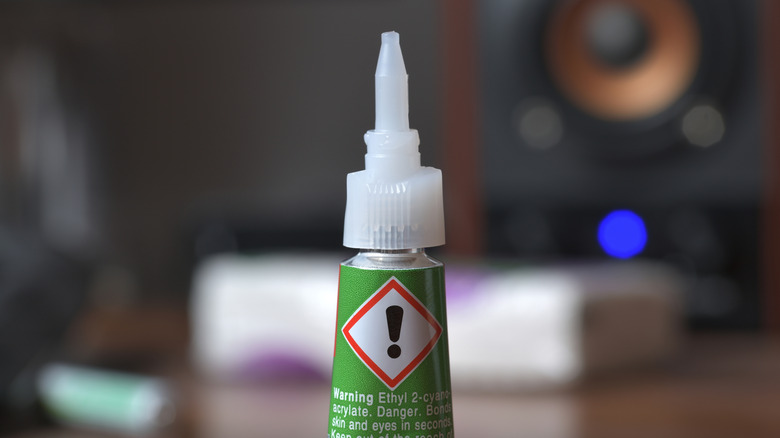
Super glue is unsurprisingly called upon for an array of household projects, crafts, and repairs. However, anyone who has utilized this quick bonding concoction has likely dripped a little on an unintended target at some point. Once dried, the stubborn bond to surfaces which make it an attractive option for these tasks can make rogue drips and drops difficult to remove. Luckily, if you were using super glue to bond metal, cleanup is a breeze with one household staple – vinegar.
Among different types of household glues and adhesives, super glue is often cited among the hardest to remove. To get dried super glue off of metal surfaces, acetone is often listed as the top choice, but it is harsh and can cause more damage than vinegar. Vinegar is effective in removing dried super glues because of its acidic properties. That is the result of fermenting alcohol until it turns into acetic acid and is then diluted with water to create white vinegar. The acetic acid serves to separate the glue from a metal surface by dissolving the bond.
To remove super glue from metal using vinegar, all you need is some white vinegar, cotton balls, a plastic scraper or credit card, and a little patience. To avoid spreading the glue over an even larger area, wait until it is completely dry. Then, use a cotton ball soaked in vinegar to wet the area. After a few minutes, attempt to remove it with the plastic scraper. If it remains stuck, place a vinegar soaked cotton ball on the area for anywhere from 10 minutes to an hour, then try to scrape it off. After it is removed, rinse all the vinegar off with water.
Pros and cons of using vinegar to remove super glue
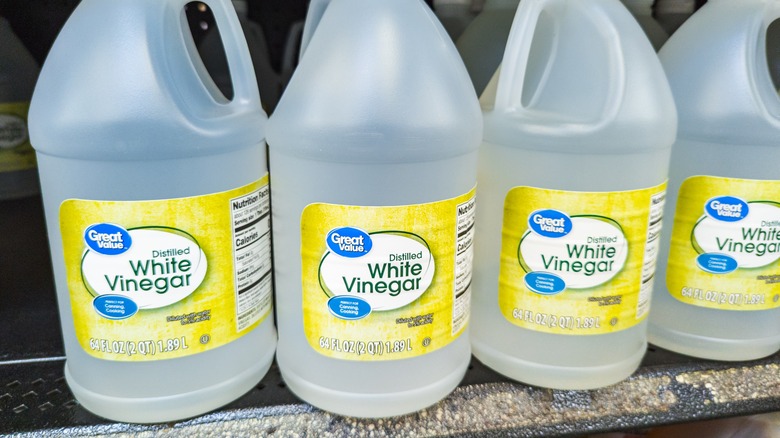
There are advantages and disadvantages to using white vinegar to remove super glue from metal. However, when compared to the most often recommended solution of acetone, vinegar tends to be more mild, less toxic, and more readily available. While both are acetic in nature, acetone is a very strong solvent, whereas vinegar is fairly weak, usually containing less than 10% acetic acid. Both are typically safe for use on bare metal. Vinegar, however, should be rinsed off thoroughly afterwards to prevent corrosion.
Painted metal and other materials are a different story. Acetone is primarily used in paint and fingernail polish removers. Using it on any painted metal surface will remove not only the super glue, but also the paint. While vinegar can soften paint and be used to remove it, it takes much longer to do so, making it a safer choice for removing super glue from painted metal surfaces. Additionally, vinegar can also be used to remove super glue from plastic, as it will not harm the plastic as acetone does. So, it is a better choice if any portions of what you are cleaning contain plastic parts.
One downside to using vinegar to remove super glue is it generally takes a little longer to work. However, while acetone is undoubtedly faster, you run the aforementioned risks of damaging paint or other materials. Plus, acetone is extremely toxic, while vinegar is non-toxic and considered eco-friendly. A final plus on the side of vinegar is that while you may not have any acetone or fingernail polish remover handy, most kitchen pantries are stocked with white vinegar.