

If You Put Baking Soda In Your Toilet Tank, Here's What Will Happen
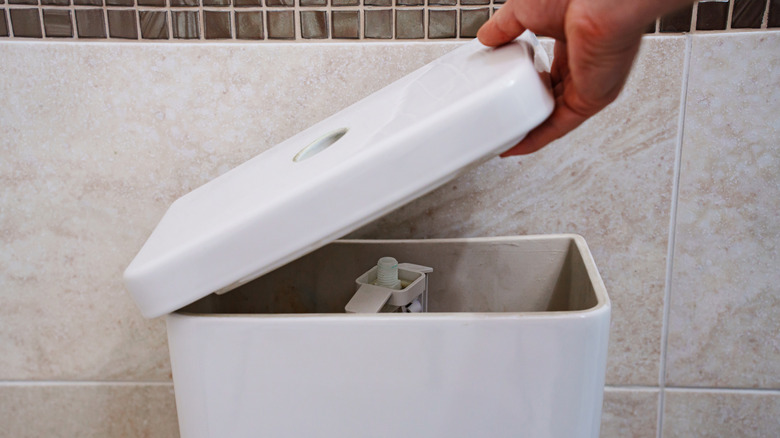
Baking soda is a popular household product with a variety of uses, ranging from baking to mouthwash to cleaning around the house. Not only is it versatile, but it's also inexpensive and biodegradable. Given that there are so many surprising uses for baking soda, you may wonder what would happen if you put it in your toilet tank. Doing so does have some benefits, including cleaning, deodorizing, and preventing future issues with your toilet system. However, it is not a universal solution — it won't help with plumbing problems or disinfecting the tank.
Perhaps the most noticeable benefit to putting baking soda in your toilet tank is that you'll have a better smelling bathroom. Baking soda is also known as sodium bicarbonate, a natural substance found in all living things that accomplishes scent neutralization by chemically reacting with odor-causing molecules. So, if you're looking for the best toilet deodorizer, you may want to grab a box of baking soda.
Another benefit you'll glean from putting baking soda in your toilet tank is balancing the pH level of the water. Toilet tank water is typically slightly acidic, which can degrade metal and rubber parts within the toilet more quickly. Using baking soda to balance the pH can help extend the life of those components. Baking soda can also limit the formation of various strains of mold, mildew, and bacteria that flourish in acidic water. If your home has a septic system, regularly adding baking soda to your toilet tank can keep the pH of your septic tank at the proper level as well.
Baking soda gets toilet tanks clean, but not germ-free
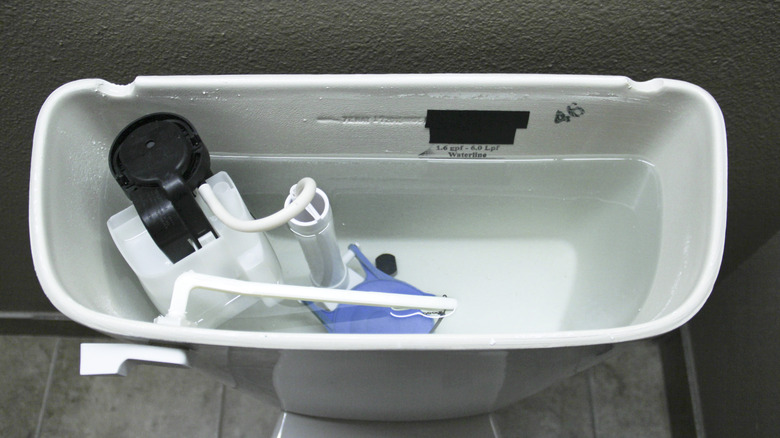
While there are definitely good reasons to put baking soda in your toilet tank, it won't take care of all your toilet maintenance needs. In terms of benefits, baking soda acts as a gentle abrasive that can assist in cleaning tank walls, as well as rubber and metal parts, without damaging or scratching them. It can also help prevent new mineral deposits, bacteria, mildew, and mold from forming on your tank walls and internal components, meaning less cleaning is necessary. Additionally, when light deposits and residue rings do form, it can make removing them easier.
However, despite all those positive attributes, baking soda has limitations. It will not remove, dissolve, or break down heavy mineral deposits. More importantly, although regularly using it in your toilet tank can prevent bacteria, mildew, and mold from growing, baking soda does not disinfect, nor does it kill germs unless mixed with vinegar or another disinfecting agent. To that end, if you do use baking soda in your toilet tank, you have to be careful what products you use to disinfect. Certain products, such as those containing ammonia or bleach, can cause a dangerous chemical reaction when mixed with baking soda.
One other thing baking soda will not do is fix faulty toilet tank components. If your float is stuck or flapper is not sealing, treating the toilet tank with baking soda will not help. Those repairs should be addressed separately.
How to use baking soda in your toilet tank
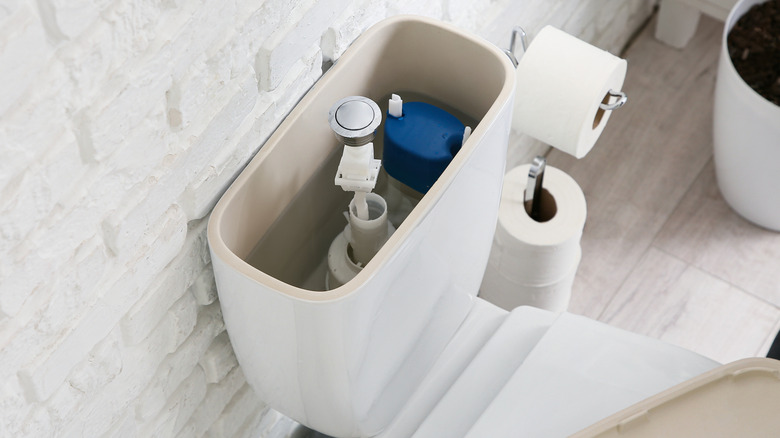
Properly using baking soda in your toilet tank isn't as easy as simply pouring it in. Or, is it? The answer to that depends on your goal. If you want to maintain the proper pH in your septic tank, just pour some baking soda into the tank and flush it down. Typically, about 1 cup of baking soda flushed through your system once a week is adequate for accomplishing this objective.
If your goal is to clean and deodorize your toilet tank, it's a bit more involved. To thoroughly clean your tank, it's best to have the water level at its lowest point, so start by turning off the water supply valve and flushing the toilet. Then, add 1 cup of baking soda to the remaining water in the tank. You can begin scrubbing the tank walls with a long-handle brush at that point, but allowing the baking soda to sit for a few hours or even overnight before scrubbing will increase the effectiveness of the odor neutralization. Once the tank has been thoroughly scrubbed, turn the water back on and flush a few times to rinse. Keep in mind that the water from your tank runs through the bowl when flushed. So, if you plan to use bleach products to treat toilet bowl stains or disinfect your toilet, do not do so while you are cleaning the tank with baking soda so as to avoid creating a dangerous mix.