

Think Twice Before Salting A Neighbor's Sidewalk Without Asking This Winter — Here's Why
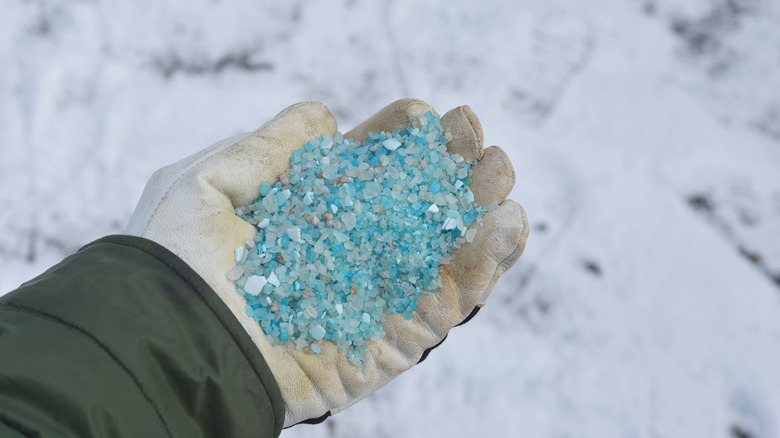
Clearing snow and ice from the sidewalks next to your house helps keep you, your neighbors, and other passersby safe by preventing slip-and-fall accidents. That's why many cities require homeowners to remove snow from these areas 12 to 24 hours after it falls. Some municipalities will also impose fines if you don't follow their rules about getting rid of sidewalk ice. Though tossing salt on a neighbor's sidewalk as you address your own property's ice may seem like the right thing to do, ask before barreling ahead. For starters, there are different types of salt used to melt sidewalk ice, and some are safer for pets and plants. Choosing the wrong one could harm a garden your neighbor spent hours nurturing or even a new puppy.
When it comes to melting sidewalk ice, your neighbors may not share your salting habits. In fact, they may prefer to treat sidewalks with a product that's not a salt at all. Sand, gravel, and cat litter all provide traction that reduces the risk of slipping without bringing sodium into the equation. In addition to being safer for animals and landscaping, they help keep sidewalk salt from polluting local waterways.
Some homeowners even avoid salt so they don't track it onto their new floors. Salt is particularly rough on wood floors, as it can cause white stains, scratches, and water damage. Plus, removing salt from hardwood floors is a multi-step process that involves vacuuming, spraying, and mopping. Your neighbors may even be paying a yard-maintenance company to deal with snow and ice on their sidewalks. In this case, your efforts may complicate the plan they've set up with these pros.
The logic of asking before salting
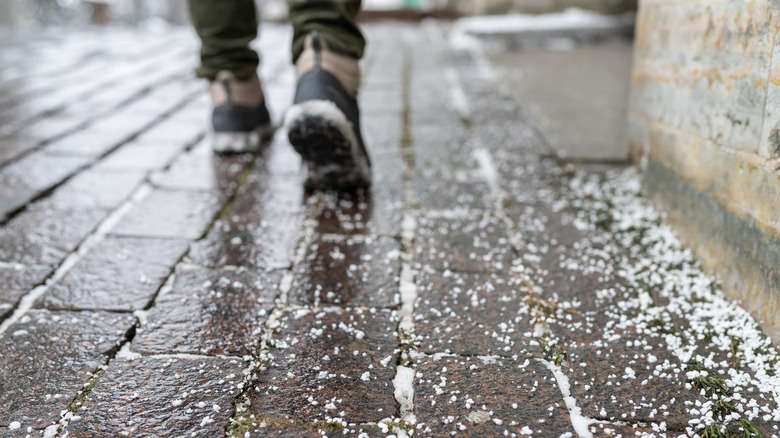
Pets, plants, and pollution are just a few reasons your neighbors may have strong feelings about sidewalk salt. It's also worth noting that sodium chloride, a leading de-icing salt, doesn't do its job when air temperatures drop below 16 degrees Fahrenheit. If you live somewhere where frigid temperatures are common, at least a couple of your neighbors may prefer calcium chloride, which works when temperatures are as cold as -25 degrees Fahrenheit. It's also the fastest way to de-ice a driveway. However, calcium chloride isn't a good choice for homes with dogs because its pH-lowering properties can be harsh on paws.
Your neighbors might also be wary of applying too much salt to their walkways, which tends to do more harm than good. The rule of thumb is to use about a cup of the stuff for every 10 squares of sidewalk and leave 3 inches between pellets. Keep in mind that salt's effectiveness depends on how close it is to the pavement. If it's scattered on top of a thick layer of snow, it's unlikely to make the sidewalk less slick.
So, what's the best way to assist a neighbor when wintry weather strikes? Other than asking them about their ice-melt preferences, you could help them remove snow from their sidewalks before it becomes ice. Pitching in with your shovel when you see them shoveling is one option. Or, take a pass at it with your snow blower if they're not using a yard-maintenance service. If you go this route, remember that the best time to remove snow is when 2 to 3 inches of it have fallen.