

Goodbye To Traditional Tile Showers: The Moody Bathroom Trend Taking Over
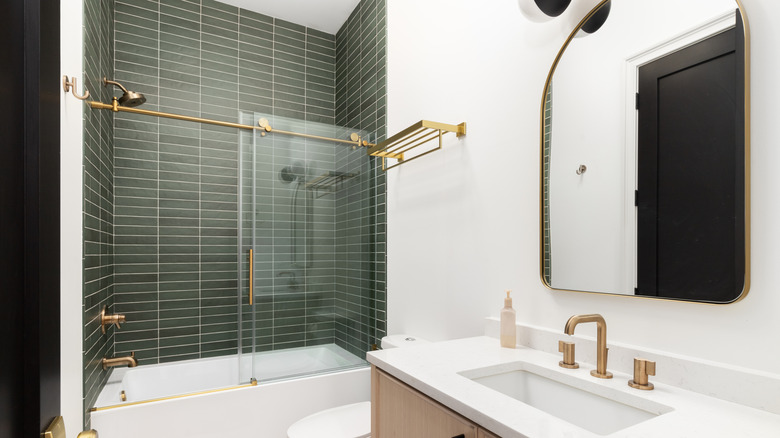
Plenty of us have already said farewell to basic white subway tile, instead lining our showers with more interesting shapes, colors, patterns, and textured tiles. But now, some interior designers and DIYers are getting rid of tiles in showers altogether, instead opting for textured, grout-free wall treatments. For example, Homes & Gardens suggests that plaster finishes are gaining traction in bathrooms because they add depth and visual interest while creating a clean, continuous surface that feels both contemporary and timeless. Whatever the reason, basic tile looks are clearly on the way out in 2026.
While plaster finishes are one idea, there are a number of other ways to achieve a textured look in your bathroom, such as microcement, roman clay, and limewashing. The sudden shift to these more organic, textured walls is in keeping with upcoming interior design trends, which show a general move towards using raw, imperfect materials that feel lived-in, characterful, and warm; in December 2025, a Vogue article on interior design trends reported that "2026 will see us embracing the natural, the organic and the unapologetically fabulous."
Additionally, these wall treatments solve one seriously agitating and often fruitless task — you no longer have to worry about cleaning the grout in your shower. Whether you're keen to get rid of those outdated shower tiles or wondering how to add a little texture to your basic plaster walls, it's important to know the pros and cons of each type of texture for your bathroom.
Picking the right textured wall treatment for your shower
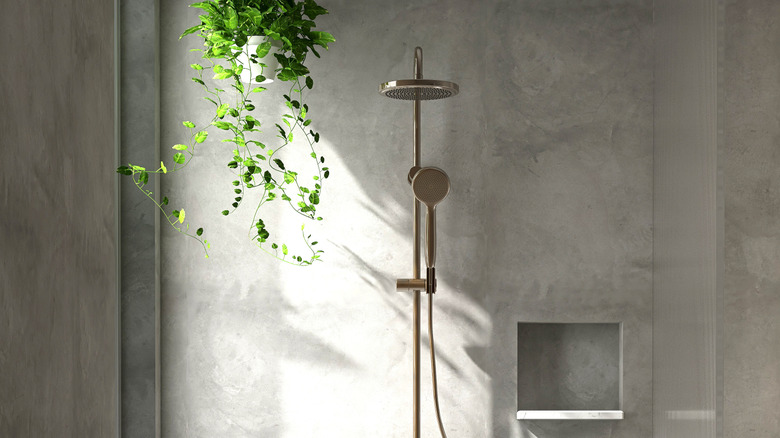
Microcement, roman clay, and limewash are some of the most common ways to achieve this at-once modern and old world aesthetic in your bathroom. Each offers a slightly different effect, but they would all look lovely in a shower — or even all over the bathroom, if you want to experience the benefits of color drenching.
Microcement is ideal if you want a concrete look without all of the difficult maintenance. Concrete is highly porous and doesn't adhere as well to vertical surfaces like shower walls, so it's not a top choice for most showers and bathrooms. Microcement, on the other hand, looks almost identical to concrete, but it's composed of resins, minerals, and additives, as well as cement. This allows it to be applied directly onto old tiles without the need for a skim coating of plaster or joint compound. It's also available in a wide variety of hues, including rich greens, dusty pinks, and cozy beiges.
Roman clay and limewash will need to be applied to a smooth surface to adhere properly, whether that's plaster, joint compound, or a waterproof concrete solution, as these are thinner finishing treatments that won't be able to cover tile completely. Roman clay is something between a paint and a plaster. It's applied in overlapping strokes, typically with a putty knife or drywall trowel. Limewash, meanwhile, is the thinnest of the treatments. It's made of slaked lime, water, and sometimes other natural pigments. Applied with a paintbrush, the wash leaves behind a matte, stone-like effect, and can be applied over existing paint colors or used on its own. No matter which of these treatments you choose, make sure to use a waterproofing seal, as this will extend the life and appearance of your new shower.