

Cover Popcorn Ceilings Without Scraping: The Mess-Free Solution You Haven't Tried
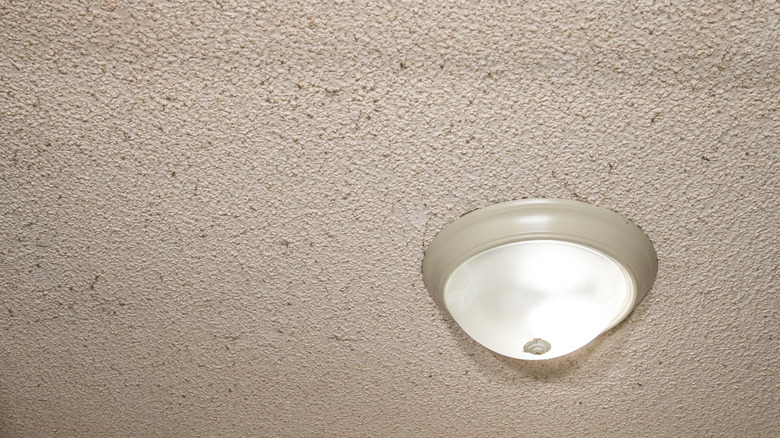
Popcorn-textured ceilings are generally disliked by renters and homeowners, who often search for simple, mess-free ways to remove them. That said, you don't necessarily have to get rid of them altogether. People who wish to avoid the tedious and dangerous work of scraping drywall might prefer to track down some ideas to cover popcorn ceilings instead. Many of these concepts don't remove the popcorn texture on the ceiling — they simply go over it. One of these methods involves installing a stretched fabric ceiling cover.
The perk of a stretched fabric cover is that you keep all the benefits of popcorn ceilings. This style was especially popular in the mid to late-20th century as a post-war staple in home construction. As ugly as popcorn ceilings may be, they work well to mask bigger imperfections from water leaks and physical damage. Stretched fabric may be an unconventional cover for them, but it adds a soft and cozy texture to rooms, absorbs sound, and acts as an additional layer of insulation.
How to install DIY fabric covers on popcorn ceilings
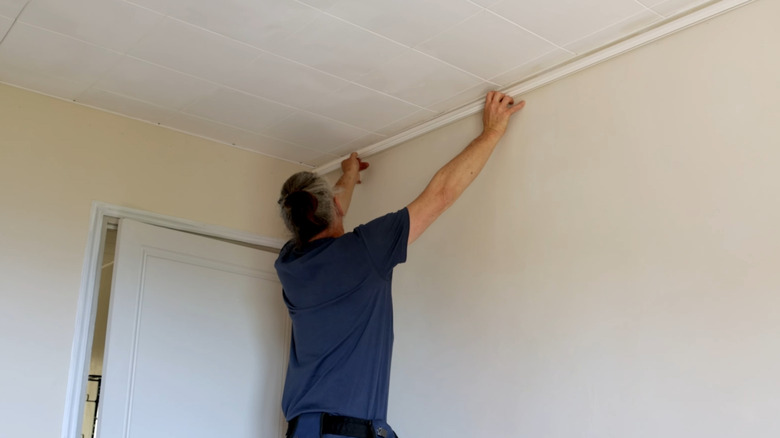
DIYing a stretched fabric ceiling is a bit more difficult to accomplish than, say, making a loose ceiling canopy. You'll need to use a plastic profile as the fabric ceiling track; you can find some examples of these at the Stretch Ceiling Store. Attach the tracks on the top edges of the walls, but not the ceiling, as the fabric should hang below it. O-Remonte recommends picking a fabric that is about 4 to 6 inches longer than the room dimensions on each side. Once the fabric is acquired, tuck the material into the plastic profile or track. Ensure any ceiling lights are hidden a safe distance behind the stretch ceiling for both aesthetic and safety reasons. On that note, try to use LED light bulbs on any fixtures located near your fabric ceiling.
When installing stretched ceilings, prioritize practicality over aesthetics. As beautiful as a rich, thick velvet ceiling may seem, it isn't a practical long-term choice. Instead, the best option is an antistatic, waterproof PVC fabric. The waterproof quality prevents moisture from causing mold and mildew, and the antistatic coating prevents allergens from clinging to the fabric. PVC-coated fabrics are also considered fire resistant, making them safer and more realistic as a form of ceiling installation.
Of course, if you don't feel confident about pulling off this DIY project, you could always hire a professional to do it for you. The beauty of doing this is that there's no need to worry about the small but essential details, like ensuring a home is still up to code or that the covering is evenly installed.