

Most People Set Their Thermostat Wrong In Winter — Here's The Best Nighttime Temperature
As winter temperatures continue to drop, snow starts falling, and you find yourself grabbing for the thickest sweaters in the closet, your home becomes a wonderful and warm respite from the bone-deep chill of seasonal weather. And though it can be tempting to crank the heat when the outdoor temp plummets, it's common knowledge that the ideal heater temperature for winter days is to set your thermostat right around 68 to 70 degrees Fahrenheit. This is the perfect zone for optimizing comfort without blowing your energy efficiency. So does that mean you should just set it and forget it for the duration of the winter? Actually, no — for two main reasons, it's advised you adjust your thermostat's settings to a lower temperature at night.
By lowering the temp on cold winter nights, you create an ideal sleep environment to promote sustained, deep rest, according to the National Sleep Foundation. In addition, dropping the overnight thermostat settings while you snooze is an eco-friendly heating winter tip that can help you save money on your energy bills over the course of the coldest season. That's because dropping the thermostat at night shrinks the difference between your indoor temperature and the air outside, slowing heat loss and reducing how often your heater kicks on. So, for both your personal coziness and wallet straining under rising energy costs, the 60 to 67-degree range is the right setting on all fronts. Let's dive into the details of why this temperature zone supports both your sleeping habits and energy output during those impossibly frigid winter nights.
Lowering your thermostat's temperature at night supports good sleep and lower heating bills
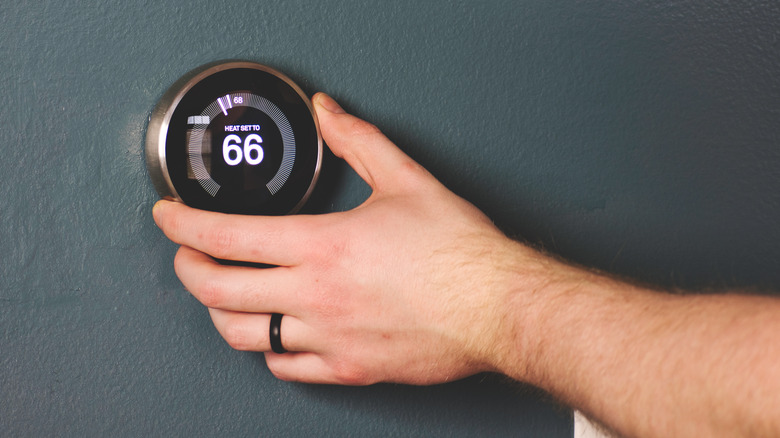
Determining the ideal temperature for those cold winter nights is two-fold. First, it's essential that your home is set at a level that feels personally comfortable to you and promotes a good night's rest. A room that is too warm or cold will cause a restless sleep rather than the solid, undisturbed rest we all strive for. Feel free to adjust a few degrees within that range to find your family's perfect thermostat sweet spot.
Besides creating an environment for a long, snuggly snooze during hibernation season, aiming for the ideal nighttime thermostat settings can also help keep your home's energy bills in check. According to the U.S. Department of Energy, lowering your thermostat 7 to 10 degrees for eight hours a day from the usual recommended daytime temperature of around 68 to 70 degrees can save you as much as 10% on your winter's heating bills. And with your ideal full night's sleep clocking in at exactly that, setting the thermostat dial for as low as feels comfortable in the 60 to 67 degree zone for the duration of your rest can save you some serious cash. Sounds like lowering your thermostat at night is essentially like getting paid to sleep well, right?
For the most consistent results, program your home thermostat to schedule an automatic shift in temperature during nighttime hours so you don't have to remember before your head hits the pillow or before your first cup of coffee kicks in. Nearly any type of home thermostat will have this capability. Then, sit back, relax, and enjoy a restful night's sleep and lower heating bills this winter.