

The Colorful Indoor Plant You Can Grow Even In Rooms With No Windows
Filling your living spaces with life-giving plants is proven to heighten moods, improve indoor air quality, and add a lovely natural aesthetic. But if you are stuck with an inner office or basement bedroom with hardly any light, you may think adding some greenery is out of reach. Not so, if you reach for an easy-care variety of one of the planet's most prolific plants: the bromeliad.
Plants in the vast and diverse bromeliad family (Bromeliaceae) include tropical wonders like the pineapple, as well as thousands of other varieties that grow in shapes from tall, spiky plants to delicate epiphytes that cling to tree trunks in their natural tropical forest habitat. And while a majority of these species need natural light to thrive, there are a few varieties that will be perfectly happy in your windowless room. Bromeliad species Guzmania and Vriesea have varieties that are adapted well to low light, and both produce gorgeous, long-lasting central blooms that rise up dramatically from their central core. Guzmania lingulata, also known as scarlet star, sends up a tall red or orange bloom amidst a cluster of smooth, green leaves, and is happy seated on your office desk or in a sunlight-starved corner of your living room. Several varieties of Vriesea, like the showy Vriesea hieroglyphica, with its striking banded leaves and tall, cream-colored flowers, will do just fine in shady spots of your home and can grow up to three feet tall to bring the drama.
Indoor care for low-light bromeliads
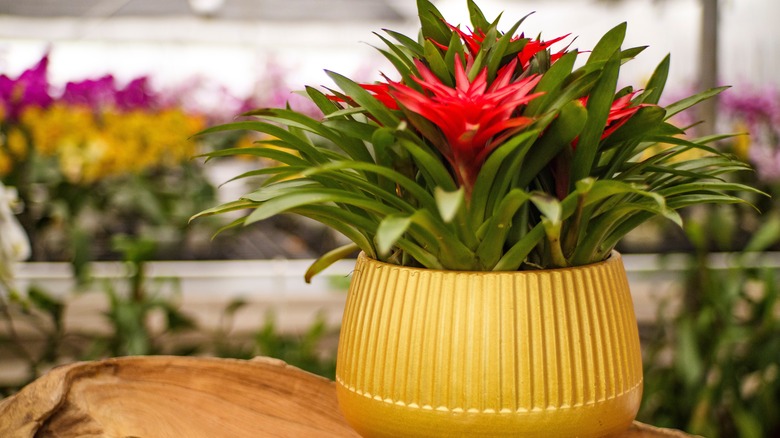
With so many houseplants to choose from to add greenery to your home, it is nice to know that these low-light bromeliad species are some of the easiest to care for. Choose an airy, bark-based mix for your Guzmania or Vriesea, and plant them in small, heavy pots that allow the soil to dry out fairly quickly but won't tip over when these plants send up their tall, spiky blooms. Like other low-light tropical indoor plants, bromeliads won't tolerate becoming waterlogged. These plants are used to grabbing moisture from the air when it rains, collecting it in a central cup, and don't like wet feet. Only water your bromeliad when its soil is starting to feel dry. Since your home isn't exactly a tropical forest, mimic humidity by periodically misting your plants. Slow-growing bromeliads can also benefit from some monthly time-release fertilizer sprinkled into the soil.
Don't despair if after a few years your main plant dies back after blooming — this is normal. Most bromeliads are one-and-done in the flowering department, but that doesn't mean your low-light friend is destined for the compost heap after it finishes flowering. Bromeliads send out pups, little new versions of the mother plant that start out around its base. When these pups grow to ⅓ the size of the mother plant, you can cut them off and plant them for a whole new generation of these colorful indoor plants.