

Not Once A Day, Not Once A Week: How Often To Water Monstera Plants In Winter
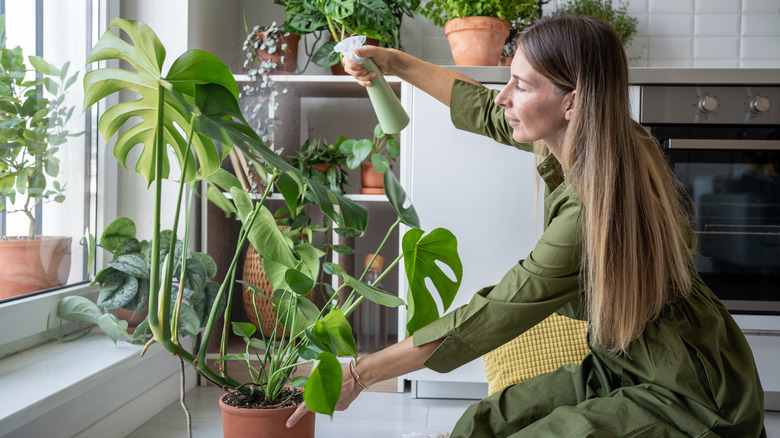
Though monstera plants (Monstera deliciosa) can thrive outdoors in USDA hardiness zones 10 through 12, these tropical vines are content indoors as long as they receive indirect sunlight, humid air that's between 60 and 85 degrees Fahrenheit, and the right amount of water for their roots to drink. Their hydration needs diminish as fall marches toward winter and then increase when springtime's around the corner. That's because monsteras are dormant during colder months and growing during warmer ones. Rather than figuring out how many days to go between waterings in the winter, turn your attention to soil moisture, which can help you hydrate your houseplant at the right time.
Practice evaluating soil moisture levels as you learn how to care for your monstera. Eyeing the soil's surface is a sensible first step, but don't assume that it's time to water if it looks dry. Instead, slide a finger into the top 2 to 3 inches of soil in your monstera's pot, making sure to dodge any roots you encounter. This will give you a sense of how dry the growing medium is. When moisture is present, soil particles will stick to your finger easily. In this case, watering isn't needed yet. If you find that the top inch of soil is quite dry, it's time to make like a raincloud and deliver some droplets. Many monsteras grown as houseplants will be ready for water from 1 to 2 weeks after their last irrigation session, but some are thirsty a bit sooner and others a bit later. Consider hydrating your monstera with rice water, a mild natural fertilizer, every now and then to give it a foliage-enhancing nutrient boost.
What influences a monstera's winter moisture needs
A few factors shape a monstera plant's thirst patterns in the winter and beyond. Getting acquainted with them can help you optimize how you water this member of your houseplant collection. The soil your monstera calls home is a good place to start. As a general rule, a weighty soil will need less frequent watering than a lightweight potting mix. Likewise, soil blanketed with a layer of stones or tree bark will need to be watered less often since these materials prevent moisture from evaporating quickly. Also keep in mind that a monstera plant whose roots are snug in its pot will typically want to be watered more often than one whose roots have more breathing room.
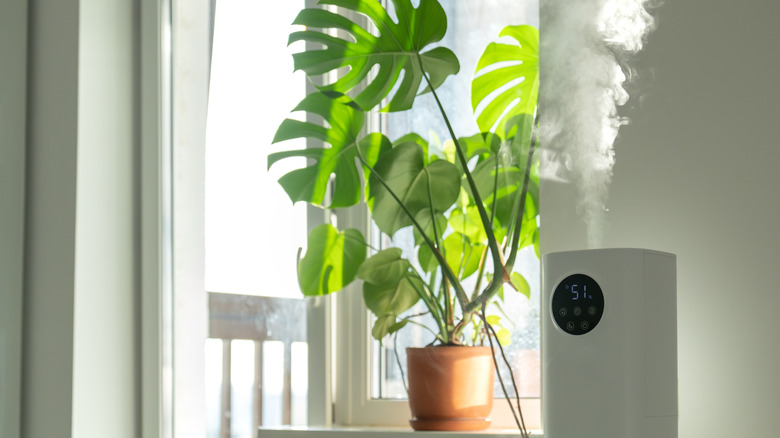
Above-ground conditions also influence the moisture needs of your monstera. If your home is a little cooler in the winter than it is at other times of year, this may keep your monstera from getting thirsty as fast as it does otherwise. By contrast, dry winter air can make your monstera feel parched sooner than usual. In addition to making your monstera clamor for more humidity, dry air accelerates the speed at which the soil dries out. Drooping foliage and brown leaf edges are two giveaways that the air humidity level needs raising — ideally above 60 percent. Growing a monstera inside rather than outside gives you little more control over humidity. You may find that your monstera and other humidity-loving plants do best in a bathroom with a shower in the winter. Alternatively, run a humidifier near your monstera or fill its drip tray with wet pebbles.