

Ditch Expensive Cleaners — This Household Staple Can Get Shower Walls Cleaner
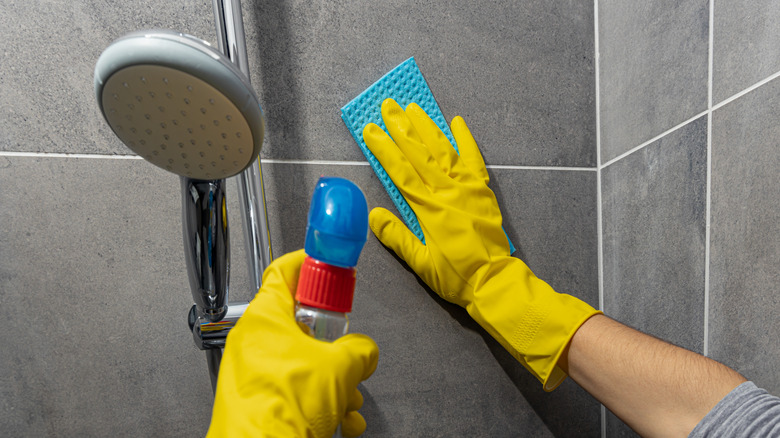
It's funny how the place where you go to get clean — the shower — is also the place that so easily becomes grimy and coated in soap scum. A shower covered in cloudy buildup and mildew is never inviting, which is why learning how to clean a shower properly is vitally important. The good news is that hydrogen peroxide, which is an effective, plant-friendly disinfectant, can cut through that stubborn film while also helping prevent mold, bacteria, and other unwanted bathroom grime from coming back, especially the dirt that gets stuck in the grout between your tiles.
Hydrogen peroxide isn't just something from your first-aid kit. It's recognized by the Centers for Disease Control and Prevention as a stable and effective disinfectant against a wide range of microorganisms, including bacteria, fungi, and some spores. Unlike porous materials such as wood, fabric, or ceiling tiles, which often have to be replaced when mold takes hold, hydrogen peroxide can safely lift mold and mildew from solid, non-porous surfaces. That makes it ideal for cleaning countertops, tabletops, glass, walls, and bathroom fixtures like your toilet.
How to use hydrogen peroxide to clean your shower
To put hydrogen peroxide to work in the shower, pull out all the bottles, razors, loofahs, and anything else that's been collecting soap scum. If you spot mold on any of those items, a quick wipe with a hot towel usually does the trick. Next, crack open a window or door and turn on the bathroom fan so everything can air out. Then grab a spray bottle filled with 3% hydrogen peroxide and mist the entire shower. Let it sit for about 20 to 30 minutes while it works its magic loosening grime and mildew. Use a soft sponge or brush and start scrubbing. Rinse everything with warm water and dry the surfaces with a towel or squeegee. Your shower should look cleaner.
On Instagram, @cleansnob tried this with 12% hydrogen peroxide, but says 3% works, too. She sprayed it on, let it fizz, and then scrubbed it with a brush. Commenters were excited to test it out. "I let it sit on the shower walls for 10 minutes before scrubbing and rinsing, and it works like a charm," one says. "You can even make a paste with equal parts hydrogen peroxide and baking soda for extra scrubbing power!" Another adds, "totally agree hydrogen peroxide is better," saying it's superior to bleach for battling mold. After you shower, YouTube's @AskAngelaBrown recommends lightly spraying hydrogen peroxide on the surface again, letting it sit until the next shower to prevent mold from forming.