

You Don't Need A Big Yard To Grow Juicy Strawberries. Here's How To Do It Indoors
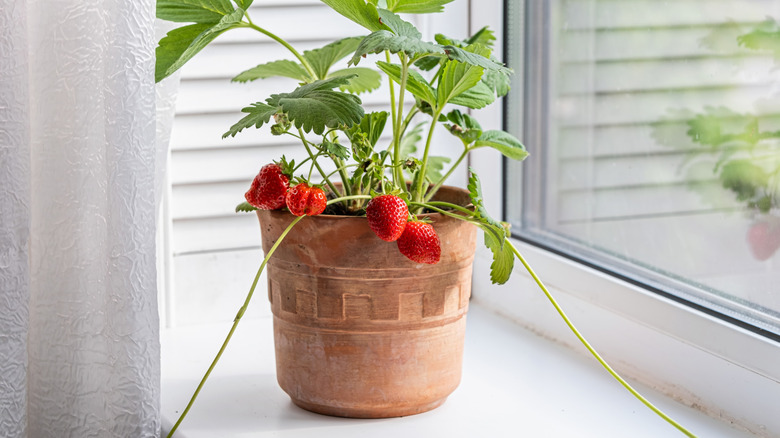
If you love the idea of growing your own little strawberry patch but outdoor space is at a premium, you are in luck. These attractive little berry plants with deep green leaves can also thrive inside your home. And fresh, ripe strawberries grown inside don't have to just be a midsummer treat. Varieties that do well indoors can also produce tasty berries throughout the year with proper care.
Strawberries are one of the easiest types of fruit you can grow indoors, but you need to choose a variety well-suited to indoor life. The strawberry (Fragaria x ananassa) comes in a lot of different cultivars, including native varieties, and while most outdoor varieties grow fruit just once a year in the long, warm days of summer, others are day-neutral, meaning they don't pay attention to the length of days or nights in order to produce. These varieties will keep sending out juicy berries year-round if they are kept at a temperature between 35 and 85 degrees Fahrenheit.
Popular day-neutral varieties that are happy inside include the easy-growing Albion, Ozark Beauty, and Portola. Once you choose your plants, put them in a spacious container that can hold multiple seedlings (or seeds if you like starting from scratch), about 8 to 10 inches apart. Your container doesn't have to be deep, as strawberry plant roots don't grow very long, but should have plenty of surface area. A ceramic container with a 12-inch surface area and 8-inch depth works well and can accommodate about four plants. Avoid hanging baskets or those cute strawberry pots with multiple ceramic pockets on the sides unless you are going to be super vigilant about watering, as these types of pots tend to dry out quickly.
Care tips for a healthy harvest
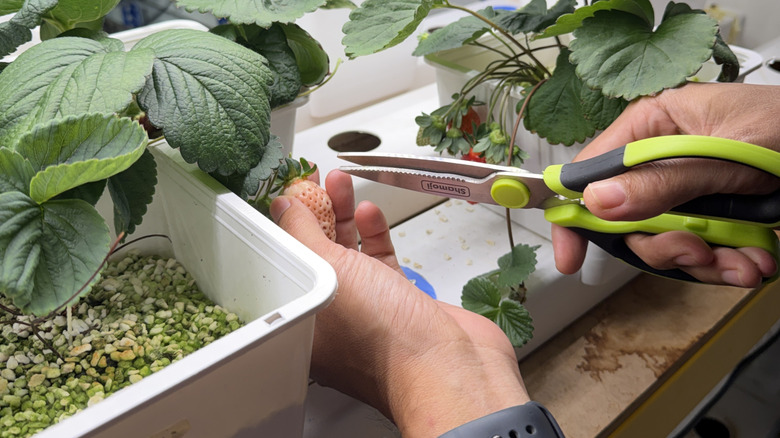
Like all indoor plant care, getting your inside strawberry garden right will depend a lot on water and light. Strawberries love having moist, well-drained soil, and a standard indoor gardening potting mix works just fine. If the soil you buy doesn't come with fertilizer, you'll want to add some balanced indoor plant food when first planting your seedlings and a few times throughout the year to keep them healthy. Plenty of light is very important for a juicy harvest — at least 6 hours of full sun are needed each day, so if you don't have a south-facing window with constant sunshine, you'll want to invest in a full-spectrum LED grow light. A healthy, happy strawberry will send out runners, but you'll need to snip those off as they appear in order to concentrate growth on the main plant. After a few years, these runners can be used to propagate new strawberry plants for an even bigger harvest.
There are a lot of benefits to growing strawberries indoors. Outside, they are a favorite of multiple types of pests, from slugs to bunnies, and keeping them inside means you get to say who comes and goes. Unfortunately, one thing that won't be able to visit your plants is pollinators. Never fear, because you can become a human pollinating fairy to make up for those absent bees and summer breezes. When your plants are flowering, grab a soft makeup brush or paintbrush and gently go from flower to flower to share the pollen. With these care tips, in a few weeks after planting (or up to several months if starting from seed), you can expect your indoor strawberry patch to produce its first, bright and tasty fruit.