

Look For This Uncommon Number On Thrift Store Mason Jars — They've Got A Wild Backstory
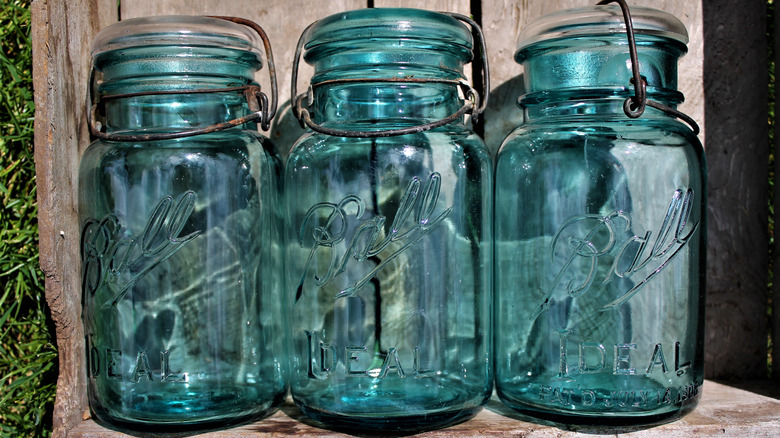
There's a sizable number of valuable items you shouldn't overlook at estate sales, secondhand stores, and other places you might shop for antiques. Some of the most functional objects on this must-thrift list are glass containers, including vintage Weck jars that are making a comeback and specific models of Mason jars from eras past. If old canning jars are your jam, be sure to look for specimens stamped with the Ball logo and the number 13. They're typically made of the pretty aqua-blue glass Ball was known for until 1937, and they come with lore that makes them treasures to some history lovers.
Several factors determine the value of a Ball jar, including color, condition, and scarcity. For instance, hard-to-find olive green Ball jars can be worth $300 or more if they're in good condition — that is, no cracks, dents, or chipped lips. The embossed script of a vintage Ball jar's logo is a reliable clue about its age, but the mold number found on the bottom is not. Though mold numbers tend to be found on older jars, they simply indicate how the factory's glass-production machine was set up for a particular batch. This number will fall between 0 and 15. Many jars with a number in this range were probably made since Ball produced large amounts of jars on its automatic glass-blowing machines, which debuted around 1895. By 1905, Ball was manufacturing 60 million jars per year. For reasons that aren't entirely clear, those with certain numbers survived the journey to the present better than others. Ball jars stamped with a 13 can be somewhat tricky to find.
What's the allure of No. 13 Ball jars?
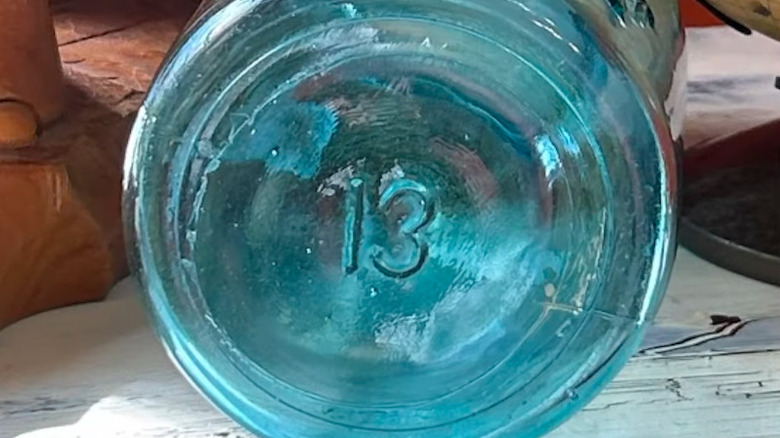
Uncommon models of aqua-blue Ball jars can be worth more than $50, but easier-to-find ones tend to sell for less. Though a Ball jar sporting a 13 isn't necessarily a cash cow, it is a curiosity, which means that some shoppers may be willing to pay a higher-than-average price to add it to their collection. In fact, some antiques experts suspect that rumors about these jars were stared as a way to boost their prices. As one legend goes, homemakers were apprehensive about using these jars because they associated 13 with bad luck. Apparently, some destroyed them because they felt so nervous around them, others avoided them entirely, and a few stashed them in closets where they gathered dust for decades before making their way to flea markets and antique shops.
Other legends swirling around No. 13 Ball jars might boost their appeal, too. Some jar enthusiasts have heard tales of Prohibition-era moonshiners shattering these jars so bad luck wouldn't upend their whiskey-making operations. Moonshiners were known to transport liquor in Ball jars, yet it's hard to confirm the veracity of the jar-shattering stories. There are a few things you can be sure of if you locate a No. 13 Ball jar, though. One is that it's a conversation piece for your home. Another is that it's a useful vessel for storage and decorating. Try repurposing Mason jars for storing bathroom items such as cotton swabs and makeup brushes.