

5 Ordinary Household Items That Make Melting Driveway Snow And Ice Easy

For those familiar with the four seasons (not looking at you, sunny southern California), it's no secret that snowy, icy driveways are a real problem. Icy driveways can be especially dangerous, as they easily contribute to scary trips and falls, foundation damage, and damage to your cars. Oftentimes these dangerous driveway conditions are mitigated by chemical deicing products like calcium chloride. Unfortunately, once the snow and ice melts, these chemical products are washed into local waterways, polluting the area. Instead of buying chemical deicers this season, why don't you opt for some more natural options instead? Better yet, these alternatives are typical household items you likely already have at home. That means your deicing can be both environmentally friendly and less expensive.
Some common kitchen staples that double as deicers during frozen winters include things like alcohol solutions, pickle juice, vinegar, beet juice, and coffee grounds. It's likely you probably have at least one of these items floating around your house, so learning how to use them to melt your snowy driveway in the winter could be a really useful trick. Though these items are handy and organic, there are some things to consider when using them as deicers. We'll give you the full low down on how to use these ordinary items to easily melt snow and ice off your driveway.
Alcohol solutions
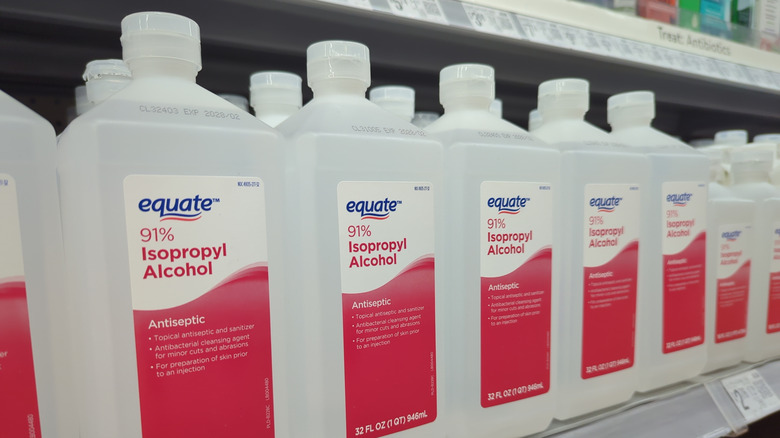
Melting snow and ice on a gravel driveway primarily comes down to being able to reduce the freezing point of water (a process called freezing point depression). While things like rock salt and chemical deicers are the most common ways to achieve this, there are other handy products that can do the same thing. So, instead of heading to the store, head to your medicine cabinet and grab some rubbing alcohol. Using rubbing alcohol alone to deice your driveway might not be the best bet, as it'll take quite a bit to cover the whole driveway. Instead, make a solution with rubbing alcohol, hot water, and some added dish soap.
To make this home deice solution, grab a large bucket and pour in a half gallon of hot water. Then add six drops of dish soap and your rubbing alcohol. Most people suggest a ratio of 16:1 for your rubbing alcohol and water solution. In a pinch, you could also use alcohols like vodka that have a high alcohol concentration, and maybe after tossing your solution on the driveway, help yourself to a nice, warming cocktail (be careful this doesn't create its own fall risk, though!). Though alcohol is certainly a handy and effective way to melt your driveway, some say if temperatures are too low, this solution won't work as well as others, so keep that in mind.
Pickle juice
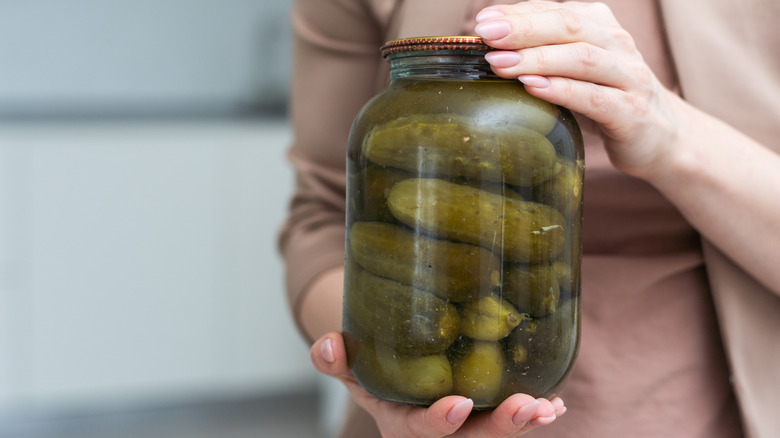
Salt is one of the most standard ways to melt snow and ice on your driveway. This ingredient works, as many others do, by lowering the freezing temperature. Types like rock salt are also beneficial because their coarse nature helps with traction and reduces slip risks. However, studies have been coming out that show salt-heavy deicing tactics can actually be harmful. The rising salinity these methods cause in local waterways can severely impact the surrounding wildlife as well as damage roads and other infrastructures. So, in lieu of this method, people have been turning to another common household item — pickle juice.
Pickle juice is a type of brine (a mixture of salt and water) that can work to deice your driveway because of its salt concentration. Pickle juice's key advantages over more traditional salt deicing methods is its smaller concentration of salt, and its liquid form. As a liquid, it'll work faster to deice and go farther. Its smaller concentration of salt also means less chloride runoff into the surrounding waterways and ecosystems. This isn't a perfect environmental solution, but can be a better, effective option in temperatures of -23 degrees Fahrenheit and above.
White Distilled Vinegar
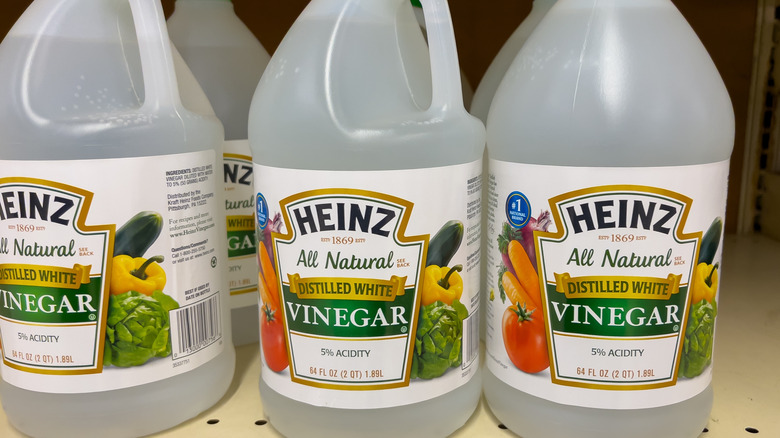
Distilled white vinegar seems to be a household super product. Homemade vinegar cleaning solutions are used for so many hacks, anywhere from cleaning appliances to cleaning rusty tools. Now, it's also being lauded as a way to deice your wintry driveway. As with many of the other household products on this list, white distilled vinegar works to clean up your driveway because its ingredients help lower the freezing point of water. Specifically, its the acetic acid found in vinegar that brings down that freezing point. You can create your vinegar deicing solution by combining equal parts vinegar and hot water and simply apply it to your driveway.
Though this can be an effective, easy deicing method perfect when you need to use what you have on hand, it's not the most friendly option for plant life or your driveway. Vinegar can cause damage to both your landscaping and your concrete so if you use it, make sure you quickly follow up with a good clean up. Use a broom or shovel to push excess vinegar solution off your driveway.
Beet Juice
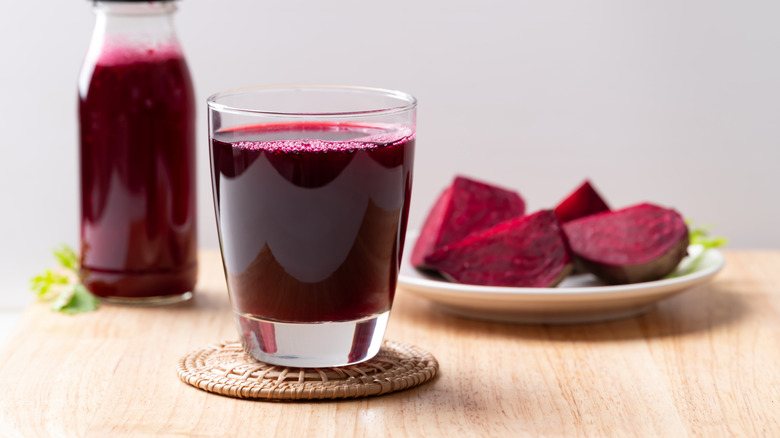
Another kitchen product you can use to help easily melt snow and ice in your driveway is that gorgeously-hued beet juice. It's not really an effective tactic to use on its own, but instead in combination with salt. The sticky, sugary, liquid beet juice helps the salt stick to the roads, reducing an excess use of salt, as it prevents it from bouncing off its intended target. Beet juice can also reduce the freezing point even lower to -20 degrees Fahrenheit. This helps keep the environmental exposure to chloride at a minimum. Another plus to adding beet juice to your salted driveway? It works to naturally inhibit the salts' corrosive nature. According to The Weather Channel, the addition of beet juice to salt methods can reduce its corrosiveness by as much as 75%.
Similar to pickle juice, beet juice isn't a perfect solution to the environmental impacts, but it's certainly a simple, common household addition to your deicing routine that can make cleaning up your driveway easy and more eco-friendly.
Coffee Grounds
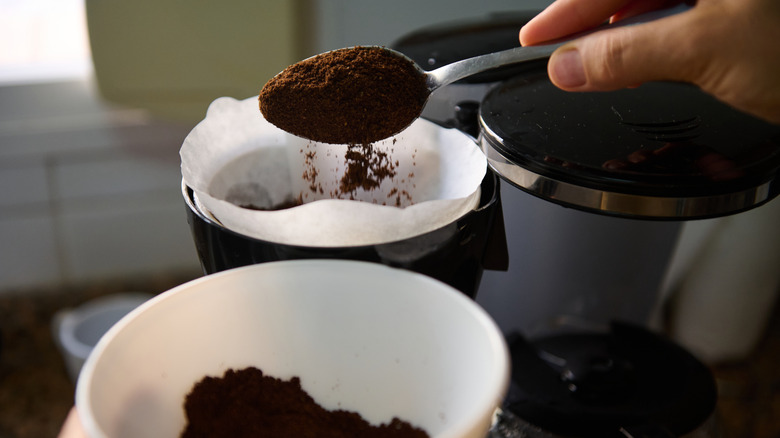
Okay, so this one is more of an honorable mention, but it's a good one and uses a material you probably have at home: Coffee. To be fully clear, coffee grounds do not actually melt ice. However, it is true that your morning cup of joe can come in handy not just as an early pick-me-up, but also to make that dangerous, slippery winter driveway more manageable.
Using this method on your driveway is slightly different than the other options on this list, as what the coffee grounds actually help with is traction. Their coarse texture goes a long way in making your icy driveway or walkway less slippery and preventing dangerous falls, since your shoes or tires — depending on your goals — won't slip and skid anymore. Simply toss your leftover grounds over your icy patches and let it do its thing while you sip your morning brew.