

Tired Of The Ugly Downspouts In Your Yard? This DIY Makes Them Less Of An Eyesore
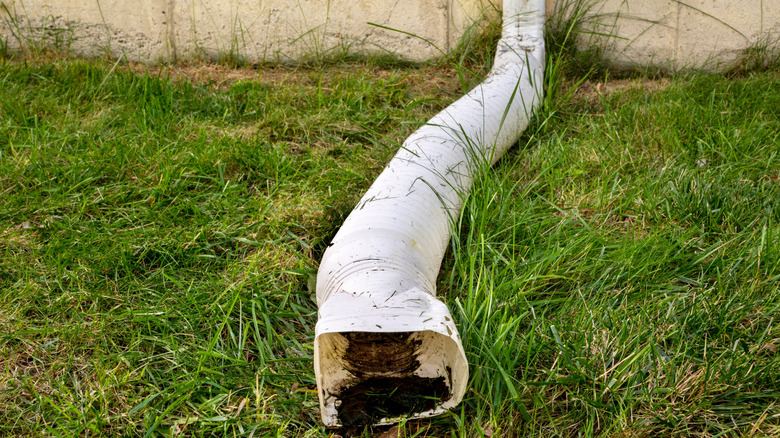
In the craft of homebuilding, we have constantly refined the mechanisms for handling things like water to the point that a carpenter of a century ago would be utterly bewildered at all the high-tech layers for thermal, water, air, and vapor control. But here's the thing: you'd never know it from a foot away. We can hide all the membranes and alien-tech sheathing behind lovely finishes — that is right up to the point that water enters our downspouts.
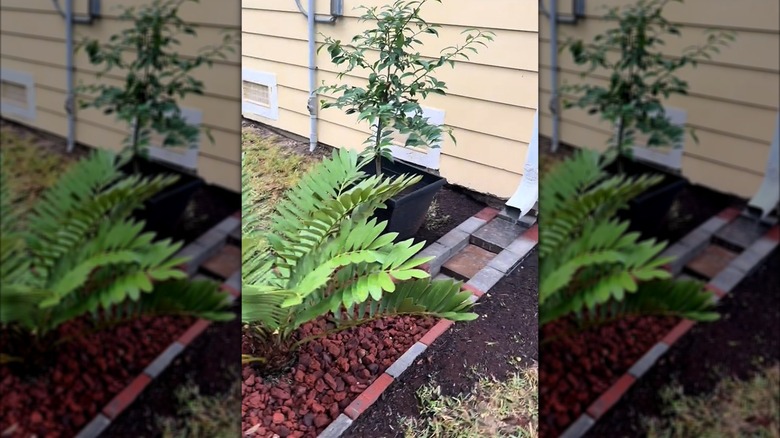
There's nothing new or high-tech in most gutter systems, and whatever improvements there have been in downspouts and post-downspout accoutrements — such as downspout extensions, splash blocks, and catch basins — they are all still typically made of thin plastic and look completely generic. Enter @CatDadChad, a TikToker who reinvented everything from the bottom of the downspout on to suit his own purposes and aesthetics with the help of some stunning red bricks and a little ingenuity. His downspouts (or at least one of them) end in a sort of stepped trough of bricks and pavers that pick up the water where a splash block normally would, then guide it down to what is essentially a buried planter.
Why divert some water when you can use it all?
The challenge with most downspout planters is that they are above ground, and so require diversion of the rainwater (or some of the rainwater) from the normal path of a downspout. This takes many forms, none of which are exactly aesthetically pleasing. Commercially available diverters — the sort you'd use to set up a rain barrel for irrigation — look like the gas mask attachments of some kind of Covenant invaders. Homemade diverters range from unexpected and bizarre turns of downspouts that stick out 90 degrees and five feet from the house to elaborate PVC contraptions that would make your neighbors suspect you're hiding a sour mash still under the lantana. Whatever the mechanism, it feeds a perfectly lovely planter made out of things like Tractor Supply watering troughs.
@CatDadChad's catch basin has nothing in common with this mess. He's not diverting anything ... or, rather, he's diverting everything. His downspout ends at the ground in a perfectly ordinary elbow, which empties into the brick-and-paver tiered channel described above. This routes rainwater away from the home's foundation and into a brick-lined planting area covered in what appears to be red lava rock.
@catdadchad I dont like the plastic pans for gutter downspouts so i direct the water a different way. #diy #raingutters #landscaping
There's no way to know from the video how far (if at all) the bricks extend into the ground, but we'll make some good guesses in a moment. What is clear is that the DIYer has taken an incredibly ugly aspect of home design, turned it beautiful, kept all of its functionality (routing water away from the house), and put the water to work doing something useful. And that something useful is also something special.
Let's talk about rain gardens
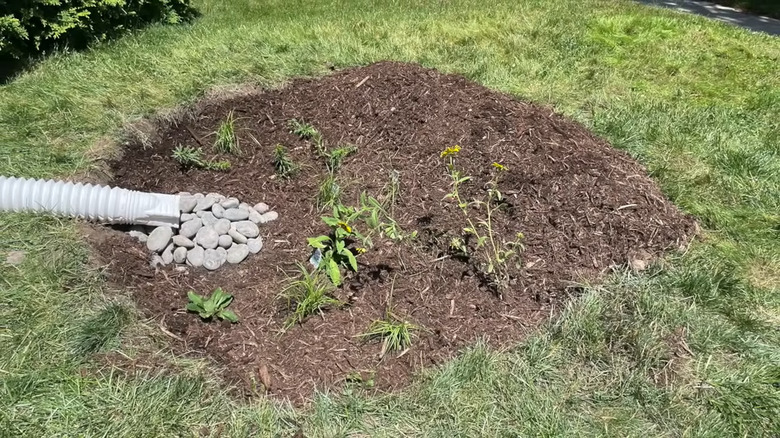
What @CatDadChad has devised here is called a rain garden. Rain gardens are depressions, often natural (though not in this case), that catch rainwater in the manner of a tiny retention pond — except that water almost never stands in a rain garden, but is instead distributed to native plants. It's a simple and ideal way to stop stormwater runoff from wrecking your yard.
Rain gardens do the real work of a dry well for yard drainage, and they can do it in places where this sort of work isn't ordinarily seen. They are typically designed to capture runoff from homes and home accessories, like patios. As rain skates along roofs and driveways, and then across patches of our grass farms, it picks up pollutants like pesticides, herbicides, fertilizer, motor oil, and whatever plastic edging, landscaping fabric, and fenceposts leach into the ground. Some estimates suggest that 30% of our water pollution comes from stormwater runoff. It contributes to erosion and makes drinking water more difficult and more expensive to treat.
But research has shown that approaches like rain gardens can reduce runoff by 84-100%. So a downspout like @CatDadChad's looks better, improves water quality, and reduces pollution. What's not to like?