

The Best Way To Clean Behind Your Toilet And Keep It Spotless
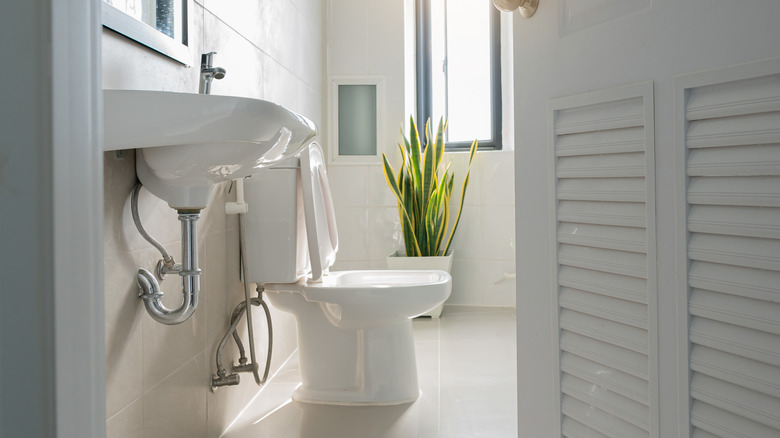
As much as you dread cleaning the toilet, it's likely a pretty standard part of your cleaning routine by now — that is, at least the parts you can see. But when was the last time you made a good-faith effort to clean that awkward gap behind the toilet? Whether you have a freestanding or mounted toilet, this may be one of the areas you're forgetting to clean in your bathroom. To make the task easy, quick, and pain-free, you just need a vacuum with a narrow brush head attachment, a quality microfiber cloth, and an antibacterial spray.
The gap between the wall and your toilet is subject to humid conditions, which trap dust, hair, and other debris. Plus, thanks to a phenomenon known as a toilet plume, in which microorganisms are dispersed out and around the toilet when flushed, this spot may harbor nasty bacteria. Thankfully, by starting with a quick dry vacuum of the area, followed by a generous spritz of antibacterial spray and a wipe down of the area with a microfiber cloth, you can have this area sparkling and germ-free in minutes.
A lot of us don't think to use the vacuum in the bathroom, especially in the area behind the toilet, as this can be one of the trickiest spots to hit with a vacuum. However, when you add moisture to a surface in your bathroom before proper vacuuming, you're actually making a bigger mess for yourself. Instead of cleaning dry dust and hair, you're basically creating mud. That's why a narrow-bristled hose attachment is perfect for this task. The bristles can scrape up loose debris, while the head shape can fit into those awkward grooves.
Cleaning behind the toilet doesn't have to be hard work
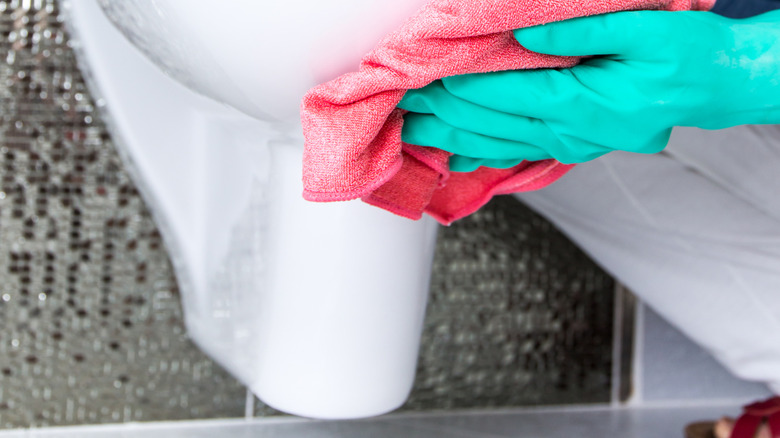
With most of the physical debris gone, you can worry about cleaning and sanitizing the area. Spray the area with your antibacterial spray of choice, then allow it enough time to actually work — how long varies by product, so check the instruction label for exact timings. When the clock is up, take a moistened (but not dripping wet) microfiber cloth and wipe the area down thoroughly. Microfiber cloths are one of the most important bathroom cleaning supplies, as they actually trap debris and bacteria instead of just spreading it around. This should help to remove any remaining debris and cleaning spray. If you notice excess moisture, use another dry microfiber cloth or paper towel to dry the area.
Have back problems or an extremely narrow gap that you can't quite reach? Try attaching your microfiber cloth to an extendable dusting arm with an elastic band. This will allow you to thoroughly clean without having to bend over or get on your knees, and will reach all of those tiny grooves and gaps.
A few other things to keep in mind: You don't want to use the same vacuum brush head in any other parts of your home, as this can be a source of cross-contamination. To ensure you don't accidentally end up using it elsewhere, consider marking it in some way, with a label, or simply with a color-coded piece of tape. Similarly, always be sure to properly sanitize any cloth you use in the bathroom between uses, even if they are dedicated for bathroom use only.