

Keep Weeds From Growing In Flower Beds With One Essential Addition To The Soil
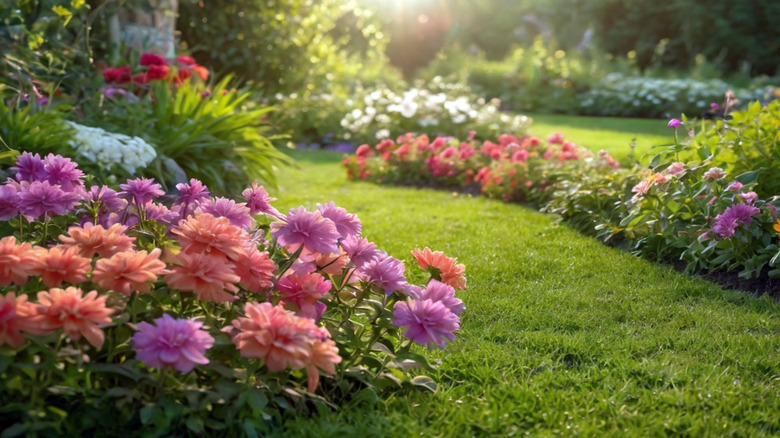
Starting a flower garden is a little more involved than simply choosing seeds or bulbs and depositing them in a bare patch of ground. You need to think about weeds, which can crowd out tender new plants before they have a chance to blossom. Even if weeds don't completely suffocate your snowdrops, snapdragons, or sweet peas, they're likely to siphon off water and nutrients your flowers need, and they may attract problem-causing insects and pathogens. In other words, keeping them under control is crucial. One of the best tools at your disposal is mulching — covering the soil surrounding your plants with a layer of material that deprives resource-robbing weeds of sunlight, preventing them from taking over your garden. Mulching also conserves water, minimizes erosion, and regulates the temperature of your flower bed's soil.
There are two main categories of mulch to consider for your flower bed: organic and inorganic. Organic mulches are natural materials that break down over time, improving the soil's structure, adding nutrients, and more. The decomposition process does require some effort on your part: You have to reapply organic mulch regularly to keep reaping its benefits. Wood chips, tree bark, straw, pine needles, and grass clippings are some commonly used organic mulches. Inorganic mulches such as pea gravel, lava rock, plastic sheeting, and rubber chips don't decompose as readily. They don't need to be replaced as often as their organic counterparts, but they also don't tend to raise the quality of the soil. Inorganic mulches may actually lower quality of your soil by interfering with the activities of earthworms and microorganisms that enhance its health.
Mulching your flower beds to limit weed growth
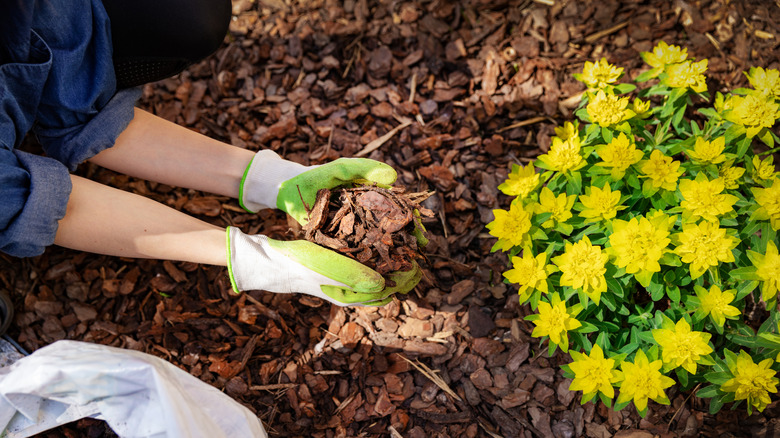
To keep weeds at bay in a flower bed, follow a few mulching best practices. Choosing the best type of mulch for your landscaping project is a crucial fist step. If you're able to add a fresh layer every spring, opt for an organic mulch to keep the soil in tip-top condition while controlling weeds. You can refresh your mulch less often if you opt for an organic material that decomposes slowly — say, cypress bark. This type of mulch is also popular because it contains natural oils that deter termites, ants, and other pests. Plus, cypress bark and some other organic mulches — cocoa bean hulls, for instance — will make your garden smell nice.
There isn't a single best type of mulch for curbing weed growth. What will work best depends on local conditions, including temperature and rainfall. That said, mulches that let very little sunlight through are your best bet for smothering weeds. If you create a sufficiently thick mulch layer, most weeds that attempt to sprout won't get the light they need to survive. A layer of mulch that's 3 to 4 inches high is ideal for flower beds. A thicker layer may limit the amount of oxygen and water your flowers can access, preventing them from flourishing.
Also consider the mulch preferences of the flowers you've selected. Azaleas, gardenias, and other acid-loving plants may benefit from pine needle mulch that accumulates beneath some of the evergreens in your yard. Meanwhile, annuals such as zinnias and bulb-based flowers such as tulips often appreciate leaf mold mulch because it breaks down fast, delivering nutrients quickly.