

Stop! Pouring Boiling Water Down Your Drains This Winter Could Cause Serious Damage
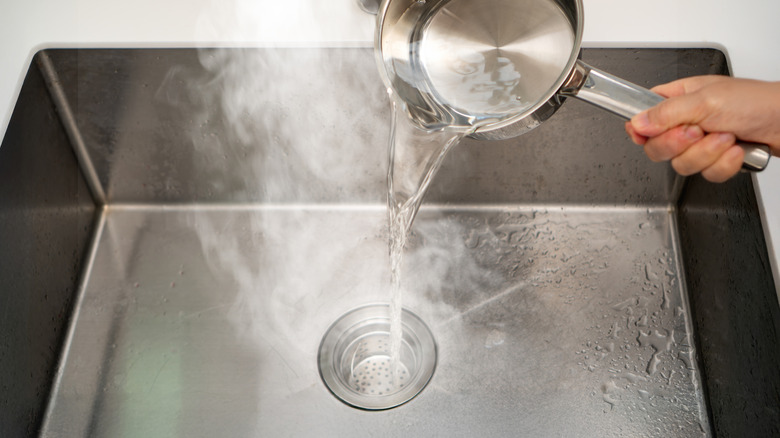
If you're dealing with a slow-draining sink, it can be tempting to boil some water and pour it down the drain. After all, shouldn't hot water help clear out blockages and get things moving again? It might make sense on paper, but the practice isn't the best way to unclog a drain. In fact, it can do more harm than good, especially during the winter months.
For starters, most homes have pipes made of polyvinyl chloride, or PVC. This is a type of plastic that's affordable, lightweight, and easy to install. However, PVC can warp when it's exposed to high temperatures, and it can only handle water temperatures up to 140 degrees Fahrenheit. Boiling water is notably hotter — 212 degrees Fahrenheit, to be exact. There's also the risk of thermal shock, as your pipes are cold in the winter. If boiling water suddenly flows through those cold pipes, it can cause weak spots or cracks resulting in damage and potentially leaks. So, what should you do instead? And is it ever safe to pour boiling water down the drain?
What to do instead of pouring boiling water down the drain in winter
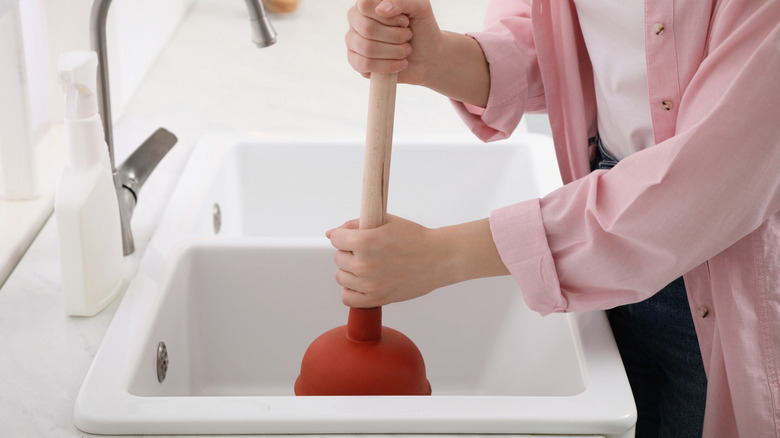
To clear slow-draining sinks in the winter, consider using an enzyme drain cleaner. It's a better and natural solution to unclog your drain, as the enzymes will break down the common culprits of blocked sinks (think fats, grease, and food). They're also a safer alternative to caustic drain openers, which can damage your pipes over time. You can also use a plunger or plumber's snake to dislodge any debris. If neither of these solutions works, consider calling a plumber for expert help.
If you live in an older home with galvanized steel or copper water pipes, you might wonder if boiling water poses the same risk. In general, metal pipes can handle hot water better than their PVC counterparts, but it's still worth using caution. That's because older pipes can be weak and fragile, making them vulnerable to sudden temperature changes in the winter.
All that said, if you know for certain your pipes are clear, it's less risky to pour boiling water down the drain during the warmer months. But it's still a good idea to avoid the habit, as hot water can still damage pipes over time. On that note, if you need to pour boiling water down the drain for other reasons (like after making pasta), let it cool first. It's also worth adopting tips to keep your drains clear for good and prevent problems.