

This Beautiful Indoor Plant Will Thrive In Dark Corners Of Your Home

There are many wonderful types of indoor houseplants, but finding the right one can be tricky. It's made even harder if you're trying to source a plant for the shadier areas of your house. One beautiful option is Aglaonema, also called Chinese evergreen. This perennial is grown for its long, oval-shaped leaves that are often variegated with patches of cream, silver, and even pink, but can also be solid green. While Aglaonema leaves have the best color in bright, indirect light, the plant is hardy and adaptable. Its easygoing nature makes it a fantastic plant for beginners, and it grows well in low-light environments.
You need to make sure to choose the right cultivar for your shady room, though. A solid green variety of Aglaonema is ideal, because plants with variegated leaves are less suited to low-light places. The lighter patches, no matter what color they are, have less chlorophyll in them. That means they're not able to take in as much light. Since they aren't able to get enough light in shady environments, variegated plants will sometimes revert, losing their pattern and returning to a solid state. If you aren't interested in ways to brighten a dark room, save yourself the heartbreak of watching the colors fade and get a solid green Aglaonema plant for your shady corners.
How to care for your Aglaonema plant
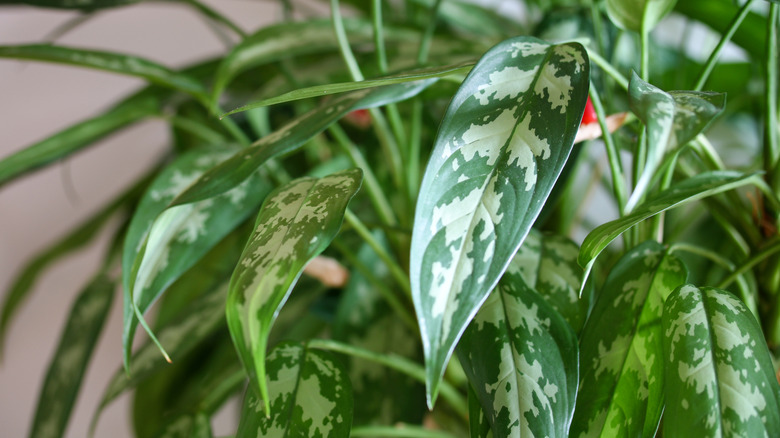
Aglaonema care is fairly simple. It's a tropical plant that prefers warm, humid environments, so avoid placing it near drafts or underneath an air vent. Ideally, your plant should come from a nursery already potted in well-draining soil and a container with drainage holes, but if not you can typically repot your Aglaonema plant without any major issues. While they prefer well-draining soil, they also appreciate regular watering and misting. Your Aglaonema can bounce back from occasional missed waterings, but for the healthiest plant you should water it whenever the top few inches of soil dry out.
Give your Aglaonema a balanced houseplant fertilizer during the growing season, and repot it every few years. If it is thriving and growing too quickly, you might consider propagating it. This can be done through stem cuttings or by dividing the roots while you're repotting it. Aglaonema does not have any major pest or disease problems, but do keep an eye out for some of the most common houseplant issues such as aphids and root rot. The only thing left to do is enjoy your lush, beautiful Aglaonema plant — and hey, if it needs a shelf-mate, why not try one of these 16 low-maintenance indoor plants?