

Moving Light Switches Is A Breeze With These Top-Rated Products
We may receive a commission on purchases made from links.
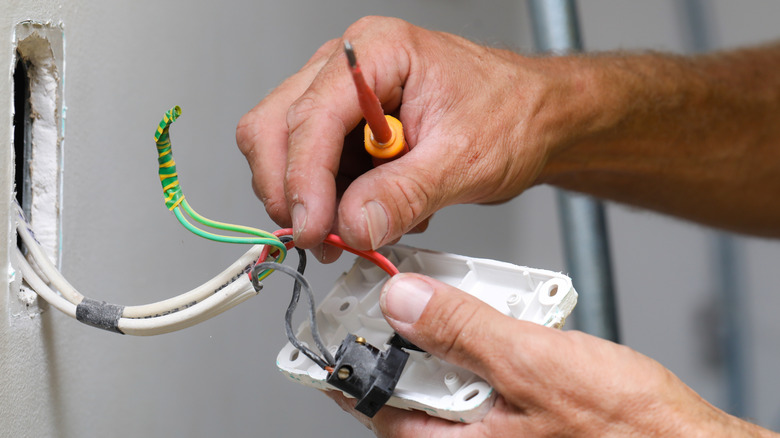
Some people put light switches in the strangest places, outside of bathroom doors, on stair landings, in kitchens while even though they control garage lights, and the like. Other people want to move light switches to the strangest places. Whether you need to undo someone's whimsical switch placement or create a new curiosity of your own, we can all agree that relocating a switch can quickly become a messy, and even expensive, affair.
Fortunately, this problem has been solved by companies using wireless technology to make super-flexible switches that require little wiring and no cutting of drywall. But some would argue that the problem was solved ages ago, in 1984. Survivors of the '80s will remember the Clapper, an electrical outlet that was activated by a clap of the hands. In many ways, the Clapper represented the very things people want today in a solution to their switch-location woes. It was so effective at controlling a lamp that the location of a wall-mounted light switch was basically irrelevant.
If you knew the Clapper was there, that is. For the most part, home tech has moved on from the Clapper, and these days visitors are more likely to grope around in the dark for a switch, wave their arms wildly to activate a motion sensor, or shout "Hey Google, Alexa, whatever, turn on the dang lights!" for a while before breaking out their phone flashlights. Let's take a look at a few of these modern improvements that actually make moving a switch pretty painless these days.
The wireless switch approach
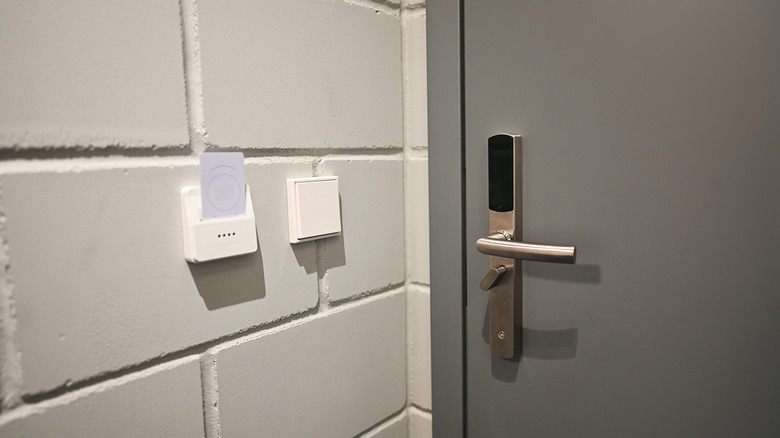
The usual way to solve the switch-moving problem is to replace it with a wireless switch that you can locate where you want. This switch wirelessly operates a module attached to the light's wiring (or sometimes at the original switch location). Think of that module as the clapper, and the battery-operated wireless switch as your hands.
The Thinkbee Wireless Light Switch and Receiver Kit (4.6 stars on 3,887 ratings at Amazon) is perhaps the most universal and universally loved solution to the switch-moving problem. Its premise is simple: Install the Thinkbee receiver between the wiring and your light, much as you would install a ceiling fan, then use the wireless wall switch wherever you want. The Thinkbee receiver can be paired with as many as eight switches, which makes three-way switches seem like a quaint twentieth-century artifact. Thinkbee switches are IP66-rated, which means you can install one in your shower or on a tree in your yard, if you think that's a good idea. The Thinkbee requires a neutral wire, but there's a good chance you have one at either the old wall switch or at the light fixture itself. You can usually install the wireless switch in either location, assuming the old switch is not a three-way.
There are a few nits to pick with the Thinkbee switch, according to reviewers. After installing the switch, a number complain that the wire connectors are difficult to use and that the instructions, which barely mention the wiring, are not easy to follow. Some Thinkbee resources seem to show different connectors, and the product's user guide doesn't show connectors at all.
The outlet control option
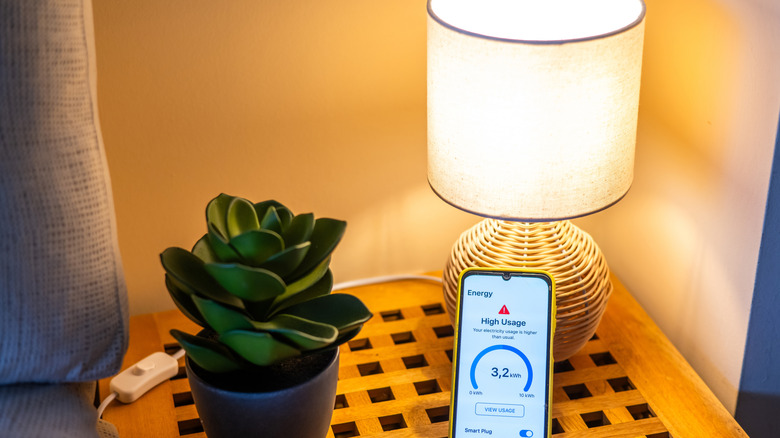
One genius thing about the Clapper was that it was effectively a wirelessly switched outlet, way before the days of wireless smart outlets were a thing. Another is that it didn't require hardware affixed to the wall; it basically used your hands as a remote. This meant you could power on and off just about anything you could plug in, in the same way you'd use a switch for one of those weird lamp receptacles that only work when a switch is on. So if the light you want to switch has a standard 115-volt plug, or if it can be made to have one, a product like the Suraielec Wireless Wall Switch Remote Control Outlet (4.7 stars on 2,961 ratings) can get you most of the way to Clapper functionality.
The remote control included with the Suraielec kit can be kept loose, as on a keychain, or mounted to a wall in a standard Decora-style wall plate. The Suraielec has a couple of other advantages: You don't have to do any wiring at all to use it — not even the basic ceiling fan-level wiring required for the Thinkbee. It has decent range at 100 feet and can handle up to 10 amps, more than enough for most residential lights. You can also configure it so that multiple switches can control a single light, or a single switch can control multiple lights (or whatever you want to plug into the Suraielec outlet). The downside is that it's not practical to plus a ceiling-mounted light or a wall sconce into an outlet that the Suraielec can control.
The occupancy sensor approach

The original version of the Clapper had a feature few remember. You could set it to turn on lights (or a TV or whatever) at hearing any sound at all, which was a great for welcoming home someone carrying groceries or for deterring a burglar intent on stealing your groceries. This was the most basic occupancy sensor, a concept that has been refined by the smart home industry so that your lights need not be triggered by every garbage truck, strong wind, dog, or cat in your neighborhood. Lutron Caseta Smart Lighting Auto On and Off Motion Sensor (4.6 stars on 940 ratings) includes a configurable motion sensor that wirelessly communicates with your Lutron wall switch, keeping your hands off altogether.
The Lutron sensor is highly rated, but reviewers do have some problems with it. Many note that it does not play well with smart home systems or logic — one key shortcoming being that the sensor itself doesn't have any awareness of when a light has been turned on through some other means. And more than a few complain that the price of the sensor and switch together is about $120.
There are other options, but all have failings. Kasa makes a smart home light-sensing switch, but it must be hard-wired. You can easily find motion-sensor-activated outlets, but they're harder to come by for wired lights. There are also a few exterior wireless light sensors that might be adaptable, such as the Dewenwils Motion Sensor Light Switch.
The smart home approach

Smart lighting has progressed beyond the Clapper model of replacing a physical switch with mere sound activation. Modern home automation systems will allow you to integrate your lighting with its hub and tons of other smart devices, making switches all but irrelevant. You can still "move" your switch by using something like the Thinkbee, or you can install the Kasa Smart Motion Sensor Switch (4.4 stars on 6,506 ratings) mentioned above. While it requires wiring directly to the light, its hands-free operation means the location of the switch is mostly irrelevant.
The important thing is that the smart home integration features that come with the Kasa switch can give you tons of other ways to operate your lights. They can be voice-controlled through products like Alexa and Hey Google, and you can build custom automations using products like Home Assistant to tie the on/off state and brightness level to just about anything. This includes sophisticated presence-sensing systems that use of motion sensors, cameras, mmWave radar, your Wi-Fi router's ability to sense your phone, and more.
When it comes to light switches, the real magic of smart home tech is that you can create routines to address specific needs or solve particular problems. Lights can react not only to your presence, but also to ambient light levels, the time of day or night, the status of doors, and others. You can also more finely control attributes of the lighting like how long the light remains on after a space becomes unoccupied, how bright the lights are, and (with certain smart lights) the color temperature of the lights.
Connecting a switch to a different light
What if you leave your light switch in place and move the light itself? Or, more likely, use a different switch to activate a different light? For example, if your goal is to easily turn on a light in a dark room, it might not necessarily be the room's main overhead lighting. Entering a dark room and activating a lamp by voice control will often get you through the space well enough to pass on through, have a seat, or even reach the "real" light switch. One smart thing about the Clapper wasn't that it was an alternative to using a light switch, but that it allowed you to add another light source like a lamp (since it was a remotely controlled outlet).
And, sure, you can still buy the Clapper (3.6 stars on 17 reviews), but given the reviews, you might be better off with one of the outlet control options. But come on: What can be more fun than standing in the dark and clapping to turn on a lamp? Well, the Capper folks do have a few things that are more fun (and more appreciated by reviewers), like several "Star Wars"-themed Clappers, another designed like A Christmas Story's famed leg lamp, and our personal favorite, the Bob Ross talking night light and light switch (four stars on 16,990 ratings). But we'll warn you now that you will occasionally get the Clapper song stuck in your head.