

You've Probably Been Leaving The Toilet Lid Open When Not In Use — But Should You?

Although leaving the toilet seat up is a well-known etiquette taboo, the consensus as to whether you should leave the toilet lid open or not is not quite as clear. With most public restrooms opting for a lidless design, you might think that leaving the lid up in your own home is without cause for concern. But it turns out that there are some convincing reasons why you may want to start closing the lid when you are done doing your business.
Besides just being more polite, many people also believe that closing the lid is more hygienic. It is true that flushing will cause a "toilet plume," which is basically an assortment of aerosolized particles that are spread into the air. But the common misconception is that closing the lid before flushing will make a significant difference in the potential spread of germs. Though it is possible that closing the lid may protect you from some bacteria, viruses are much smaller and are therefore able to travel faster and farther, which means that closing the lid might not make much of a difference, if it even makes any at all. Realistically, the most hygienic thing you can do in your bathroom is to clean and sanitize the toilet regularly. However, even disregarding the germ factor, keeping the lid down can also help reduce odors or potential splashes from escaping the bowl; plus, it looks neater overall if you plan to have any guests come over.
Keep the toilet closed to keep kids safe
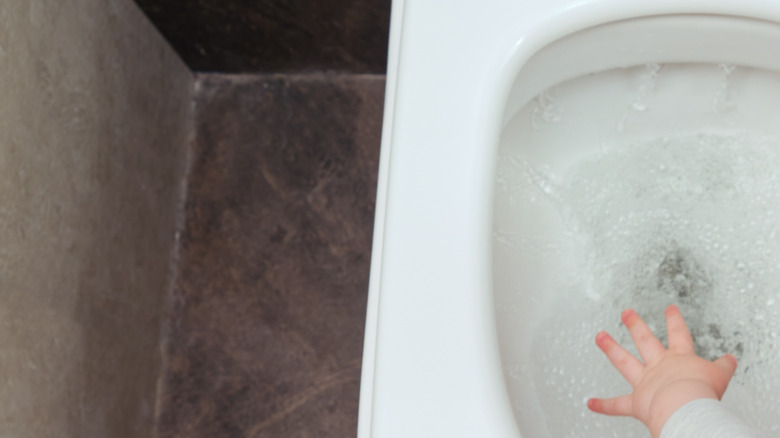
Leaving a toilet open might seem safe enough, but it's not the threat of a toilet plume that you should be most worried about. If you have young children, you want to be sure that you don't leave any standing water around, as it doesn't take much to become a drowning hazard. While it's not as big of a threat as a pool, toilet water is dangerous enough to be fatal to children under the age of five, according to the Consumer Product Safety Commission. If you want to take extra precautions, you can babyproof your home by putting child-proof locks on the doors, or even putting a toilet lock on so that they cannot open the lid.
Not only do you want to prevent the risk of drowning, but kids tend to put their hands on everything they can and then shove their hands into their mouths. You may not be able to stop your toddler from touching the toilet at all, but at least by keeping the lid on, you will have a bit more of a barrier between them and the seat, where most of the germ particles end up anyway.
Why you should keep paws off the porcelain
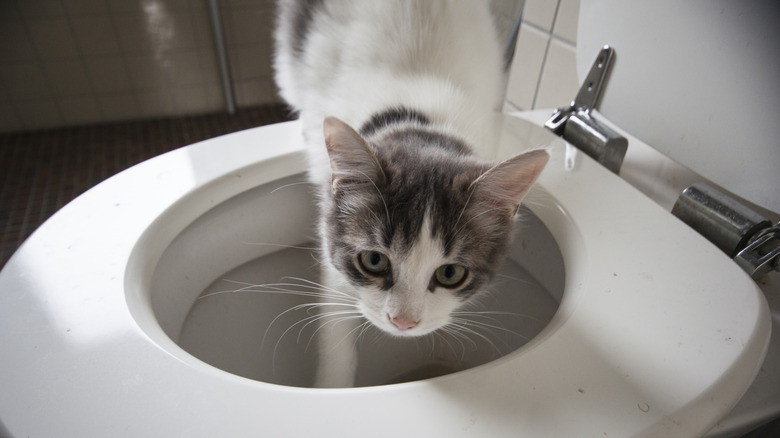
If you have a cat or dog, you have also probably caught them lapping up some water from the porcelain throne. Though it may not seem appealing to you, toilet water is a draw to animals because it is usually colder, and not stagnant like a water bowl. Once the toilet water hits the bowl, you have the addition of anything that may be on the surface, which can include more bacteria or viruses, as well as toxic cleaning agents.
Although the water itself may come from the same source as your tap water, the toilet tap is rarely cleaned, so it can be a hotbed for mold, bacteria, and other pathogens. Bleach is one of the most often used disinfectants used in bathroom cleaning, but even when highly diluted, it can make your pets ill. It's not the only one however, there are actually quite a few common household cleaning products that can be toxic to your pets, so if you are going to use them, you want to make sure you are taking precautions to keep them safe and always take care to close the toilet lid.