

Icy Driveway Too Cold For Your Usual Salt? Try This Better Version
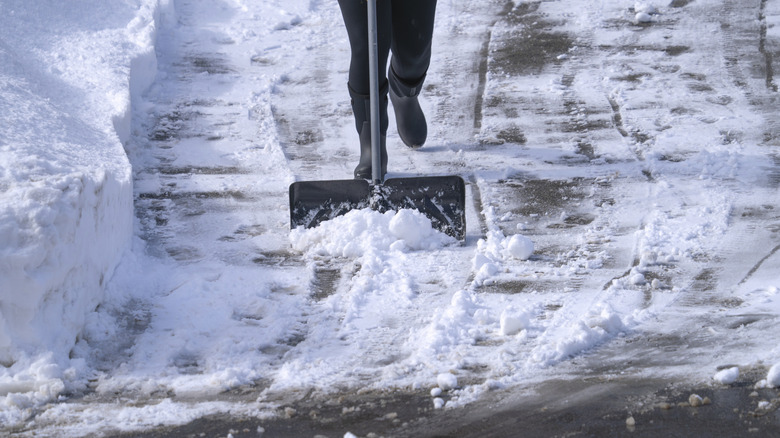
If you've ever experienced a winter in a colder climate, you'll know that those freezing temperatures and biting winds are no joke. But even winter weather veterans may not know that there's a much more powerful option for icy driveways than rock salt, which is otherwise known as sodium chloride. A close cousin, calcium chloride, may actually be the key to fighting your winter woes. This compound is capable of melting ice at temperatures as low as -25 degrees Fahrenheit, which is significantly lower than rock salt, which taps out at around 15 degrees.
Not only does calcium chloride work at lower temperatures, but it also melts ice particularly quickly. This is a great option if you need to defrost a driveway in a pinch, or if you're working with a thick layer of ice. That said, while you can purchase pure calcium chloride, it can be a bit expensive — so finding a blend that includes it might be a better option than buying pure pellets. It's also common to combine ice melts with sand to give you some extra grip, just in case the ice doesn't melt all the way. For best results, you'll also want to pretreat your driveway before it snows.
Is calcium chloride better for the environment?
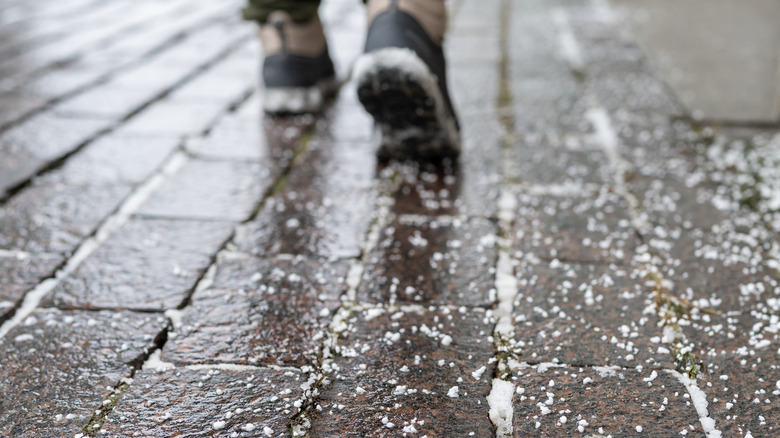
Rock salt is considered to be harmful to the environment: It can negatively affect plants and aquatic life, and may even pollute drinking water. Calcium chloride, however, is friendlier to the environment in some ways — it's biodegradable, for example, and less likely to cause damage to the plants in your yard.
That said, there are some things you should know about the effects of calcium chloride before you use it. While not quite as damaging as sodium chloride, it can still be quite corrosive to certain metals. Like sodium chloride, it's also highly hygroscopic, which means that it should be used sparingly if possible to prevent erosion, cracking, and flaking of concrete. If the damage is already done in that regard, you can repair crumbling concrete without completely replacing it.
You'll also need to use just the right amount of these chemicals for them to be effective, so make sure you always follow the directions listed on the container; this will help prevent unnecessary waste and minimize any negative environmental impacts. If you're still concerned about the possible effects that ice melt could have on the environment, you may prefer a cheaper (and much more entertaining) option — removing ice from your driveway with a pitchfork.