

Keep Your Snake Plant Alive And Thriving With These Easy Winter Care Tips
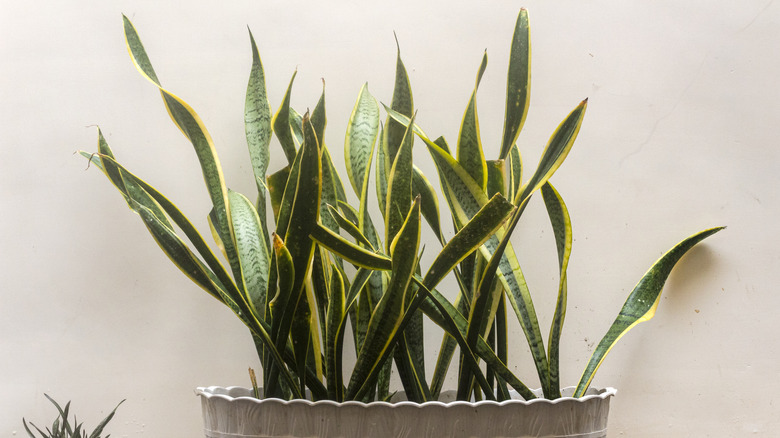
Out of all the common houseplants, snake plants (Dracaena trifasciata) are one of the easiest to care for. Snake plants are great for low-light rooms, and they're hardy enough to bounce back from neglect or a beginner's mistakes. Winter can be a difficult time to care for houseplants, however — even simple ones like snake plants. To keep your plant healthy through the cold winter months and help it flourish in the spring, you'll need to follow a few key steps.
When winterizing your indoor snake plant, the first thing you'll need to do is make sure it isn't placed under a heating vent. Both air conditioning and heaters can harm plants, as sudden temperature changes cause them stress. Snake plants in particular need some humidity in order to thrive, and the dry air from a vent can leave them crispy and dehydrated. Avoid drafty windows for the same reasons, and also because the air coming in from outside may be too cold for them. Ideally, you should find a warm, slightly humid place for your snake plant to ride out the season – a room temperature above 50 degrees Fahrenheit would be best.
When to water your snake plant in winter
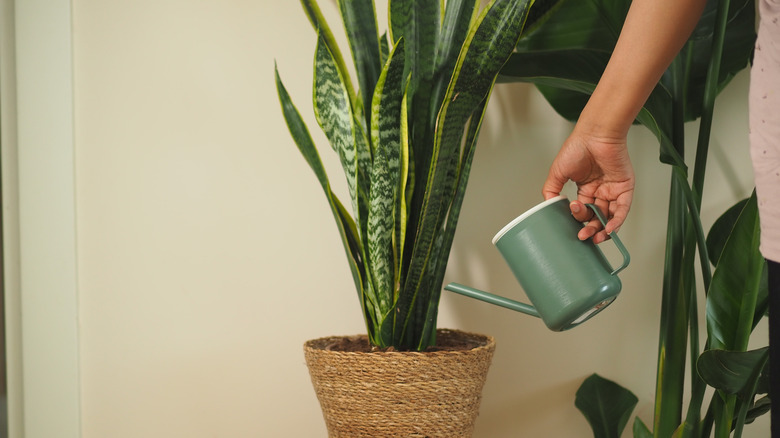
When plants go dormant through winter, they use fewer resources. Your snake plant won't need as much water during this time, meaning it'll be much easier to overwater it. You may already know how often to water a snake plant during the growing season, and, in some ways, your watering routine will be similar in winter. Never water your snake plant when the soil is still damp, and test the soil with a finger to ensure it's dry before you give it a drink. Watering once a month at most should be enough for a snake plant during winter.
If you accidentally give your snake plant too much water, the best thing to do is let the soil dry out. While this isn't ideal, your plant will likely survive an occasional overwatering. However, be careful not to make it a habit! While a little bit of extra water isn't the end of the world, these plants do not want to spend all winter sitting in cold, soggy soil. If that happens, or if some kind of accident resulted in your snake plant being thoroughly soaked, repot it in fresh, dry soil to minimize the damage.
How much light does a snake plant need?
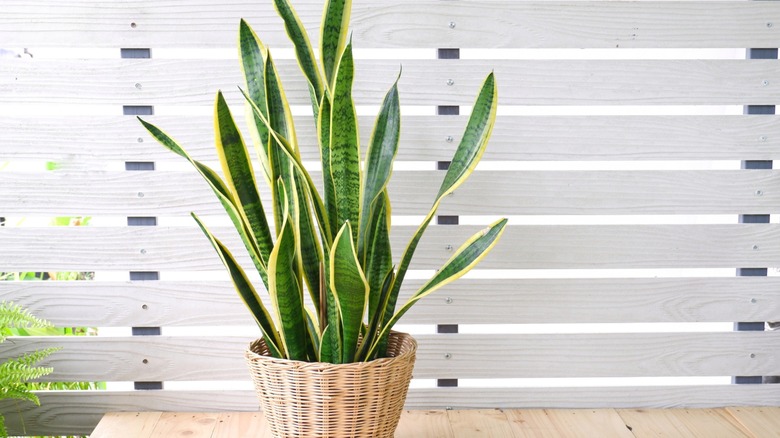
Part of what makes caring for a snake plant so simple is that they don't need a lot of light to grow. That said, when the days are shorter and the sky tends to be cloudier, it can be tough for a plant to get enough light — and even snake plants can struggle with this! You may need to move your plant to a sunnier spot during winter, or, if there isn't a good place for it, you can try supplementing the natural sunlight with a grow light. Additionally, if only one section of your snake plant is getting light, you should turn your plant to ensure even distribution.
If your snake plant starts to look paler or duller than normal, losing some of the gloss that makes it so attractive, it likely needs more light. Weak or discolored leaves can also indicate that it's not getting enough. Your snake plant may also grow more slowly or absorb water less efficiently, leaving the soil damp for longer. Those signs, however, are hard to notice in winter, as the plant is already slowing down. Overall, the best way to keep your snake plant happy in the colder season is to pay close attention to it — and do your best to follow this care routine.