

Why Experts Are Urging You Not To Use Fabric Softener For Dust-Free Ceiling Fans
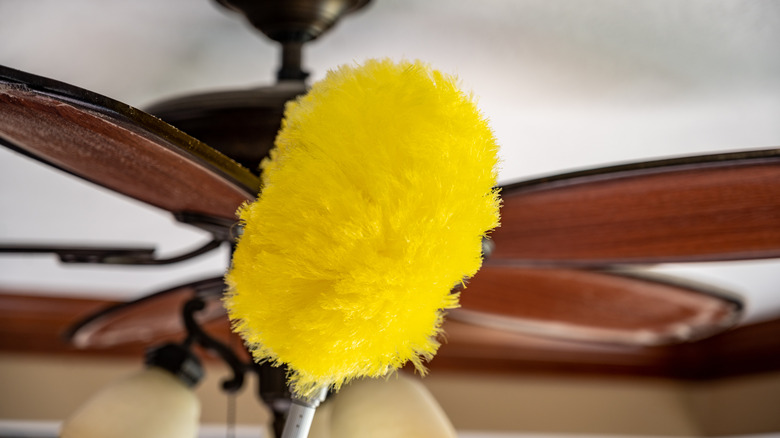
Dusting isn't a fun chore for most people, but it is nice to have a clean, dust-free home. That's why so many people turn to cleaning hacks for help — like making DIY reusable dusting cloths. At their best, these tricks can make cleaning so much quicker and more effective, but, at their worst, they can also be actively dangerous. Unfortunately, the viral hack of using a fabric softener spray to clean your ceiling fans falls into the second category.
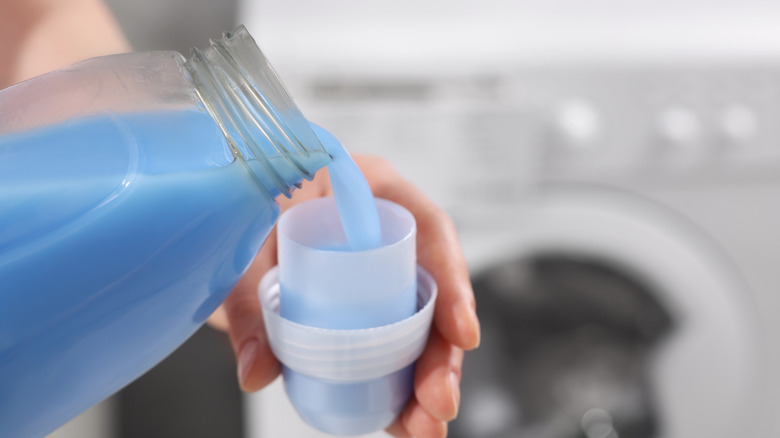
Fabric softener works by leaving a thin residue on clothes or objects, which makes them feel sleeker and softer. However, this residue is also flammable. This is typically only a concern if you're using fabric softener frequently or applying it to flame-resistant clothing. But it can also be a problem if you're leaving flammable residue all over your house. Spraying fabric softener near electrical appliances – such as a ceiling fan — is particularly high-risk. If the wiring malfunctions, it only takes a few stray sparks to cause a devastating accident.
On top of that, this "hack" may also be ineffective. If dust settles onto the fan before the fabric softener is fully dry, it can actually stick to it rather than be repelled. Even if it doesn't become stuck to the ceiling fan, the dust won't just vanish: You'll simply have to clean the same amount of dust off a different surface.
How to safely clean your ceiling fan
There are plenty of clever dusting hacks you can use if you're having trouble reaching your ceiling fan, but few things beat a simple microfiber cloth. Make sure the cloth is clean and turn the fan off first, then wipe down the blades. The dust will drop to the floor, so you'll want to sweep or vacuum after you've dusted. You can also spread a drop cloth under your fan to catch the dust and make cleaning easier.
If some of the dust is stuck onto the fan, you can use a mixture of equal parts vinegar and water to clean it off. Don't spray the fan directly, as the moisture can damage the wiring and motor. Instead, spray the cloth lightly, then wipe the blades. You may need to be firm or take a few passes, depending on how stuck it is. Then, dry the blades with a clean cloth to be sure you don't leave any lingering moisture on the fan. If dust buildup is a major issue for you, you might want to take a look at some of the most common sources of dust and how to deal with them. Cutting down on the amount of dust in your room will certainly make cleaning much easier!