

Take Cuttings From These 10 Outdoor Plants Before Winter Arrives & Thank Us Later
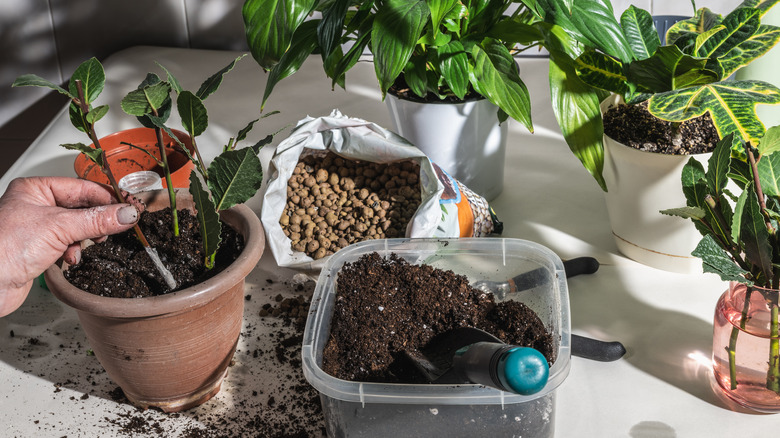
Taking plant cuttings before winter is like an "Act Now Before It's Too Late!" slogan at a going-out-of-business sale. Unlike those situations, however, plant cuttings don't cost you any money. In fact, taking cuttings is an excellent method of not only increasing the number of plants you already have, but also maintaining their unique genetic identities. The process is called propagation, and it can be done with plants as small as flowers to as enormous as oak trees.
Taking a plant cutting is a fairly simple affair. Typically, you just need to look for the node, the connection point where a healthy stem meets the main stalk or trunk. However, other plants can be divided at root level, but we'll get to that later. Just make sure whatever stem or plant you're dividing from is healthy. After the division, you can soak the cut stalk in water for several weeks as roots sprout. Once the roots emerge, you can then either replant them outside, provided they are a cold-hardy plant that can withstand winter temps, or in pots indoors.
Over the course of the winter, the plant cuttings will re-establish their root system in preparation for new growth come spring. Cuttings could even allow you to extend the growing season of more tender vegetables and herbs.
Rose
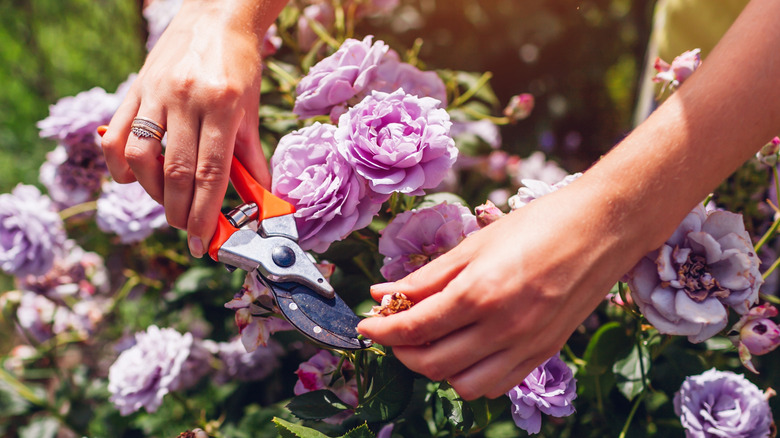
Cutting from a rose (Rosa spp.) in the fall is what is known as a hardwood cutting, as the plant has gone dormant for the season. As such, it will take longer for the roots to establish, but since you're propagating in winter, this shouldn't be an issue. Once you've cut your 6 to 8-inch sections off of a healthy stem, dip them in some fertilized water and plant immediately in a pot of good soil, or wrap the cuttings in several layers of damp newspaper. Roots should appear after about 6 weeks.
Basil
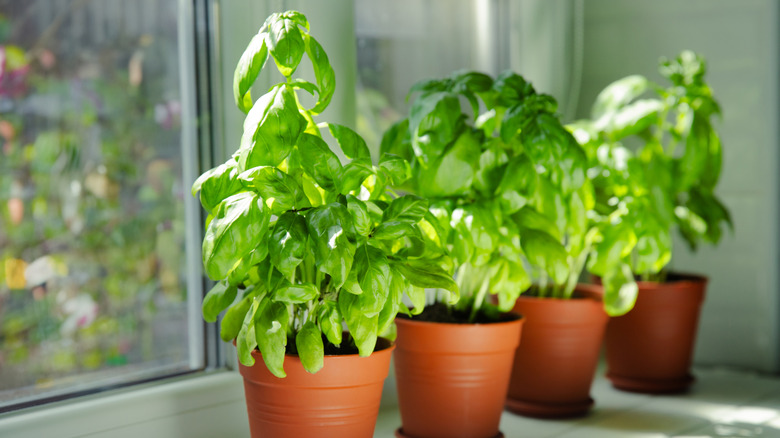
Basil (Ocimum basilicum) is a highly favored Mediterranean herb used in a wide variety of cooking. A plant that favors warm weather over cool, you can extend the life of your basil plants by creating new ones to grow indoors during winter. Before your first frost, cut a 4- to 6-inch stem, strip the bottom third of leaves, and place it in a jar of water in a sunny spot. Roots will appear in a few weeks, at which point you can transplant the cutting to a pot with soil.
Tomato

Tomatoes (Solanum spp.) can be easily managed indoors over the winter if you have the right conditions. The process will be all the easier if you're growing tomatoes from cuttings taken from healthy plants as opposed to starting from seed. Remove a 4 to 6-inch stem from a tomato vine before the first frost. Set the cutting in water until the roots form, which should take about a month. You can also plant the cutting directly in a pot in a warm location with plenty of sunlight. This will keep it healthy until spring planting.
Hydrangea
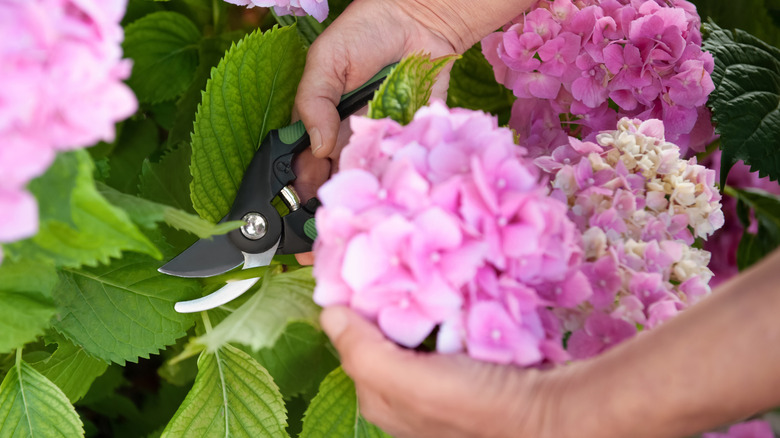
The large, colorful blooms and spreading foliage make hydrangea (Hydrangea spp.) a favorite of gardeners. Much like with roses, it is important to wait until late fall, when the hydrangeas are dormant, to take your cuttings. Cut your 6- to 8-inch section with a 45-degree angle at the base, and scar the sides before dipping it in rooting hormones. Place them directly in pots and keep them in a cool, unheated space, water occasionally throughout the winter, and then plant in the spring. With luck, you may already have some growth on your cuttings.
Rosemary
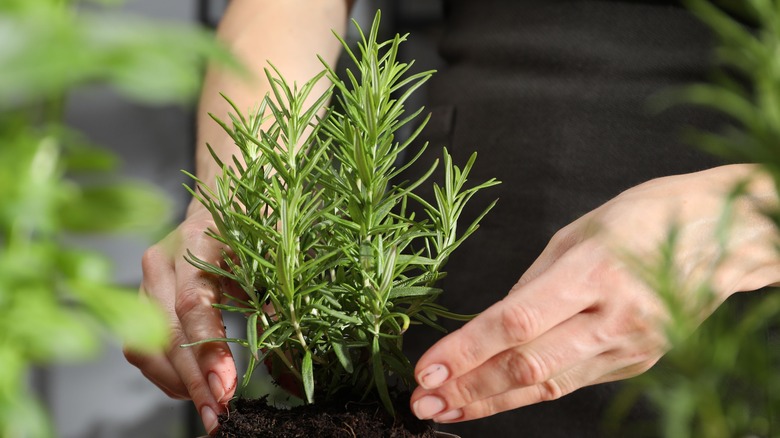
Herbs are among the easiest plants you can grow indoors during the winter, and rosemary (Salvia rosmarinus) is no exception. This woody herb is a wonderful addition to the kitchen herb garden, and you can propagate it by taking a 4- to 6-inch cutting from the flexible tip of a healthy branch. Trim back the leaves along the bottom and trim the base at an angle to help with water absorption. Roots should develop in the water container after a few weeks, at which point you can transfer the cutting to soil in a pot.
Begonia

While you can technically propagate begonias (Begonia spp.) any time of year, waiting until just before winter will help make sure that whatever cuttings you make are safe from winter weather damage. Always cut mature, but not woody, begonia stems with at least two leaf nodes remaining at the top. Remove any lower leaves and place them directly into the soil. The roots will develop quickly when planted this way. Avoid water root development with begonias, as the stems tend to rot in the presence of too much moisture.
Geranium
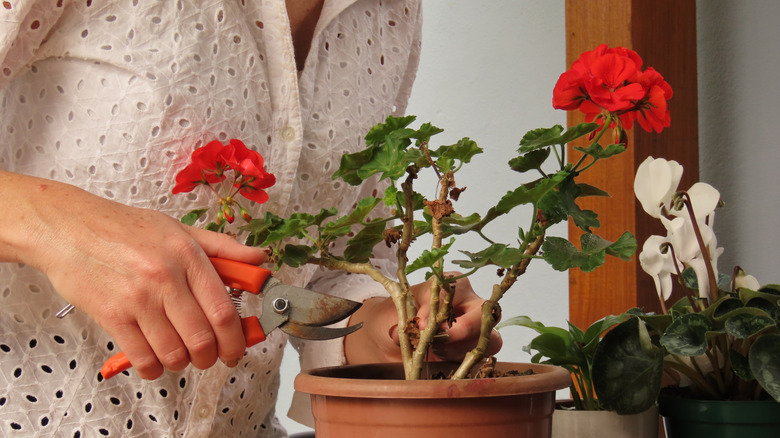
Like the aforementioned begonia, geranium (Pelargonium spp.) will root very easily when taken from cuttings. Take a 3- to 4-inch section from the main stem and remove the lower leaves. Dip the cut base in some kind of rooting hormone, then plant it in a well-drained container filled with porous rooting material, like vermiculite. After about a month, you should have roots long enough to be transplanted directly into a larger pot filled with gardening soil. Keep it in a sunny area and remove any spindly-looking growth that appears. This will encourage healthier, fuller branches in the spring.
Dogwood

Whether you're propagating flowering dogwood trees (Cornus florida) or want to bring color to your winter landscape with red twig dogwood shrubs (Cornus sericea), the method remains the same. Just understand that, as with roses and hydrangeas, you will be taking hardwood cuttings during fall propagation. Make your 8- to 10-inch cut just below the leaf nodes, and make an angled cut at the top. You can plant them directly back into the ground, or in a large pot in a sheltered area, keeping the soil moist until spring.
Lavender
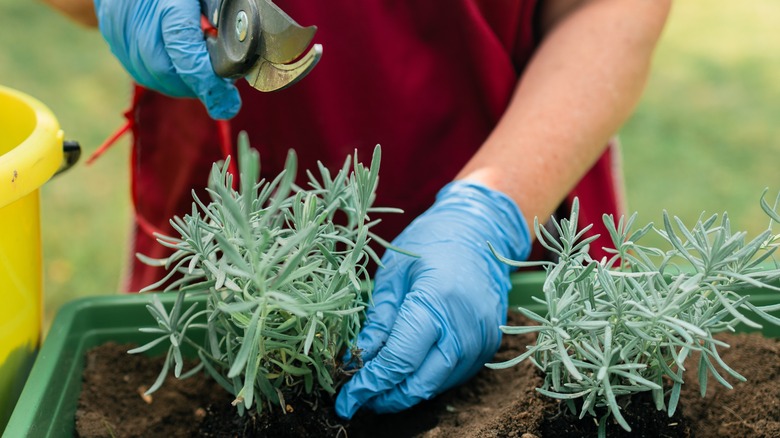
Lavender (Lavandula spp.) needs to be propagated in pots indoors to survive the cutting and transplanting process. In the fall, take a 4- to 6-inch, non-flowering stem and remove the lower half of its leaves. Dip it in a rooting hormone and plant it directly into a well-drained potting mix. You don't want the soil to hold too much water, lest you end up with stem rot. Keep it in a sunny spot and water it every few days. Roots should form in about 4 weeks, at which point it can be transplanted into a larger pot.
Raspberry
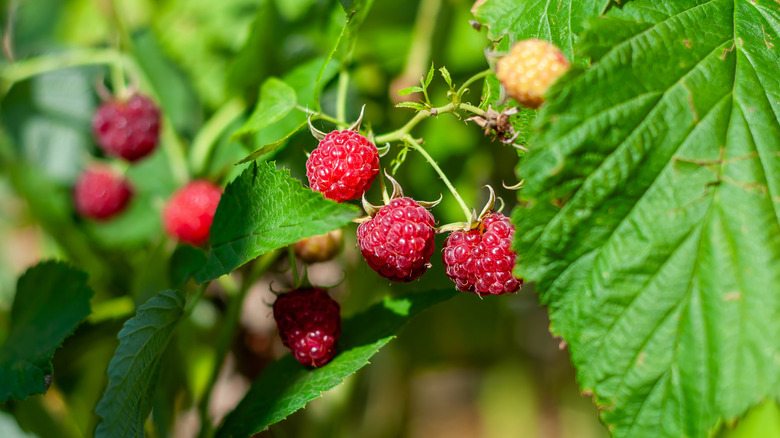
While it is not the most common method for growing raspberries (Rubus spp.), you can nevertheless take cuttings from your bushes to create new plants to overwinter and replant in the spring. Once the bushes have shed their leaves in late fall, take a 5- to 10-inch cutting with two or three leaf nodes remaining at top, and the rest removed. Dip the cut edge in rooting hormone powder before setting the cuttings ⅔ inches deep into the potting soil. Keep them in a sheltered, unheated space until spring, when you should have a good set of new roots established.