

Forget Tiles: This Sleek Backsplash Trend Is Dominating Kitchens Right Now
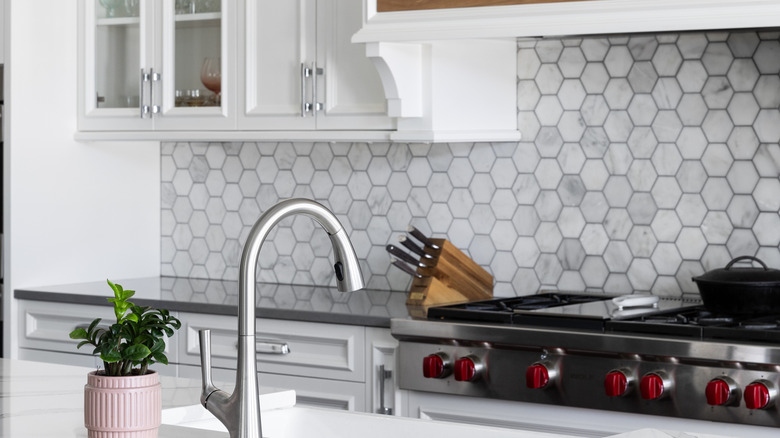
Kitchen backsplashes protect your wall from damage and mess, and they're also a great way to flex your interior design muscles. And while some dated backsplash trends have faded away in recent years, tiles have held strong. However, a newer trend might be on the way to take their place. Slab backsplashes consist of a single piece of material, as opposed to the many tiles that make up a typical tile backsplash. They're most commonly made of granite, quartz, marble, or porcelain, although some homeowners have found ways to get creative with materials like glass and metal.
There are several reasons why slab backsplashes have taken off in popularity — one of them is how much easier they are to clean. Learning how to clean tile countertops can be frustrating, but there are no cracks or crevices in a slab, which makes wiping up a mess much simpler. They also tend to be more durable than tiles, although this can vary depending on the material the slab is made of. In many cases, though, a slab backsplash might be a perfect solution if you're tired of replacing tiles when they become chipped or cracked.
Aesthetically, a slab backsplash also has a cleaner, more elegant look to it. Tiles can look busy if the pattern isn't planned out well, and you need to choose your colors carefully to avoid clashing. Slabs are more neutral, making them less likely to clash with the rest of your decor. And since they consist of just a single piece, they won't look as busy, either.
The downsides of slab backsplashes
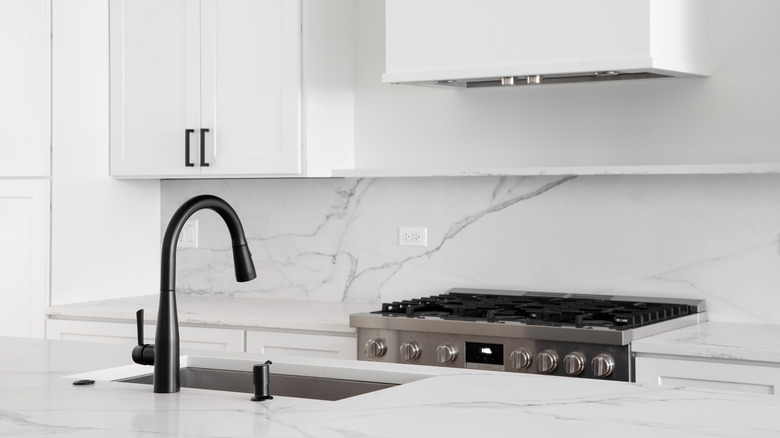
Slab backsplashes have many pros, but they aren't for everyone. For example, securing a large piece of marble — or even a less expensive material — often comes with a higher price tag. That alone may make you reconsider a stone backsplash for your kitchen, but you should also think about ease of installation. Tiles are a DIY dream: You can install them yourself relatively easily and get creative with different colors and patterns. Slab backsplashes almost always need professional installation, however, as the piece is heavier and often needs special equipment to cut and install safely. Additionally, you're limited by the types of stone available in your area.
Depending on what you're looking for in a kitchen backsplash, these downsides may not outweigh the pros. After all, if you aren't a fan of DIY projects (or if you're currently dealing with too many), then professional installation might actually be a plus. If a slab backsplash sounds perfect, but the lack of creative options is getting you down, you can always paint it. Just be sure to seal it to prevent the paint from flaking off or warping.