

No Garden? No Problem. Here's How To Grow Basil Indoors (& Actually Keep It Alive)
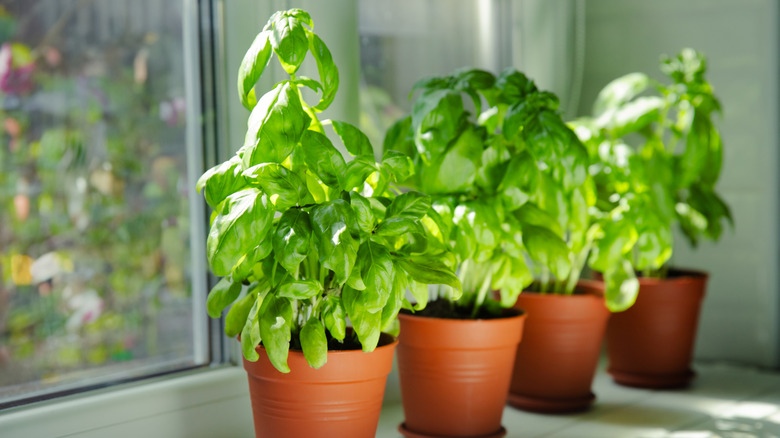
Basil (Ocimum basilicum) is one of the absolute best plants to grow at home. The leaves are delicious in an endless number of dishes, from homemade pesto to your favorite Thai curry. Not just great for your recipes, the herb also has a wonderful and sweet aroma that keeps things smelling fresh, and, even better, it serves as a natural repellent for flies and mosquitoes. If you like the sound of these benefits but don't have a garden in your home, fret not — because basil can be remarkably easy to grow indoors.
The first choice you'll face when growing basil indoors is whether to buy an established plant or grow one from seed. The easier choice is obviously to buy the established plant, as your main focus then will simply be on basil plant care and maintenance, allowing you to grow and harvest to your heart's content. To start from seed, make sure you have moist, well-draining soil in a pot with large drainage holes. Even though it will stay alive throughout the year, you should plant your basil in May to take advantage of warmer soil and give it the best start possible.
If you want to start from seed but need to make the plant grow faster, you can always invest in a grow light. So-called "smart gardens" even take care of watering and nutrient provision for you — although you'll need to ensure that you keep their water reservoirs filled and clean the soil to prevent mold from growing.
How to care for an indoor basil plant
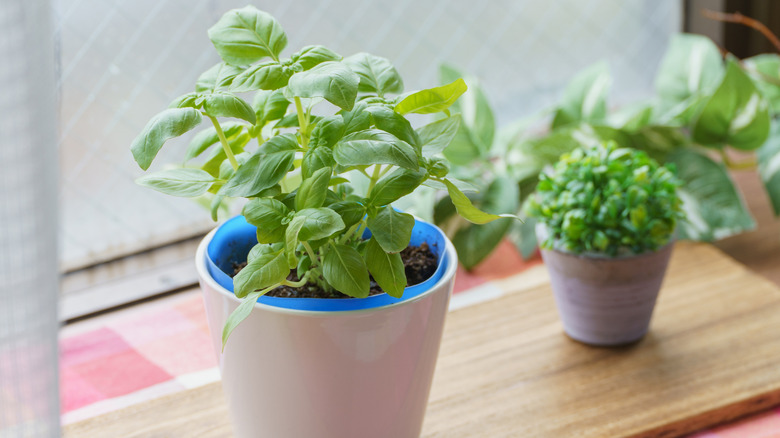
The space you plant your basil in is crucial to its success. To begin with, make sure your plant is placed in a window that gets at least six hours of sun every day. Wherever you put your basil should have an average temperature above 70 degrees Fahrenheit, and if your home is very dry, you should semi-regularly mist your plant, as basil prefers a slightly humid environment. Water the soil whenever you find it dry to the touch. If you want to, there are several other easy-to-grow basil companions you can plant alongside it — just make sure you have a large enough container for all of them.
For maintenance, your main job is to harvest the basil. You can pinch off leaves as needed, which encourages bushier growth, though you should never tear leaves off the stem, as this will damage the plant. For larger harvests, never take more than two thirds of the plant at time. In those cases, use scissors, cut from the top down, and always make sure to cut just above nodes to encourage more branching and growth. By regularly harvesting your indoor basil plants, you'll ensure they stay happy and healthy for a long time to come.