

Exactly How Often To Water Your Snake Plant To Keep It Thriving For Years
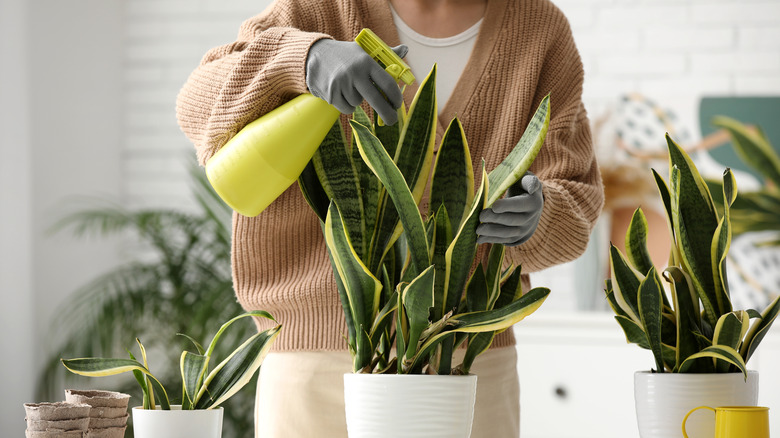
We may receive a commission on purchases made from links.
Though snake plants (Dracaena trifasciata) can survive outdoors all year in USDA hardiness zones 10 through 12, they're popular houseplants since they rarely give up when faced with limited sunlight, fluctuating humidity, and other challenges that accompany indoor living. That said, don't overlook a snake plant's needs because it's slow to protest. Several common snake plant problems stem from overwatering. Learning how often to hydrate your snake plant sets you up for years of success with this enchanting evergreen.
Though there isn't a magic number of days to wait before giving your snake plant a fresh drink of water, you can watch for signs that it's craving a moisture infusion. A weekly thirst check is generally a good idea. If this succulent's soil is damp, don't break out the watering can yet. Checking for dampness again a day later is more than sufficient. Once the soil feels dry, the likelihood that your snake plant wants water increases. Your snake plant will probably want water every two to six weeks, but keep in mind that air temperature, sunlight access, soil composition, and the container housing your snake plant can all influence its hydration requirements.
In addition to keeping tabs on the soil's moisture, monitor your snake plant for signs of over-hydration when determining when to water it next. The leaves of an overwatered snake plant are likely to lose their firmness. They may also turn yellow or flop over, both of which may indicate root rot or oxygen deprivation. Root rot often develops in overly wet potting mix and sometimes creates an unpleasant odor. If you suspect that it's present, let the soil dry out immediately.
Tips for determining if your snake plant is thirsty

Quickly patting your snake plant's soil can tell you if it's wet or dry, but you should dig a little deeper when assessing its moisture needs. The soil around your plant's roots may be quite damp even when the soil closest to the top of the pot feels dry. Adding more moisture to this situation can easily lead to a waterlogged plant.
You can use a moisture meter such as the Censinda indoor-outdoor hygrometer to see if lower layers of soil have dried out yet, or simply push a finger several inches into the soil. If moisture is present, it will feel damp and cool. If you'd prefer not to get soil on your finger, push a chopstick or skewer stick into the soil, taking care to maneuver it around your snake plant's roots. Let the stick rest for a minute or two. Then, remove it slowly and see if any particles of soil stick to it. Soil clinging to the stick indicates that moisture is present, whereas soil falling off of the stick indicates that the soil is dry.
It's also smart to know how this low-maintenance indoor plant tends to behave when it's thirsty. Like an overwatered snake plant, an underwatered one may appear a bit floppy. However, an underwatered plant is likely to have crispy brown leaf tips and foliage that looks wrinkly. An overwatered specimen usually won't communicate its disapproval in this way.