

The Easy Trick The Pros Use To Cut Back Ornamental Grasses For A Stunning Landscape
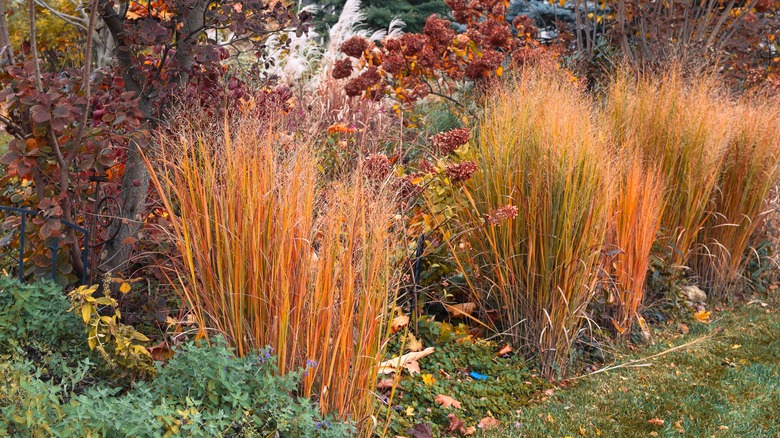
Ornamental grasses are a great way to enliven your landscape and provide a habitat for local wildlife. Their color, depth, and structure provide your lawn with excellent style, while also serving as an ecologically friendly alternative to conventional grasses, which often require chemical pesticides and fertilizers. Like virtually all other plants, however, ornamental grasses need to be cut back from time to time in order to ensure longevity, keep them healthy, and maintain their visual appeal. If you're unsure of just how much to cut back, there is a little trick that professional landscapers use to keep ornamental grasses looking stunning.
Angie Hicks, co-founder of the home services website Angi, tells Martha Stewart that you want to start by pruning what's clearly dead — but you never want to remove too much, lest you harm the plant unnecessarily. "A good rule of thumb," she says, "is to never remove more than one third of the plant's total living growth."
When it comes to tools, you can use any number of different types, from electric hedge trimmers to manual shears. A chainsaw might even be appropriate with certain varieties of ornamental grass. As far as how much to cut, remove enough so that the remaining stalks are 3 to 6 inches from the ground. This will ensure that they grow back with vigor. Tie up the bundle you're cutting beforehand to make for easier transportation to the compost pile.
When to cut back your ornamental grasses
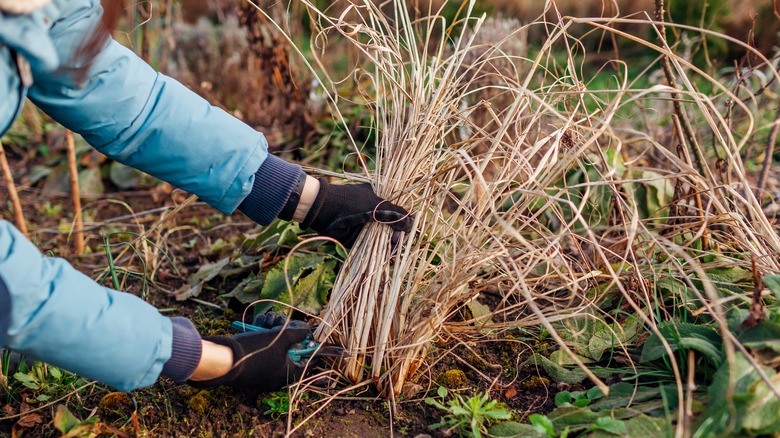
Whether you want to split and transplant your ornamental grasses or simply cut them back, timing is just as important as knowing how much to take away. While there are numerous different kinds of these plants, they can be pretty evenly split into two categories: warm or cool season. Warm-season ornamental grasses include the likes of maiden grass and fountain grass, while varieties such as blue oat grass and feather reed grass are firmly in the cool-season category.
The time of year for pruning these two varieties is pretty straightforward. Since warm-season grasses grow best in the heat, they should be cut back in early fall when the temperatures cool down and they start to go dormant. This way, they will bounce back with more vigor in the spring. Cool-season grasses should be trimmed back in the early spring, as cutting them during the heat of summer could actually stunt their growth.
Likewise, trimming grasses in winter can open them up to damage caused by freezing temperatures. You can also just choose to leave all of your trimming until early spring, as some ornamental grasses look quite beautiful in the colder season. Just be sure to leave those requisite few inches on your grasses to avoid negatively impacting their future growth.