

20 Smart Ways To Reuse Milk Jugs: You'll Wonder Why You Didn't Think Of These Sooner
We may receive a commission on purchases made from links.
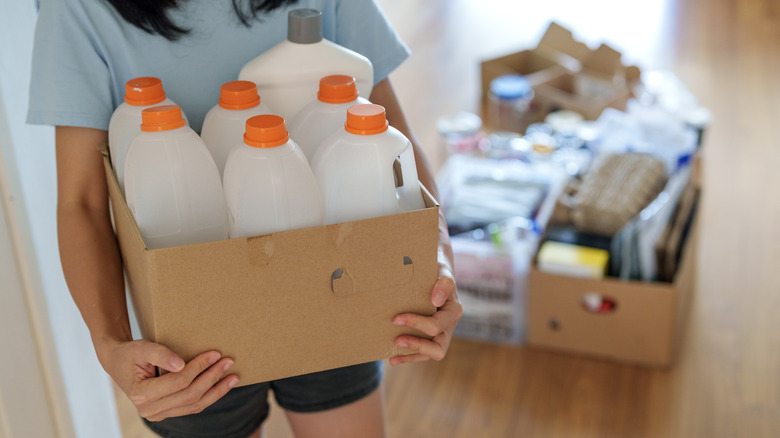
Plastic milk jugs may look modest, but they're terrific for creating brag-worthy home decor, storage solutions, and garden upgrades. Since they're made of food-safe plastic known as high-density polyethylene (HDPE), they're especially useful for holding cooking staples and crop-producing plants. It's easy to clean HDPE, and you can toss this plastic in your recycling bin once your upcycled object has outlived its usefulness.
Though HDPE is a high-value material at the recycling center, it's just as valuable for crafting since it's durable, flexible, and versatile. Start your repurposing journey by cutting a jug in half and using the bottom portion for storing bottled cleaning products or hair care items. Keep a stash of these bottles to create all kinds of other home and garden objects, like a watering can or seed starter station. In addition to extending the life of the jugs, you're saving money each time you make something for your house rather than buying it.
Build a sandwich holder

A perfectly prepared sandwich can morph into a mushed mess when you transport it in a zipper-sealed bag. To shield it from heavy objects that might squish it, fashion some sandwich armor. You can make this type of protective case out of a half-gallon milk bottle. Cut away a rectangular piece that contains the handle, and make a few strategic snips to form a foldable box. The YouTube channel Let's Remake It! has a demo video of one easy method. Add a button and a rubber band to create a fastener that holds the case shut.
Put together a plastic bag dispenser
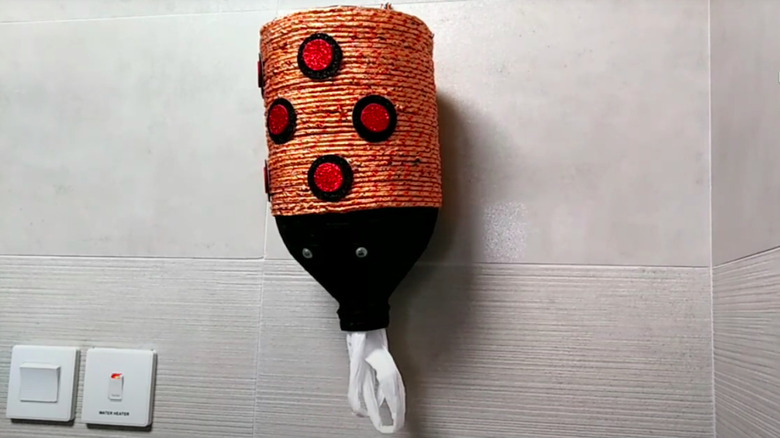
Disposable shopping bags make great wastebasket liners, so they're worth saving after a supermarket run. However, they can take up lots of space, especially if they form a sprawling pile. A dispenser made from a repurposed milk jug will keep them contained. Find a jug, slice off the bottom, and remove the cap. The bags are easy to load through the wide opening and remove through the narrow one. Want to give your dispenser some personality? Wrap it in patterned washi tape or textural fabric scraps. Or, use googly eyes for a playful touch.
Make a multi-benefit ice block
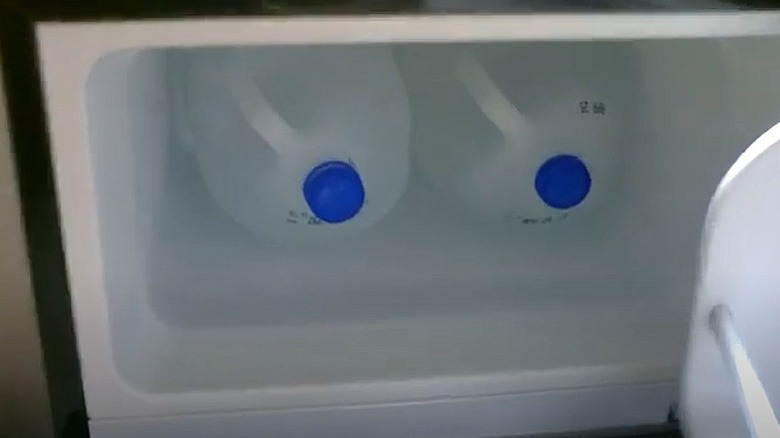
Filling milk jugs with water and popping them into your freezer helps this appliance conserve energy. That's because it doesn't have to work as hard when it's full of frozen items that help keep one another cool. This isn't the only benefit of freezing water-filled jugs. You'll have a big chunk of ice to toss in a cooler at a moment's notice, plus a supply of potable water set aside in case of emergency. Be sure to leave a couple of inches of water-free space near the top of each jug to prevent splitting.
Create a crisper bin for refrigerated produce
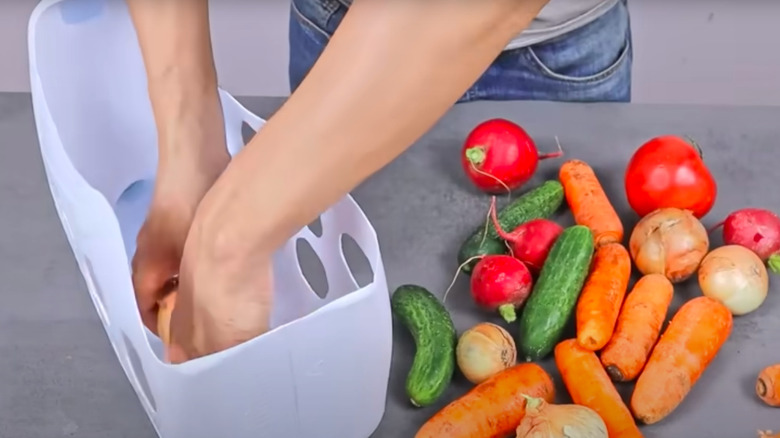
If you bring loads of veggies home from the farmers' market, your refrigerator's crisper drawer may not be big enough to hold them all. Instead of buying a spare, make one for free. Grab a gallon-sized milk jug, lop off the side containing the handle, and position the container so the cap is facing left and what was once the bottom becomes the right side. Cut out six holes that are an inch in diameter on each side. The holes create a low-humidity environment that discourages ethylene buildup and the spoilage it causes.
Craft a small basket
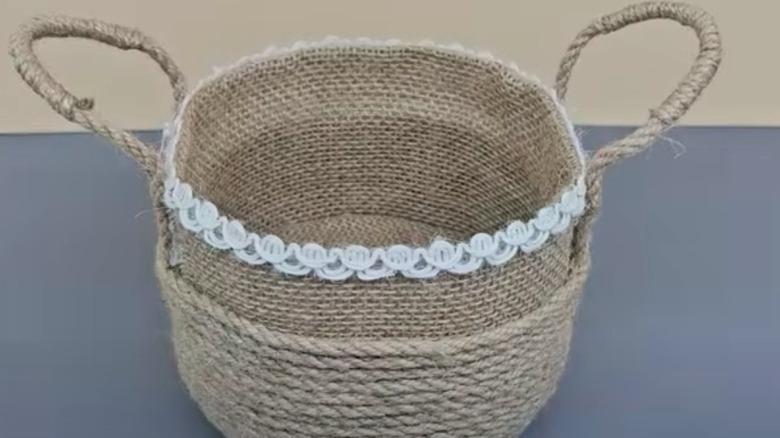
There are all sorts of ways to turn a milk jug into a small basket, and there are even more ways to use this adorable creation. Storing household goods and presenting gifts to friends are two good options. To make a basket, draw its outline, handles and all, on a jug and cut it out. Or, remove the bottom half of a jug and create handles from ribbon, twine, or shoelaces. Want to add color or texture? Decoupage images from magazines on the exterior, paint the plastic with bold stripes, or glue burlap to its surfaces.
Construct a long-handled dustpan
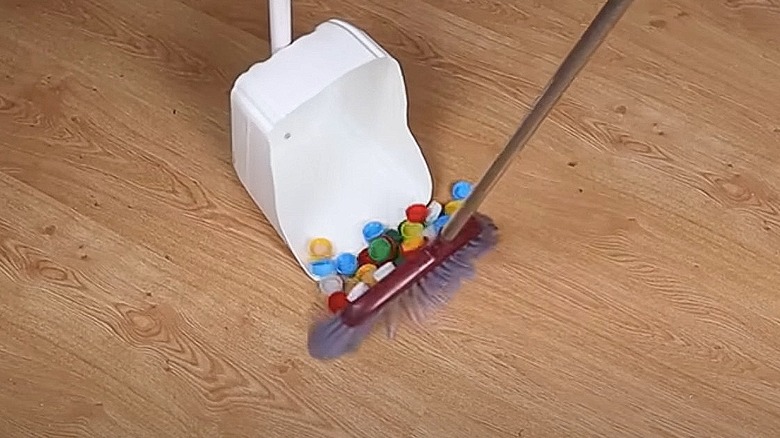
It's helpful to have separate dustpans for indoor and outdoor tasks, as well as a dedicated pan for cleaning up pet messes such as scattered cat litter. Instead of adding another item to your shopping list, make a dustpan out of a gallon-sized milk jug. Slice off the part with the handle, angling the sides of the opening as you approach the bottom of the container. Then, attach a broomstick or another sturdy rod to the pan's back. Drill holes in the rod and secure it with screws, or tether it to the pan with wire.
Reimagine as a book stand
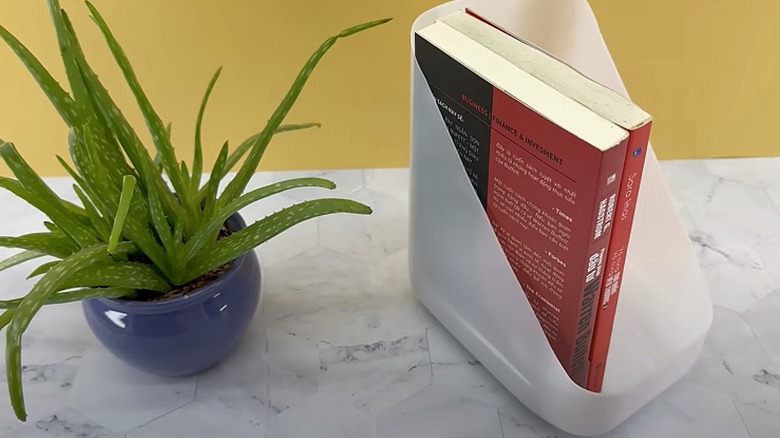
Book stands save space and keep stacks of books from taking over floors and tables. A milk jug offers a quick and free way to do this. Make matching diagonal cuts on opposite sides of a jug, starting at the top corners and ending a couple of inches from the bottom, at which point you'll need to change the direction of your cutting tool and create a horizontal lip. The result will look like a magazine holder. To boost its aesthetic appeal, line it with patterned fabric or make a border with beads or buttons.
Cut out a seed and feed scoop

Many plastic bottles can be repurposed as scoops for pet food, birdseed, and other dry goods. To create one from a milk jug, grab scissors and cut off the bottom. Then, make a V-shaped cut, placing the point near where the jug's handle starts. This will produce a spare piece of plastic you can use for another project or put in the recycling bin. Don't toss the cap, though. It will help keep whatever you're scooping from escaping through the spout. If your new scoop has jagged edges, smooth them out with sandpaper.
Engineer a kitchen sponge holder
Allowing sponges to dry out between uses is important because they tend to grow stinky bacteria when damp. To help keep your sponges from smelling bad, create an evaporation-encouraging resting place for them near your kitchen sink. Start by cutting off the square bottom off of a half-gallon milk jug, leaving a lip that's about an inch high on three of its sides. Next, turn the remaining side into a taller wall for your sponge to rest against as it dries. Finally, poke holes in your creation's sides to give water an additional escape route.
DIY a bathroom organizer with towel bar
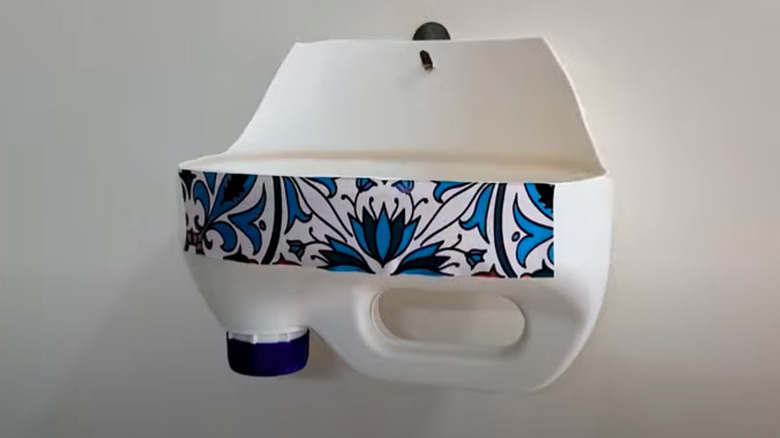
A cluttered countertop can make your bathroom feel more stressful than spa-like. Take charge of the situation by crafting a wall-mounted storage station with a bar for a hand towel and a compartment for small jars or a hair dryer. A gallon-sized milk jug is ideal for this DIY project. If you don't have one, grab another roomy plastic container with a handle, like a laundry detergent bottle. Cut it in half, placing the handle at the bottom and leaving a back flap. Put a hook hole in the flap for easy hanging.
Piece together a shower caddy
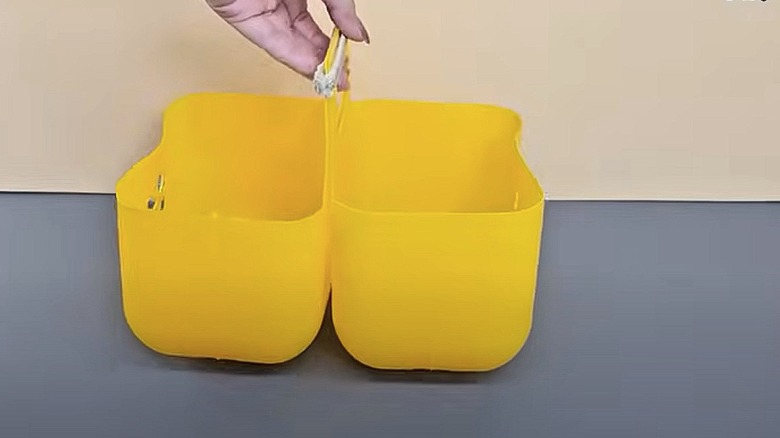
If you share a bathroom with other people, you may need to tote your suds-up supplies to the shower. A DIY milk-jug caddy can simplify this task and eliminate the need for a pre-made alternative. Grab two milk jugs that are the same size, cut them in half, and poke holes in their bottoms. Create identical handles on the left side of one and the right side of the other, then stick them together with waterproof hot glue to make a central handle. You can also use this style of organizer for storing cleaning items.
Upcycle as a hanging soap dish
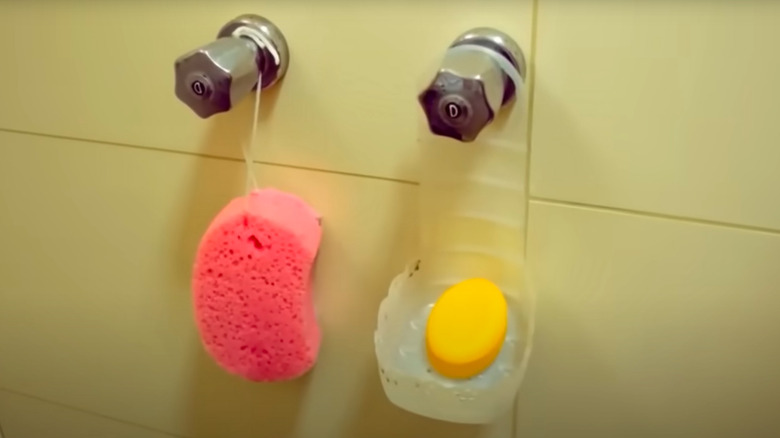
Bars of soap leave residue on shower shelves and tend to slide away from wherever they're set when wet. Tackle both problems with a hanging soap dish made from a half-gallon milk jug. To create a dish to suspend from a faucet or handle, cut off the bottom 2 inches of the jug, leaving a tall panel attached to one side. Punch drainage holes in the bottom, then carve designs into the sides of the dish or embellish its edges with scallops. Finally, make a centered handle hole ½ inch from the tall panel's top.
Repurpose as a toilet brush holder
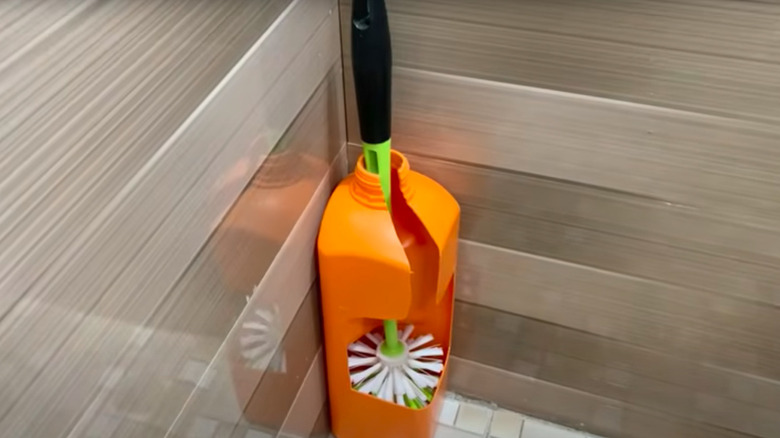
A homemade holder for your toilet brush prevents this tool from dripping filthy liquid on the floor, forcing you to disinfect immediately. To create one, grab a half-gallon milk jug and remove the cap. Next, cut off the handle, leaving a thin opening in one edge of the container. Extend this opening upward, excising a small chunk from the spout, and then extend it down the container's edge a few inches. After that, expand the opening a couple of inches to the right and left to create a window that the brush head will fit through with ease.
Design a holiday luminary
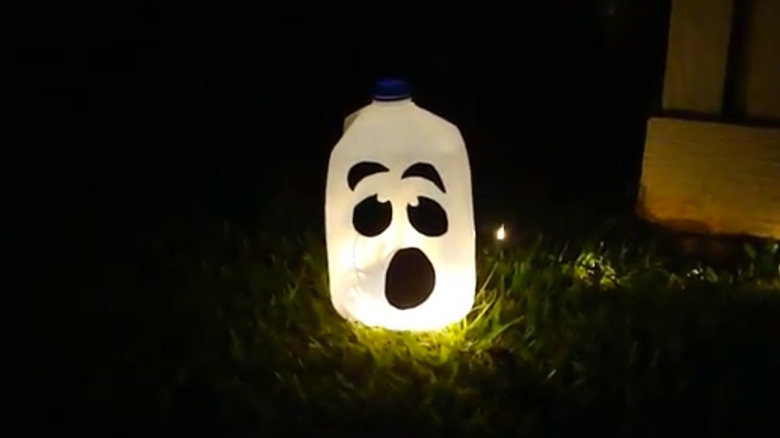
Let milk jugs light the way to your house for the holidays. Draw seasonal designs on the fronts of empty jugs, then place a light source inside each one to create a ghostly glow on your front porch or shining snowflakes beside your driveway. Solar-powered or battery-operated lights are the way to go for this project. Cut a small door in the back of each jug for popping in battery-powered tea lights, or snake a strand of Brightever solar string lights — or a similar fairy lights made for outdoor use — into every container to illuminate it.
Fashion a face-shaped planter
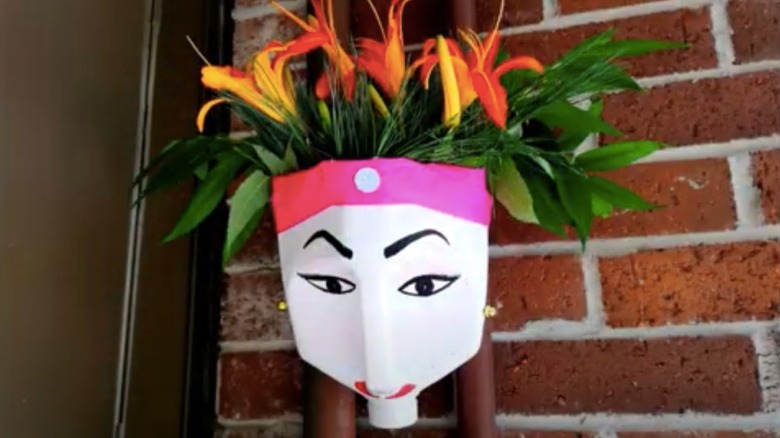
One way to make your garden decor eye-catching is to paint actual eyes on it. The handle of an upside-down plastic milk jug resembles a nose, so add eyes above it and a mouth below it to create a statement piece. After removing the jug's base, insert potting mix and a plant with foliage that will serve as your new character's hair. Whether you go with spiky snake plants or medusa-like vines, your creation is sure to capture attention. For maximum impact, place your potted plant in a prime location — perhaps using an easy DIY macrame hanger.
Lop off a protective garden cloche
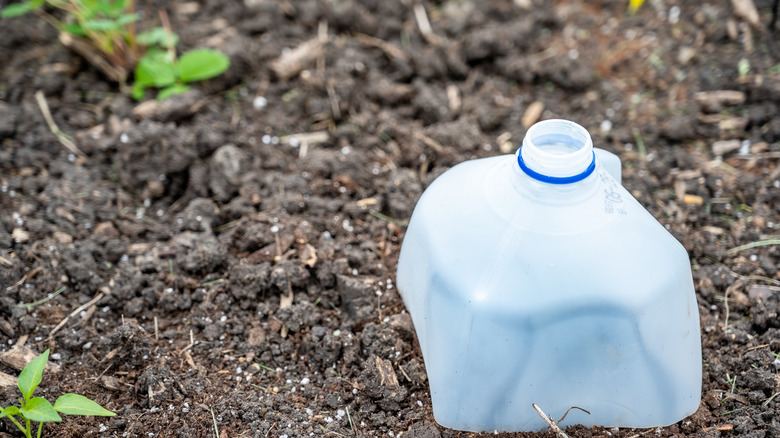
Milk jugs are ideal for upcycling in your garden because they're tough enough to handle a season's worth of rain, ultraviolet rays, and other outdoor challenges. The top half of a milk jug makes a handy cloche for potted plants and seedlings growing in the ground. In addition to shielding plants from insects and other creatures seeking fresh green snacks, this removable cover prevents them from being battered by strong winds and hailstorms. Plus, it creates a warm, moisture-retaining environment that protects plants from frost and may reduce the amount of water they need.
Reuse as a seed-starting greenhouse
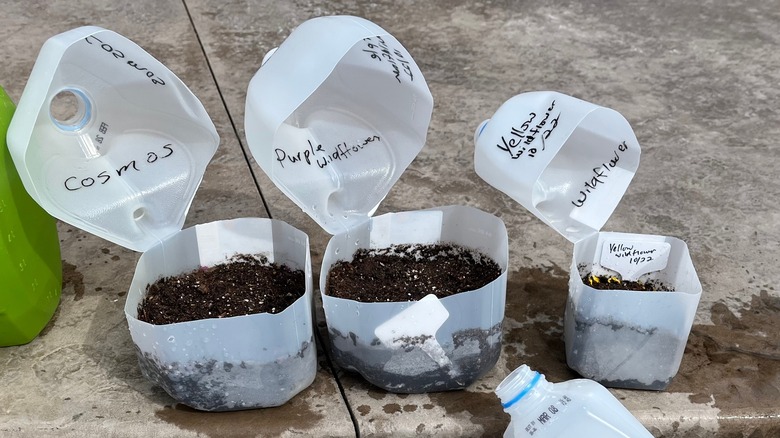
The humid environment inside a sun-warmed milk jug is ideal for helping seeds sprout. Make a germination greenhouse by slicing a jug in across the middle horizontally, leaving a 2-inch section that serves as a hinge for the top half. Add drainage holes to the jug's bottom and remove the cap since the opening serves as an air-circulating vent. Consider using your mini greenhouse outdoors to start your spring flowers in the winter. When wind, storms, or even snow are on the horizon, duct taping the lid closed should keep the seeds warm and happy.
Assemble a drip irrigation system
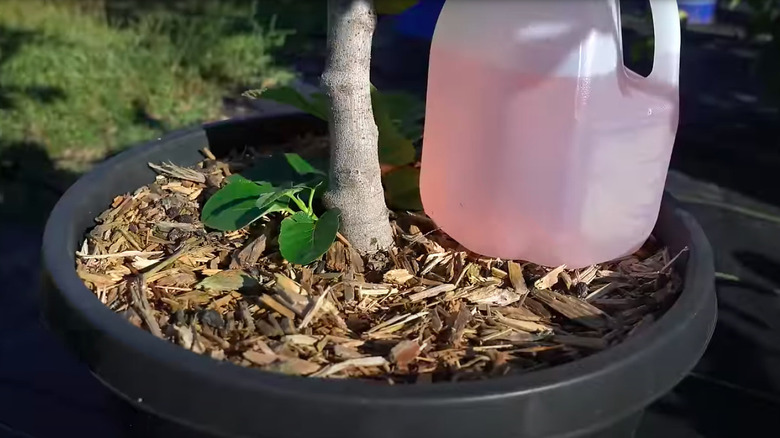
A milk jug can provide your garden's plants with a gradual stream of water or liquid fertilizer. In addition to meeting your greenery's needs when you're out of town, this drip irrigation system saves water and wards off plant diseases that spread through splashing water. Just fill a gallon-sized jug with the liquid your plants need, poke a hole near the bottom of one side, and set this handy tool in your garden. To hydrate two plants at once, place the jug between them and punch a hole in the side closest to each one.
Produce plant ID tags
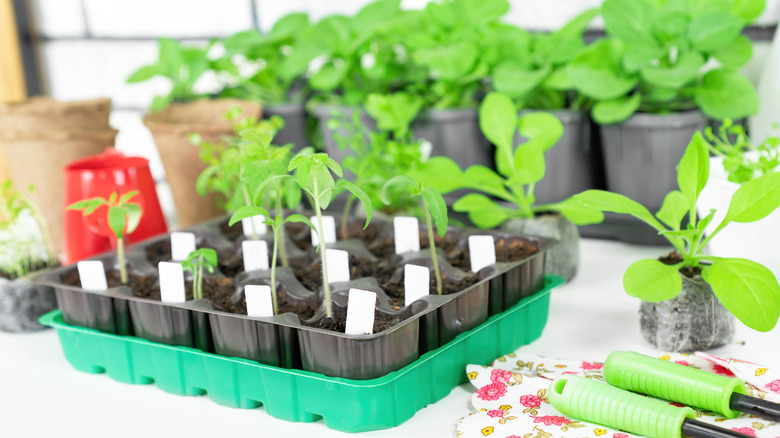
There are lots of household items you can repurpose as plant identification tags. Wine corks reused as plant tags are tough yet sustainable, and cardboard toilet paper tubes are good for crafting garden markers that biodegrade quickly. For a longer-lasting option, create plant tags from plastic milk jugs. They're not as eco-friendly as tags that you can toss in your compost pile, but you can recycle them when you're ready to replace them. One tag-making method involves cutting out long, thin rectangles and then snipping the bottoms into points that are easy to push into soil.
Whip up a watering can
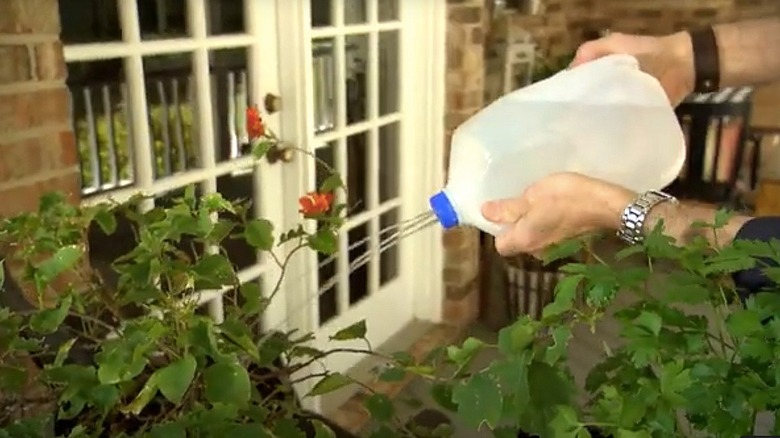
A couple of tweaks transforms a plastic milk jug into a handy watering can for your plants. You can give plants water from an unmodified jug, of course, but it's easy to over-serve them or damage tender young seedlings if the water exits the spout quickly. To deliver a gentle shower, add a smattering of holes to the cap with a drill or even a pen with a pointy tip. This style of watering can has a bonus benefit as well: If you squeeze it, the water travels pretty far, helping you hydrate hard-to-reach plants.