

Rare Vintage Kitchen Set Called The 'Holy Grail' Of Valuable Estate Sale Finds

Although it requires some time and effort, estate sales can be a unique opportunity to find lovely, inexpensive additions for your home. Sometimes you may even stumble across prized items you should never overlook because of their value. For those in the know, vintage porcelain kitchenware is often just such a treasure. A line that is particularly coveted right now is the Herend Apponyi flower porcelain collection. Hunker sat down with Dr. Lori Verderame, Ph.D., an expert antiques appraiser, for an exclusive interview about everything you need to know about this valuable vintage kitchen set, from its history, to identification, to which style can fetch you the highest resale value.
Herend Porcelain Manufactory is a Hungarian company that has been around since the early 19th century. According to Dr. Lori, "The [Apponyi flower] pattern was created in 1931 for Albert Count Albert Gyorgy Apponyi of Nagyoppony (1846-1933), a political figure and board member of the Hungarian Academy of Sciences in the 1920s and 1930s." It was produced in many different color variations, but each had the same tell-tale marks of authenticity. Dr. Lori tells us more about how to correctly identify genuine pieces while you're poking around estate sales.
How to identify Herend Apponyi pieces
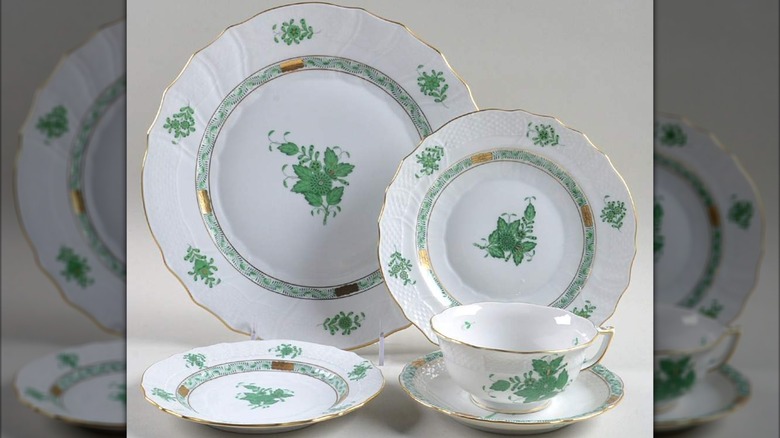
Identifying antique dishes begins with knowing genuine patterns and markings. In Dr. Lori's exclusive with Hunker, she detailed exactly what to look for when trying to identify genuine Herend Apponyi pieces. "The Apponyi flowers feature a central bouquet with floral sprays ... the pattern [was] derived from the Indian Flower Basket pattern of the 19th century ... highlighting the peony flowers of the pattern."
Another helpful way to identify genuine Apponyi pieces is by the specific color variations. "The original color of the Apponyi pattern was green with gold," Dr. Lori said, "Following the green and gold derivation of the pattern, other colors were introduced." She noted that the painters at Herend's studio used pink, blue, yellow, purple, as well as other colors, with the same central peony bouquet design as the original green and gold.
The next way to identify genuine Herend pieces is to look for the company's trademark on the underside of the piece. According to Herend Canada, the trademark will be accompanied by a number. Once you believe you've found a genuine Herend Apponyi piece by identifying the pattern, color variation, and markings, what else should you look for, and approximately what value will your new piece fetch you on resale?
You think you found a Herend Apponyi set, now what?
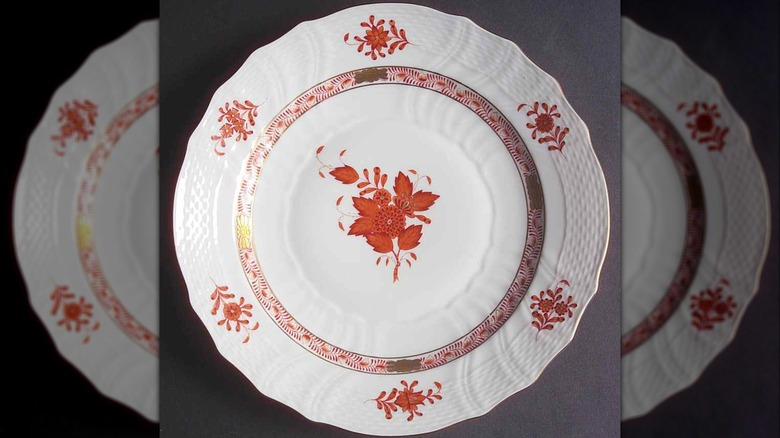
Now that you think you have a genuine Herend Apponyi piece, the next thing to look at is the condition of the piece. In Hunker's exclusive interview with Dr. Lori, she said, "For Herend, the color variants, provenance of a dinnerware service, and condition all impact value for Apponyi flowers' dinnerware pieces." Thoroughly examine the state your piece is in. Check carefully for things like chips and cracks. Because these sets were hand-painted, it is also important to examine the level of the paint's fading. The better condition the set is in, the more it will be worth. Dr. Lori added, "Today, a four-piece place setting in the Apponyi pattern in red is valued at $800 ... Color variants can impact popularity and value."
If you've ticked off all these boxes, then you can consider professional verification (particularly if you're interested in reselling the piece). Many antique appraisers offer authentication services (often for a cost). If you don't want to sell and, instead, want to bring it out for fancy dinner parties, Dr. Lori has some good news for you: "It is safe to use Herend dinnerware." Just be gentle! Whether you're looking to resell a Herend Apponyi piece, add it to your china cabinet for display, or make it the central figure of a lovely tea party tablescape, you now know how to identify this beautiful vintage (and valuable) dishware.