

Is Your Oven Costing You Money When You're Not Using It? Here's What Our Expert Said
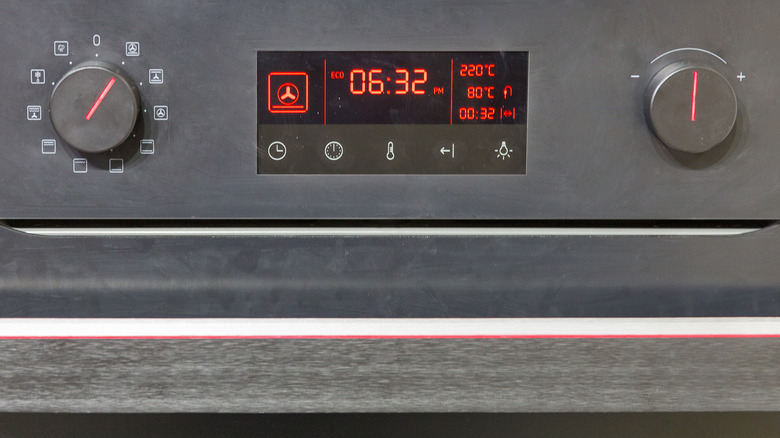
When a phenomenon is called something like "phantom power" or "vampire load," you immediately understand that there might be something threatening afoot. The specter we're talking about in this case is electricity that a device uses even when it's turned off ... or appears to be turned off. Sometimes the term "phantom power" describes difficult-to-trace electrical leakage in your home, but the situation can also be normal, particularly for devices with standby modes, like TVs and computers, or always-on displays like you might find on a thermostat. But what about a ubiquitous appliance that's always plugged in — your oven?
Hunker spoke exclusively with Troy Legg, a Virtual Appliance Expert with American Home Shield, about how the phantom power problem relates to ovens. American Home Shield is a home warranty company that has been providing peace of mind to homeowners for more than half a century with innovations like its iOS and Android apps which connect homeowners with repair professionals like Legg to discuss care and maintenance issues, including via video chat.
Legg reassured us that there's nothing mysterious going on in the darkened electric corridors of your oven. "The energy drain is caused by your oven's clock – that's it," he explained. "The only option to stop the energy drain is to get an oven without a clock, but I don't believe there's models on the market without that feature."
Making smart choices about appliance power use
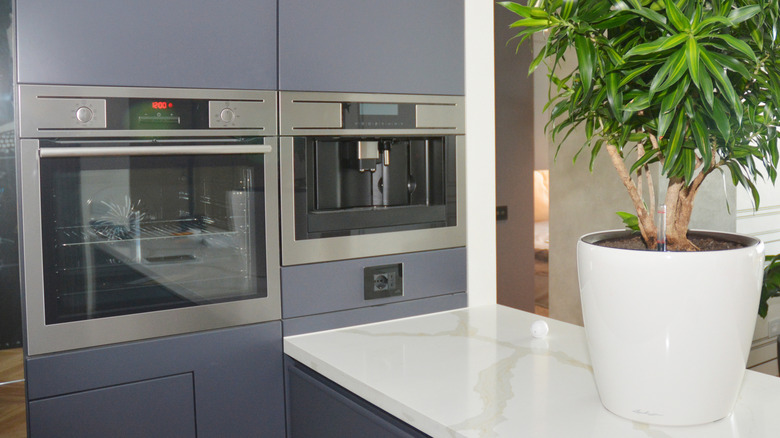
Of course, there's always one surefire way to put to rest the power-hungry demons that haunt your appliances: Unplug the device. When Hunker spoke exclusively with appliance expert Troy Legg, he explained that — at least in the case of your home's oven — the savings just aren't worth it. The clock, Legg said, uses very little power ... a rate of "approximately 60 watts a year, which breaks down to 0.9144 cents a year." At less than a penny per annum, it's not hard to find reasons to leave an oven plugged in. If nothing else, connecting and disconnecting an electric oven is not a trivial proposition. "The savings for unplugging the appliance isn't worth the risk in damaging the electronics on the appliance," Legg said. "Each time you unplug and replug the appliance, it causes a surge, which can potentially damage or shorten the lifespan of the electronics in your appliance."
This, of course, doesn't mean there aren't good reasons to tune in to the power efficiency of your oven. They do, after all, use quite a lot of electricity. If you want to save money on power, Legg said, "my strongest recommendation is to buy an energy-efficient appliance." This is, of course, assuming you don't already own one. "Newer oven models are often more energy efficient and built to run using less power," he explained, "...making them better for both the planet and your wallet."
Is it worth it to replace your oven?
There are cases where the power savings you'd enjoy from upgrading your oven are so extreme that it's a no-brainer. One such case came up in our exclusive conversation with American Home Shield appliance expert Troy Legg about oven power use. "If you have a range (versus a wall oven), opt for one with modern induction cooktops," Legg advised. "Old gas cooktops have an efficiency of about 32%, while new induction cooktops, which use coils that generate heat directly within cookware, are about 85% efficient."
But even though your oven is among the costliest kitchen appliances to run in your home, it's not a given that all scenarios will be that clear-cut. You must weigh the cost of a new oven and other factors against the potential energy savings and the environmental benefits of upgrading. "Before buying a new eco-friendly oven, you should not only weigh the financial costs of purchasing a new oven," Legg said, "But also the resource costs associated with disposing of your old one and manufacturing and delivering your replacement." Of course, there are also benefits of a new oven to be considered besides electrical efficiency. You might, for example, get a really cool new clock.