

The 12 All-Around Easiest Vegetables To Grow Indoors Throughout Winter
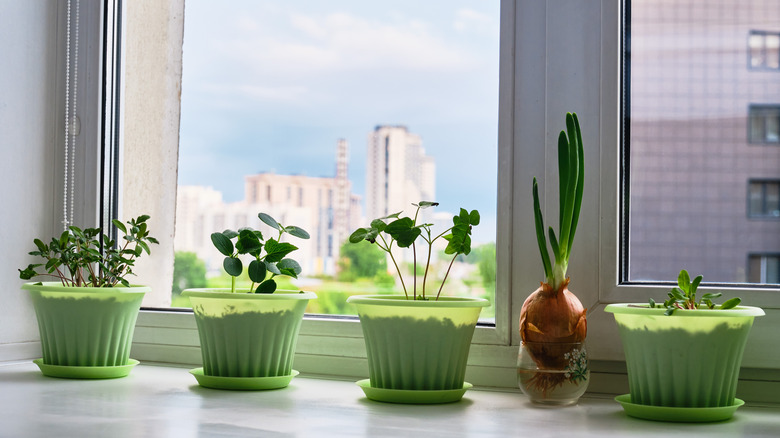
Extending the garden harvest into the winter is not always the easiest thing to achieve, especially if you live in northern climates where freezing temperatures and snow are a regularity. However, there remain plenty of ways you can grow vegetables during the winter. The easiest solution is to move your growing indoors. Mind you, not all vegetables are suited to indoor growing, which is why you need to choose carefully and pick ones that will easily grow in a winter garden.
Cool-weather plants like salad greens and root crops are all relatively well-adapted to the winter months. Therefore, growing them indoors shouldn't be too much of a challenge. You'll just need to make sure you have space, time to take care of them, and to watch out for any pests that might be lingering.
Before you start, there are a few other indoor plant care tips to take into account. You need to make sure you have enough pots for your plants, and enough soil for them to grow in — this can be scaled based on how much you intend to grow. Then, you need to make sure you have the right amount of indoor space, spots that get plenty of sunlight, the right equipment for seed starting, and that your rooms have decent temperature control. Once those things are in place, you are ready to begin.
Herbs
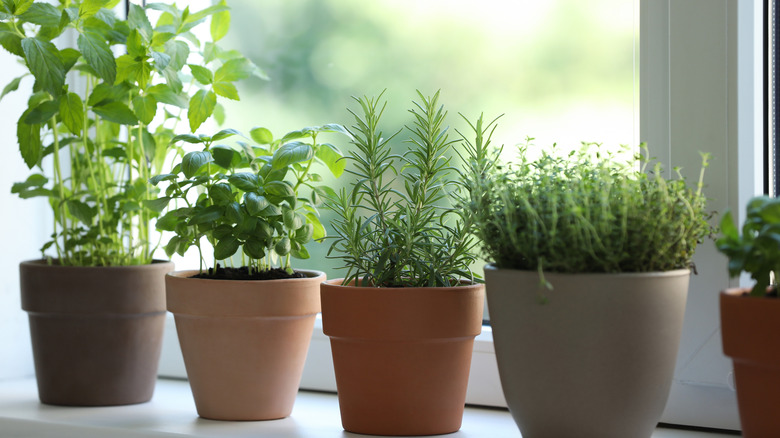
You can easily grow herbs like basil (Ocimum basilicum) and parsley (Petroselinum crispum) in your kitchen. They take up very little space and don't require too much in the way of routine care and maintenance. They need full sun throughout the day, so do your best to place them in the sunniest place in your home. If your kitchen window faces southwards, this would be a great spot. Just make sure that the soil is moist but not waterlogged, and that you don't harvest too much of the herb at a time to prevent harming the plant.
Spinach
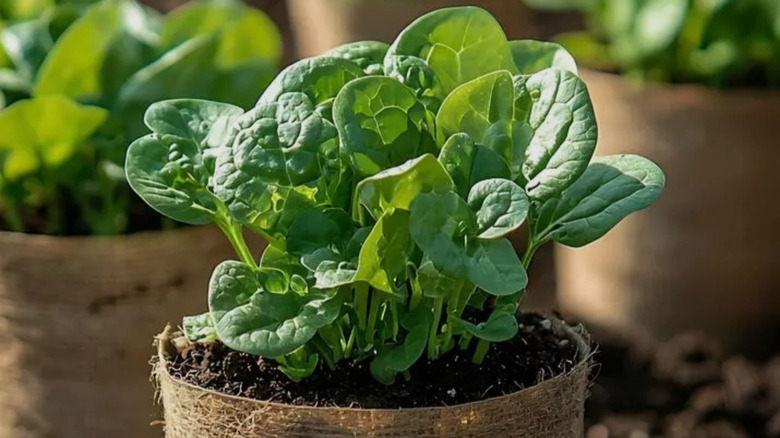
Spinach (Spinacia oleracea) is a classic cold-weather green. It can do well in certain outdoor garden environments and can even survive below zero temperatures. However, since it is shallow rooted and grows very quickly, spinach will also thrive in an indoor environment. A 2-4 inch deep container works perfectly and will need to be kept warm until the spinach has sprouted. After that, transfer it to a sunny window — most greens need at least 12 hours of sunlight — where the spinach will be ready for harvesting in about 30 days.
Kale
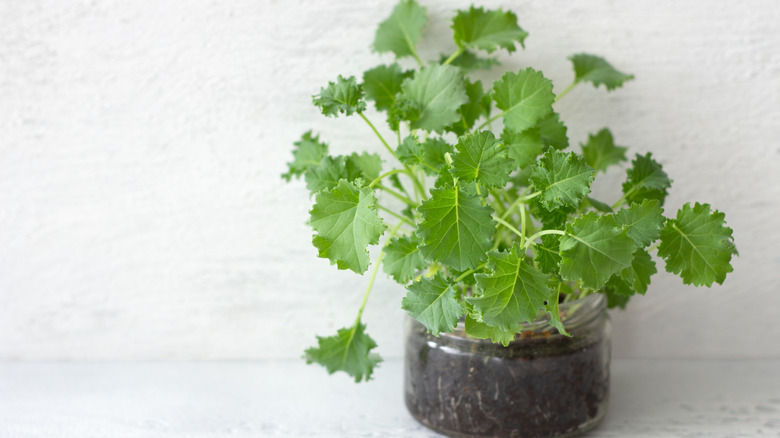
Like spinach, kale (Brassica oleracea) is another cold-hardy green that you can grow in your home, greenhouse, or other garden structure. It will grow fast, providing you with produce in about one to two months after planting. Since kale is a long-lasting plant, you can even take the one you've grown in winter out into your garden for spring, where it will keep growing. As with other leafy greens, make sure you keep your kale in a space that gets plenty of sun throughout the day, with plants sown 12 to 18 inches apart.
Snap/snow peas
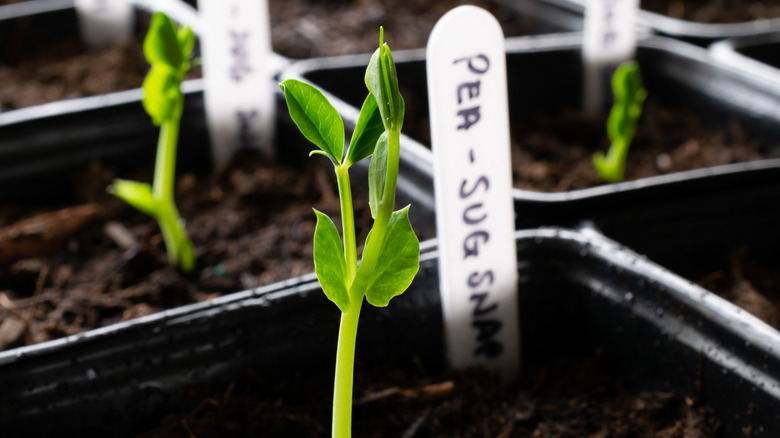
Snap or snow peas (Pisum sativum) are not a common option for indoor growers, but they can be a lot of fun. Keep in mind, they do grow in vines, so you will need a pot and some kind of trellising system to keep them in check. Otherwise, they are incredibly easy to maintain. Keep your room temperature between 65 to 70 degrees Fahrenheit and provide your peas with at least 6 to 8 hours of light. You can achieve this with grow lights, or by placing them in the sunniest room in your house. Just water as needed.
Carrots
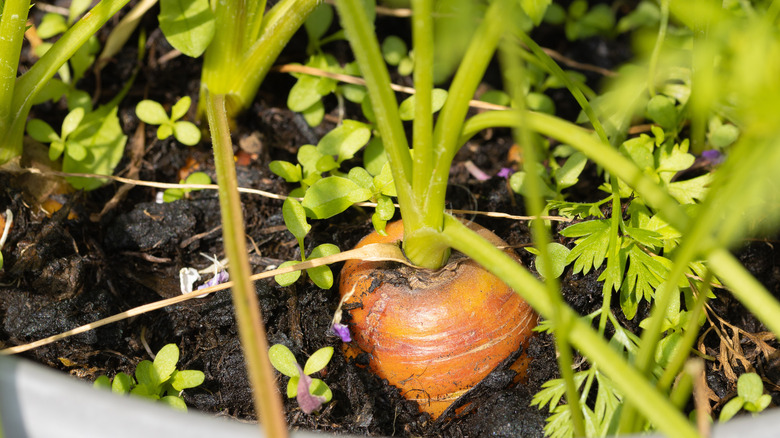
Carrots (Daucus carota) are an excellent root vegetable to grow in the winter as they will provide you with lots of vitamins and minerals during those chilly days. They are also a great ingredient for soups, which are essential for most people to get through the winter. Now, it's important to look for a shorter variety of carrot, as your containers limit the vertical length to which they can grow. Otherwise, they take up very little space, and you should have shoots within 10 days and fully-grown carrots within one to two months if all goes according to plan.
Microgreens
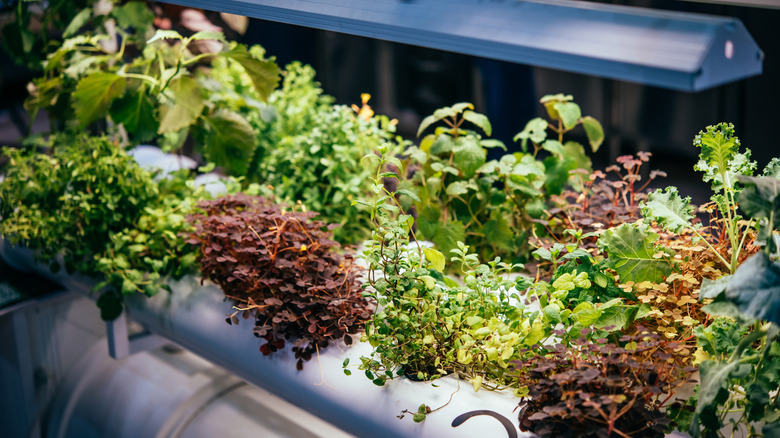
When grown from seeds under grow lights, you can get a microgreen harvest as quickly as two weeks after you've planted them. And they don't need much besides regular watering. However, grow lights are going to be essential for them, as, like other greens they need at least 6 to 8 hours of constant light, something that can be hard to come by in the dark of winter. Use microgreens to spruce up a soup, some salads, or even on their own. They'll keep growing all winter, and their uses are endless.
Bell peppers
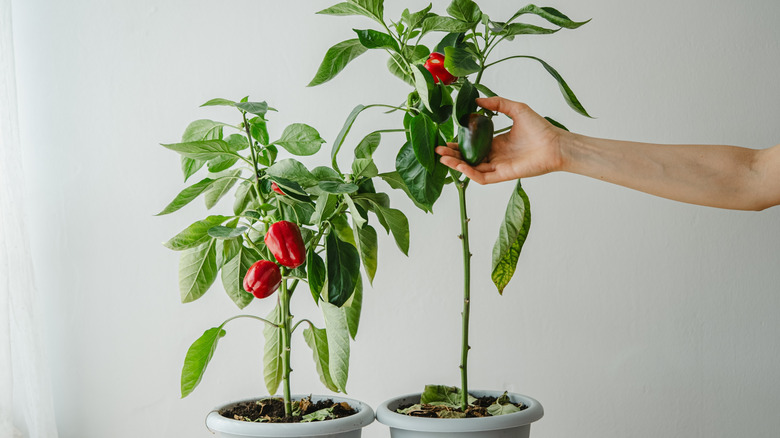
Bell pepper (Capsicum annum) plants will need some space to grow, so you'll need a larger pot that is at least 8 inches deep. They will also need at least 10 hours of light per day, so a sunny spot in the house and grow lights will be important here. Just be sure to allow the soil to dry completely between waterings, as peppers do well in drier conditions. You should see germination of the seeds in about two weeks and produce within 2 to 3 months.
Scallions
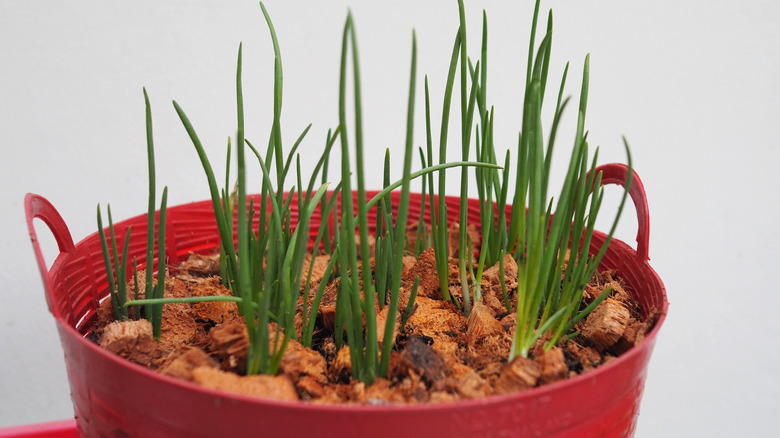
If you're looking for a great, oniony flavor in your winter garden without having to plant onions, scallions (Allium fistulosum) are going to be a great option. They are a long-lasting perennial that will continue to grow well in containers all year round. You can plant them from seed or purchase some at the grocery store and leave their roots submerged in water for a few days before planting them — this allows them to extend their roots for healthy planting. They also don't require a ton of sun, making them ideal for winter gardening.
Garlic scapes
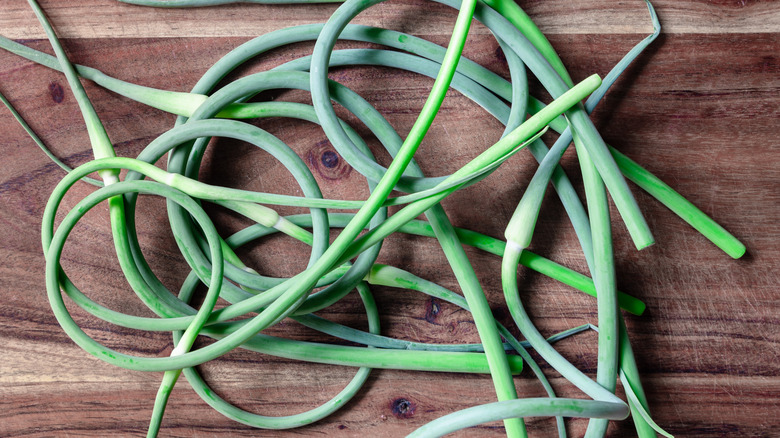
As with scallions, garlic scapes (Allium sativum) provide you with a garlicky flavor without having to necessarily grow the whole bulb. Garlic scapes only grow from hardneck varieties and are the green part of the garlic neck that appears while the bulb is still forming. Since garlic needs to overwinter in order to properly grow full bulbs, you're instead sacrificing that for some great garlic flavor in the winter. Plant the cloves 2 inches apart and 2 inches deep. Water and wait, and you'll be getting your first shoots in as little as two weeks.
Radishes
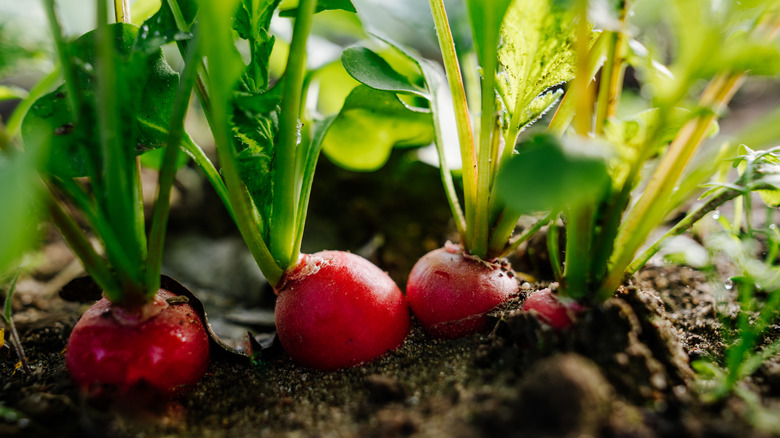
You will need a space that gets at least 6 to 8 hours of consistent sunlight and a container 6 inches deep filled with loose soil if you want to grow radishes (Raphanus sativus) properly indoors during the winter. Thankfully, that's all they really require. Radishes produce very quickly. So, in as little as two weeks you will start to see your winter radishes, though bear in mind they will grow more slowly than their summer counterparts. Be sure that the soil you use has a neutral pH balance and that the seeds are spaced at intervals of two inches.
Potatoes
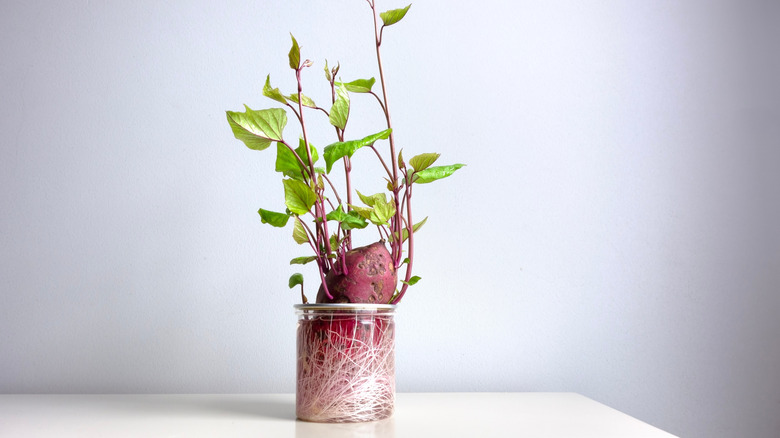
You can grow potatoes (Solanum tuberosum) indoors during the wintertime. It's easy, and you have more control over the soil than you would planting them directly in the ground. Just remember that potatoes prefer some sandy, looser soil over those that are dense and loamy. In a container that's at least 6 inches deep, bury sprouting potatoes at least 4 inches apart and 5 inches deep. Water heavily and keep them in the sun or under grow lights. With luck, you should see potatoes in just a couple of months, great to have on hand for soups and stews.
Cucumbers
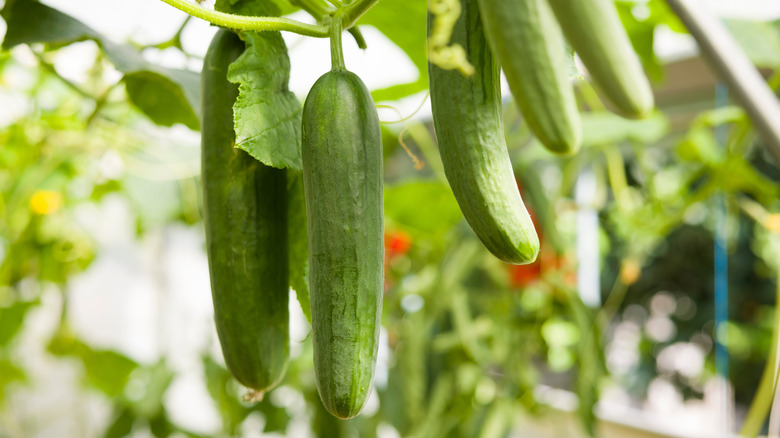
You can indeed grow cucumbers (Cucumis sativus) indoors. Make sure you choose a container-specific, dwarf variety that is parthenocarpic, meaning it doesn't require pollination to bear fruit. You will need a small trellis system for cucumbers as they grow off vines. Getting the seeds to germinate is the trickiest part. The soil needs to be warm and humid, so a heat mat, grow lights, and a humidity dome are essential tools. Once you've transplanted them to a larger pot, keep them in a sunny area and wait a few weeks for the cucumbers to arrive.