

Gardeners Are Reusing Old Sheets To Beat The Freeze, And They're Smart To Do So

When properly used as covers, bed sheets provide an unusual but effective way to protect plants from frost in your garden as temperatures drop this fall. Left unprotected, frost can do severe damage to your plants, caused by low temperatures, high moisture, wind, and more. When exposed to these elements, frost can gather on the exterior of your plants and freeze the water in the plant, which results in discoloration, wilting, stunted growth, split bark, and sometimes death. If that fate is one you would rather avoid, it might be time to take the old bed sheets you don't use anymore out of the closet and put them to work in the garden.
While this is one of the many genius ways to use old bed sheets instead of getting rid of them, it is important to note that covering your plants is effective to a point, as protecting your plants from frost is meant to extend your gardening season's end date, not terminate it. Once the temperature drops below 28 degrees Fahrenheit, covering your plants becomes less effective. However, until then, using bed sheets to protect from the cold is an effective protection method you can employ. The only foolproof way to protect plants throughout the entire winter is with a greenhouse or by bringing them inside, but that doesn't work for all the plants you have in the ground. So, let's get back to how to use those bedsheets to protect your plants.
How to use bed sheets as plant covers
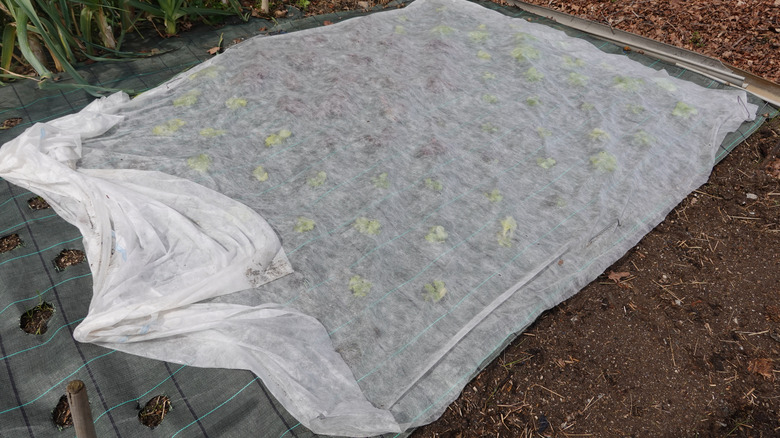
Once you are done buying cozy bedding to help you transition from summer to fall, you can take your old sheets out to the garden. This repurposing hack works by trapping heat from the ground with the bed sheets and preventing your plants from frost in those random cold nights that come in the fall and spring. Bed sheets are great for this purpose since the fabric is generally more breathable than plastic coverings, which can regulate temperature for your plants a bit better. The fabric cover prevents moisture from freezing because moisture never comes in direct contact with the freezing air.
To best cover your plants, it is important to note that the cover should never touch the plant itself. If the bed sheets come in contact with the plants you are trying to protect, they may freeze. To be most effective, you have to elevate the bed sheets in whatever way is most convenient for you. If you have spare tomato cages, stakes, trellises, or even large sticks lying around, you can use these to prop the bed sheets up off the plants. Additionally, you'll need to make sure the sheet isn't going to fly away in the wind, either by staking it down or using weights to keep it in place. Once the weather warms up, remove the bed sheets to uncover your plants (not just to look at, you also want to make sure they don't overheat).