

Effortlessly Keep Weeds Out Of Your Yard With This One Beautiful Garden Solution
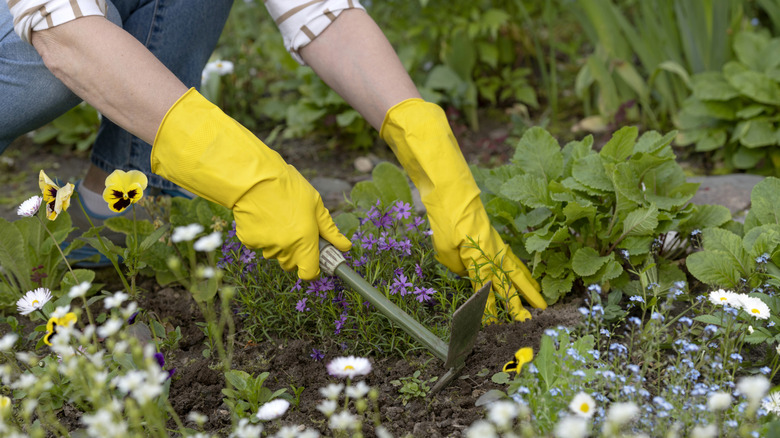
When you're just trying to have a nice flower bed, the nonstop presence of weeds can make you constantly feel like you're fighting a losing battle. Just when you think you've uprooted them all, another batch of these leggy, ugly, uninvited blemishes pops up. And though you can unconsciously make many common mistakes when trying to kill weeds in your quest to achieve an eyesore-free landscape bed, sometimes you're seeking a simple solution that helps you prevent these blights from taking over. Using other plants to crowd them out and prevent their growth is one way to do it. This is known as a ground cover plant, which is one way to practice safe and natural weed control. You're looking for a plant that not only looks good, but prevents weeds from taking root. Enter the blue, flowering plumbago.
Hardy plumbago, often dubbed leadwort, launches a slow-moving campaign underground, sending rhizomes stealthily through garden soil in USDA hardiness zones 5 through 9. Rather than simply carpeting the earth, it knits a low, dense tapestry that throws shade on unruly trespassers before they have a chance to take hold. In a world of bullish ground covers that stomp across flowerbeds unchecked, plumbago has a gentler touch. It leans into its task without elbowing out every welcome neighboring plant. And, what's more, it sprinkles the garden with petite blue blooms reminiscent of phlox that linger from the heat of July all the way into the cool breaths of fall.
How to grow and care for plumbago
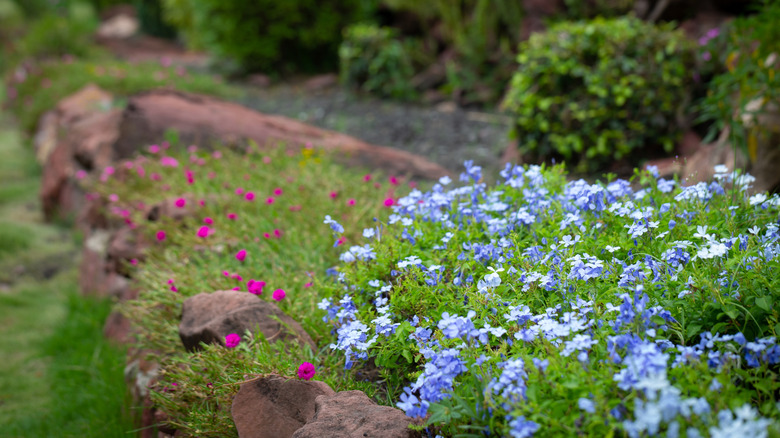
If you want a low-fuss ground cover that can handle less-than-ideal soil and muscle out pesky weeds, plumbago is your plant. It's comfortable in sandy or loamy earth that drains well. Don't worry if your soil isn't the richest; plumbago can handle it. This plant kicks its roots down in full sun or filtered light, and it appreciates a little break from the afternoon blaze in summer. Avoid planting this ground cover in deep shade, though, especially if you want to see those blue blooms. The sweet spots are under shrubs or beside early-blooming perennials. For gardeners living where winters get frosty, a layer of mulch can help plumbago endure the cold season. While planting, give each plant space to roam, which is roughly 10 to 16 inches apart.
Standing up 6 to 8 inches tall on sturdy, upright stems, plumbago creates a thick, lush carpet that's as functional as it is attractive. Its leaves don't just settle into a green hue. Come fall, they blush into shades of bronze and red, setting off a stunning contrast to those sky-blue flowers. While the leaves drop during the colder months, they leave behind a textured base of subtle color throughout much of the growing season. Though plumbago is tough and resilient, it isn't completely without quirks. Watch for occasional powdery mildew and citrus mealybugs. And when weeds do crop up, they can be easier to pull with the help of an everyday kitchen essential.