

The Top 5 Deadliest Plants In The U.S. — And They Could Be Growing In Your Yard
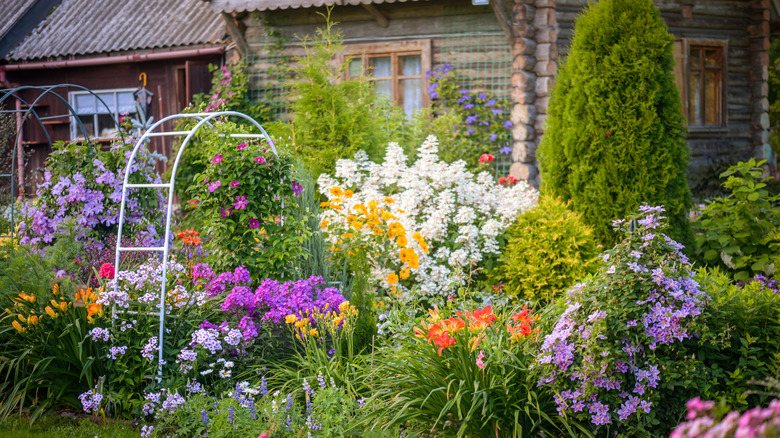
There are lots of ways a hazardous plant can end up in your yard. Sometimes wind carries problem-causing seeds a long distance. Other times, animals disperse these seeds during their travels. A number of deadly species are used in home landscaping since they're beautiful, well-suited to local growing conditions, or not widely perceived as dangerous. Knowing how to identify the United States' most threatening species is your best defense against the harm they can cause. Once you're armed with this knowledge, you'll be able to determine the best steps for safeguarding yourself, your loved ones, and anyone else who sets foot in your yard.
When you find a deadly species near your home, the first priority is to try and banish it before it spreads. In general, removing toxic plants involves hauling away any plant matter that could cause problems if touched, eaten, or inhaled through smoke. If in doubt about a plant's toxicity, treat it as you would poison ivy. Wear thick gloves, a long-sleeved shirt, and protective eyewear when digging up the toxic invader. Get rid of foliage, roots, berries, and any other parts of the plant you can access, placing all of these materials in a well-sealed disposable container you can toss into your trash can. Make sure none of this debris ends up in your compost heap or a pile of branches you plan to burn in the future. Also, immediately clean your tools as you would after exposure to poison ivy and consider covering the plant's former home with a thick layer of organic mulch. If you have health concerns or want to play it extra safe, it's best that you call a lawn care specialist to have it removed. Let's now talk about what plants you need to look out for and how to identify them.
Water hemlock
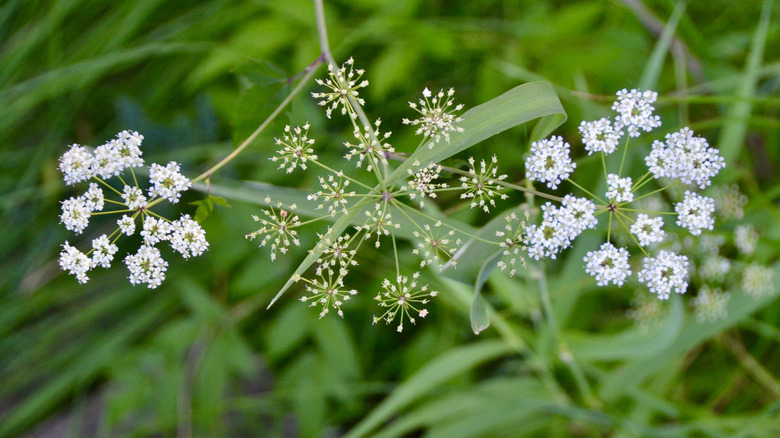
Though water hemlock (Cicuta maculata) is native throughout North America, you don't want it in your yard since it's considered America's most dangerous plant. Every inch of this wildflower can be deadly. Convulsions, vomiting, and severe confusion are just a few of the symptoms water hemlock can induce if you eat it, so it's best if you don't even touch it. Don't let pets touch it either, as it is also toxic to many animals. This plant thrives in USDA hardiness zones 5 through 9, especially near ponds, streams, and ditches, so be extra vigilant about its presence there.
Water hemlock resembles several other plants that can cause problems for humans, so take extra precautions around any plants with a similar appearance. The most prominent feature of water hemlock is clusters of minuscule white flowers. On a mature plant, these star-shaped blossoms sit atop long stems, which makes them look a bit like parasols. Water hemlock's flowers bloom in the summer, attracting bees and butterflies, and its leaflets are up to 4 inches long. This plant is low to the ground in its first growing season but forms stalks that reach as high as 8 feet in subsequent years.
Poison hemlock (Conium maculatum) looks similar and is almost as dangerous. Like water hemlock, it can kill both humans and animals. Its little white flowers also form umbrella-like clusters, and many specimens of this plant are 6 to 10 feet tall. Unlike water hemlock, poison hemlock grows lacy leaves that foragers sometimes mistake for those of wild chevril (Anthriscus sylvestris), Queen Anne's lace (Daucus carota), or other plants in the carrot family.
Giant hogweed
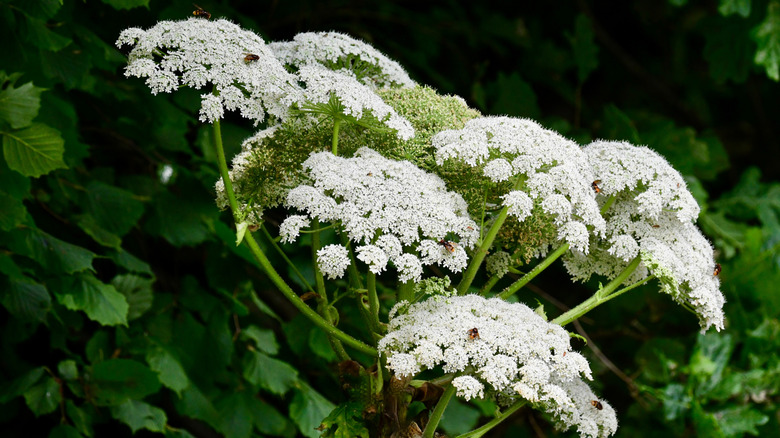
Like water hemlock, giant hogweed (Heracleum mantegazzianum) makes umbrella-like clusters of little white flowers, but it's a much larger plant. This behemoth often achieves a height of 20 feet or so, towering over any humans that dare to approach it. Giant hogweed has also earned a spot on the federal noxious weeds list. In other words, it should never be intentionally planted, and careful removal is essential. If you decide to remove giant hogweed yourself, protective gear is an absolute must. The plant's sap is highly dangerous when in contact with skin and mucous membranes. It provokes severe blisters and burns on skin, and it can even cause blindness if it touches your eyes.
Giant hogweed prefers damp growing sites that receive a few hours of shade each day, but imperfect conditions won't prevent it from wreaking havoc on your yard. This headache of a plant is particularly skilled at outcompeting native plants. It grows fast and tolerates most soil textures, even heavy clay. Plus, each of its fruits is capable of dispersing more than 1,000 seeds. Since giant hogweed is accustomed to the growing conditions in zones 3 through 9, you may come across it in many parts of the U.S., even southern Alaska.
Rosary pea
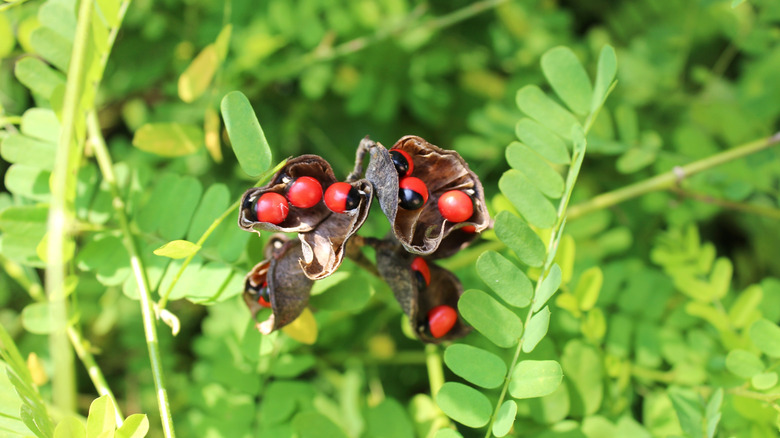
Sometimes called crab's eyes or love bean, rosary pea (Abrus precatorius) is so invasive that it's illegal to plant in the U.S. Typically found in growing zones 9 through 11, it often grows over other flowers and shrubs. It's also a health hazard for humans. Skin contact isn't a problem, but ingesting any part of this plant is. If you swallow a piece of rosary pea, you're likely to experience vomiting, intense stomach pain, tremors, and even shock. Simply putting it in your mouth is risky, as it can cause mouth and esophagus ulcers as well as a burning sensation in your throat. Symptoms may take days to emerge and ultimately claim your life. It's especially important to protect children and pets from abrin, the poisonous protein found throughout the rosary pea plant. Even if the kids who visit your yard aren't prone to mouthing foreign objects, they may want to touch the plant's red-and-black seeds, which resemble ladybugs. The seeds might even be mistaken for candy.
Birds aren't bothered by rosary pea, so they often eat the plant's fruit and disperse the seeds in yards. In other words, rosary pea may spring up in your yard even if you've never planted it. Make sure you can identify both the seeds and the full plant, and get rid of any part of it that appears near your home. Rosary pea is a fast-growing vine with compound leaves and tiny pink, purple, or white flowers. It prefers to live in areas with full sun. It's also a perennial, so it will return every growing season if it is left alone.
Castor bean
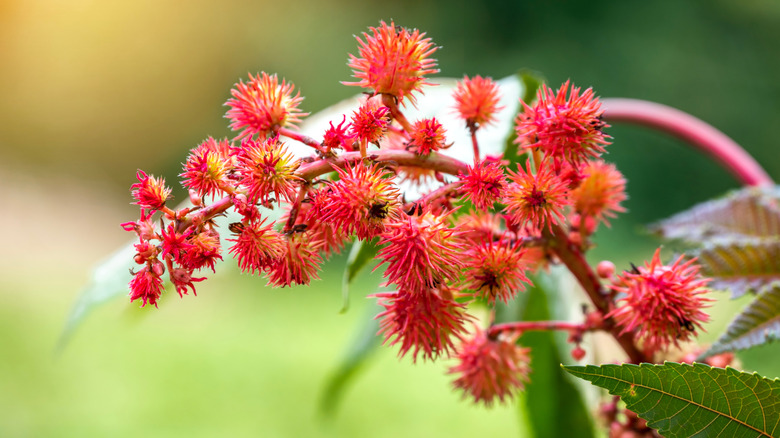
Castor bean (Ricinus communis), the main ingredient in castor oil, is an eye-catching plant that can strike you down in an instant. You don't have to swallow the beans to be killed by them. Chewing them is enough to kill because the toxin in the beans is so potent. Known as ricin, it's notorious for its role in assassinations during the Cold War. This substance halts the human body's protein-making process, causing organs to stop working, which can quickly become fatal. Other symptoms of ricin poisoning include seizures and severe dehydration. Though the ricin in the beans — and every other part of the plant — is very dangerous to consume, castor oil is non-toxic because of the way it's extracted. Castor bean also causes serious skin reactions, so wear sturdy gloves and cover your arms if you must remove it from your yard.
Florida has labeled castor bean as an invasive species, and parts of California have deemed it a noxious weed, but this shrub hasn't been phased out of home landscapes altogether. If it's growing in your yard, keep children and pets far away, and consider replacing it with a safer native landscaping plant such as American beautyberry (Callicarpa americana). Castor bean is also found near riverbeds and railroad tracks, especially in zones 9 through 11, where it behaves as a perennial. In colder areas, it's treated as an annual or grown in movable containers. After making petal-free flowers in the summer and fall, castor bean forms spiky, seed-filled fruits in shades of red, purple, or green. Mature specimens stand 6 to 10 feet tall and sport glossy, star-shaped leaves.
Angel's trumpet
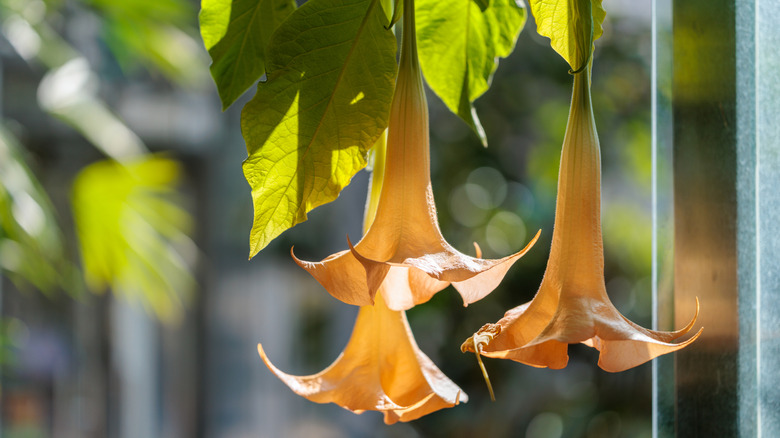
Flowers that look like trumpets are easy to admire, especially if you're a fan of musical instruments. Unfortunately, angel's trumpet (Brugmansia spp.) has inspired too many funeral marches over the years. Its flowers, leaves, and seeds are all poisonous, and it's considered one of the most toxic ornamental species in North American gardens. Consuming about ten of this plant's flowers can be fatal. Plus, you don't want to mess with its three toxic substances: atropine, scopolamine, and hyoscyamine. They can cause all kinds of nasty symptoms, including paralysis and memory loss.
Keeping children away from angel's trumpet is essential because even small amounts of toxins may harm them. Angel's trumpets typically have white, yellow, or pink blossoms that point toward the ground as they grow. These aromatic flowers bloom in the summer and can be up to a foot long. Growing zones 7 through 10 are the prime spots for angel's trumpet. You're most likely to find this perennial evergreen in areas with damp, nutrient-rich soil. This plant can reach a height of 30 feet when grown in subtropical climates, but smaller, container-grown specimens are also common. Angel's trumpet is even a popular houseplant, so kids may encounter it in homes and offices. If you spend time with kids and want to grow trumpet-shaped flowers, crossvine (Bignonia capreolata) is a safer choice.